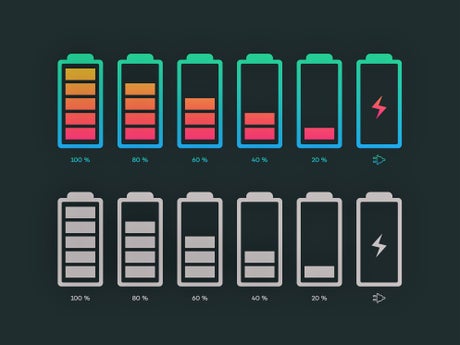
Researchers have demonstrated a solution to a 40-year problem regarding the creation of a “holy grail” battery that could radically transform the electric car industry.
The breakthrough involves harnessing the power of lithium-metal batteries, which are capable of holding substantially more energy and charge in a fraction of the time compared to lithium-ion batteries that are currently used in everything from smartphones to Tesla vehicles.
Until now, scientists have been unable to create a lithium-metal battery stable enough to be used in commercial applications.
The development, made by a team at Harvard University’s School of Engineering and Applied Science (SEAS), allows this next-generation batter to be charged and discharge at least 10,000 times, which would increase the lifetime of electric vehicles to that of of their gasoline counterparts – while simultaneously increasing their range and reducing their charge time.
“A lithium-metal battery is considered the holy grail for battery chemistry because of its high capacity and energy density,” said Xin Li, an associate professor at SEAS.
“But the stability of these batteries has always been poor... By studying their fundamental thermodynamics, we can unlock superior performance and harness their abundant opportunities.”
The research, published in the journal Nature on Wednesday, involves an innovative multi-layer approach to assemble the battery, which allows it to be self-healing and solve the issue of degradation.
It is hoped that the design can be developed commercially in order to meet the growing needs of the electric vehicle industry.
“This proof-of-concept design shows that lithium-metal solid-state batteries could be competitive with commercial lithium-ion batteries. And the flexibility and versatility of our multilayer design makes it potentially compatible with mass production procedures in the battery industry,” said Dr Li.
“Scaling it up to the commercial battery won’t be easy and there are still some practical challenges, but we believe they will be overcome.”