Ever since Marlon Brando slurred: “Whaddya got?” to a friendly bobbysoxer’s enquiries, it has been clear that cinema loves a rebel. Everyone and everything, from Star Wars to Tony Hancock, likes to give the word an airing, and fight their corner. Often, however, it seems as if film-makers themselves are the least rebellious creatures of all. Shackled by funding obligations, corralled by marketing teams, subdued by press campaigns, directors tend to be docile beasts, the least truculent, most accommodating figures in the creative arts spectrum. With so much cash – and the fate of entire corporations – riding on their efforts, it’s not hard to understand why.
But something may be stirring: the first small sparks of revolution. It may not sound much, but the directors of two of this year’s most expensive and most heavily marketed films – Jurassic World and Terminator Genisys, which cost £117m and £100m respectively – have openly criticised the efforts of those charged with selling the films. And not in a quiet way either; right in the middle of said marketing campaigns, when all attention is focussed, and when any deviation from being on-message is a crime against commerce.
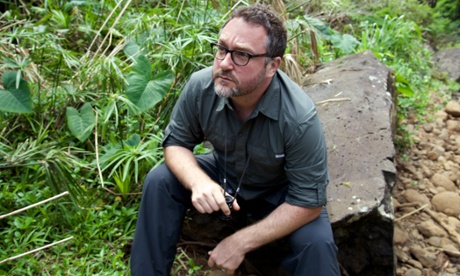
Terminator Genisys director Alan Taylor said he had protested about spoilers in the trailer, leading to “unpleasant conversations” with the marketing department, and Colin Trevorrow, Jurassic World’s director, has become a repeat offender: first backing up fellow film-maker Joss Whedon’s criticism of a “sexist” promotional clip, and subsequently, like Taylor, questioning the content of the film’s trailer.
Both directors’ complaints revolve around how these promotional materials were going to affect the way audiences responded to their work – not simply that they gave away the ending or plot twists. Trevorrow acknowledged that Whedon was right because, he felt, the clip in question – of “life-force” Chris Pratt flirting with “stiff” Bryce Dallas Howard, to use Whedon’s words – failed to convey that the characters are “stereotypes that are deconstructed as the story progresses”.
Despite presumably having been told to shut the hell up, Trevorrow later had a go at the trailer for similar reasons, after it included a shot of Pratt with “tame” velociraptors. “If you just show people snippets of something,” he said, “without them understanding the set of rules that define the movie … it can be challenging for an audience.”
Taylor, too, felt that the trailer-makers were inappropriately messing with expectations, by trying to head off the idea that Genisys was a Terminator “reboot” (in the manner of The Amazing Spider-Man), when in fact it was another sequel. “I think they felt like they had to send a strong message to a very wary audience that there was something new, that this was going to new territory,” he said. Plus, a key twist was revealed, which he thought wrecked a particular scene, which he had put together “with the intention that no one would know” what was coming.
In one way, this is just another of the age-old manifestation of art versus commerce. That you pencilnecks might be able to get the punters to line up like sheep, but you don’t really understand the finer points of what I’m trying to do here. Trevorrow did at least have the decency to admit that “this kind of marketing has historically been able to get a lot of people into theatres” – and results have certainly borne this out, with box-office records shattering all over the globe. Terminator, on the other hand, has done all right – not brilliantly, not disastrously.
But in the context, this truculence is remarkable. These rather restrained moans are way short of calling for the blood of the boss-class to run in the gutters, but in the context of the juggernaut-like momentum of the tentpole movie’s release drive, this counts as proper dissension. Taylor, in fact, has past form: during the promotional campaign for his last film, Thor: The Dark World, he suggested that Marvel had dumbed it down by ordering reshoots and re-edits. “My impulse,” Taylor said, “is always to … trust the audience and to not feed it too directly. But, obviously, there’s a very successful model for these things that seems to work very well. So, who am I to quibble?”
This public airing of creative issues is probably a direct consequence of the “indiefication” of blockbuster and franchise movies: hiring film-makers straight from Sundance hits or low-budget art films. Blockbuster directors, until recently, were a distinct breed: accomplished visual stylists schooled in music videos or VFX houses, with cartoonish sensibilities. Bringing people with no obvious facility for genre or FX film-making probably dates back to Marvel’s unlikely hiring of Jon Favreau – best known for Elf and writing Swingers – for its first Iron Man film. Marc Webb, of 500 Days of Summer, did The Amazing Spider-Man. Ken Branagh did Thor. Rian Johnson, of Brick and The Brothers Bloom, is doing Star Wars Episode VIII and possibly IX. Trevorrow’s only film before Jurassic World was the time-travel comedy Safety Not Guaranteed. Taylor, in some ways, is actually the most interesting figure: having started making films in the mid-90s, with the instant cult classic Palookaville, he moved into high-end TV after being hired on to The Sopranos, and stayed there (working on Mad Men, Deadwood, Sex and the City and Game of Thrones) until Marvel – again – made an unconventional hire and brought him on to Thor: The Dark World.
Some film-makers haven’t even made it to the starting line: Edgar Wright left Ant-Man over “creative differences”, while Patty Jenkins, of Monster renown, left Thor: The Dark World (clearing the way, ironically, for Taylor) but has subsequently been hired for Wonder Woman – replacing another high-end TV veteran, Michelle McLaren.
The griping of Taylor, Trevorrow and their ilk exposes a new faultline in the upheavals currently gripping the film industry. It’s long been a Hollywood truism that the middle-ground has evaporated: the only films that get made are either tiny festival films or massive tentpoles. (That said, there’s a special subset of awards-bait middlebrow films, your Birdmans, Grand Budapest Hotels and Muds.)
Perhaps the hiring policy of Marvel, Disney-Lucasfilm and the like is dictated by supply: the family-movie production line that once sustained the likes of Chris Columbus, Robert Zemeckis and Barry Sonnenfeld has been a big loser in the new Hollywood – Netflix and Amazon Prime have happily accommodated the film-makers who might have expended their energies making actual films.
One such project, a Netflix show called The Crown, is about to start shooting on Monday: created by Peter Morgan, and inspired by the The Queen, which he wrote, and which includes that film’s Stephen Daldry in its directing roster. Daldry is the kind of prestige figure who went from theatre success to film-directing at the highest end; his participation is a sign of the times, for sure.
But can TV and cinema, with their differing restrictions and aesthetics, flourish without affecting the other? Perhaps it’s more useful to think of this streaming-service product, designed as much for the tablet as for the TV screen, as a third space – living, as Netflix executive Cindy Holland rather neatly puts it, “somewhere between television and cinema”. The revolution may not be televised, but simply downloaded.