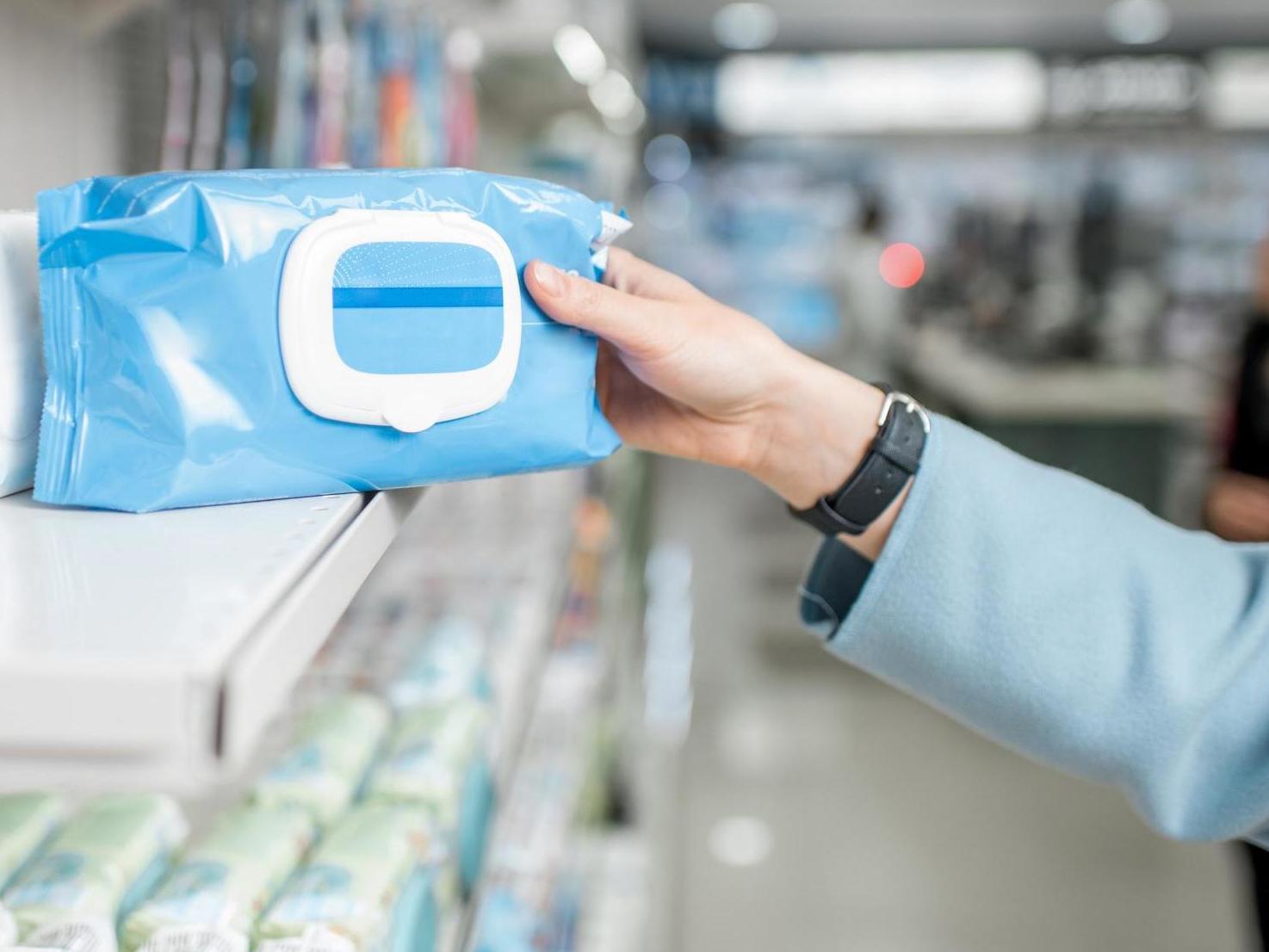
Disposable wet wipes will no longer grace the shelves of Holland & Barrett after the health food firm announced it would stop selling them in a bid to encourage customers to be more sustainable
Described as a “problem product” by sustainability campaigners because of the damage they cause to water systems, they are mostly made out of polyester and contain millions of microfibres.
Now, the high street retailer has said it will remove the 34 products in its wet wipe range in its 800 stores in UK and Ireland. Instead it will sell sustainable, multi-use alternatives, such as cotton pads and exfoliating mitts.
"There is a growing awareness of how much our current throwaway culture is damaging our oceans, beaches and rivers," said the company's head of beauty, Joanne Cooke.
"We want to encourage our customers to think about what they currently throw away and encourage them to swap to more sustainable alternatives. The quickest way for us all to make a positive impact on the world we live in is to choose to spend our money on more sustainable products.
"There are a variety of eco-friendly alternatives to wet wipes that are just as easy, efficient, and safe to skin."
Single-use wet wipes have caused blockages of congealed mass, known as fatbergs, in sewage systems.
These have become increasingly prevalent in the UK in recent years and can cause major issues for water systems.
They also pollute our oceans. The Marine Conservation Society found an average of 12 wet wipes per 100m on UK beaches it cleaned as part of last year's annual Great British Beach Clean project.
Some wet wipes now contain a “fine to flush” symbol, after it was introduced by industry trade body Water UK.
The symbol means these wet wipes do not contain plastic and should not cause blockages in sewage systems when flushed down the toilet.
Jo Ruxton, the founder of Plastic Oceans Foundation praised Holland & Barrett for "taking a clear lead on sustainability by banning one of the problem products we see in our rivers and oceans - single-use, disposable wetwipes - which use the world's precious resources to manufacture, still come in plastic packaging, and still get flushed down the loo or thrown in the bin.
She added that she hoped other retailers would follow suit.
In May 2018, the government vowed to banish wet wipes in the UK as part of environment minister Michael Gove's crackdown on plastic being thrown away and damaging ecosystems.