Hey, everyone …
• Happy holidays to all.
• Here’s this week’s Served podcast where Andy Roddick and I recap the year in tennis.
• We’ll discuss more on the show, but it was a big year for Served and we very much appreciate the audience, your feedback and your role in our growth.
• Indiana football is, for our deflating currency, the best sports story of 2025.
• Shout-out to tennis fan, loyal reader and one of the more special athletes I’ve met, Jason Collins. Spare a thought for this extraordinary human being.
Onward …
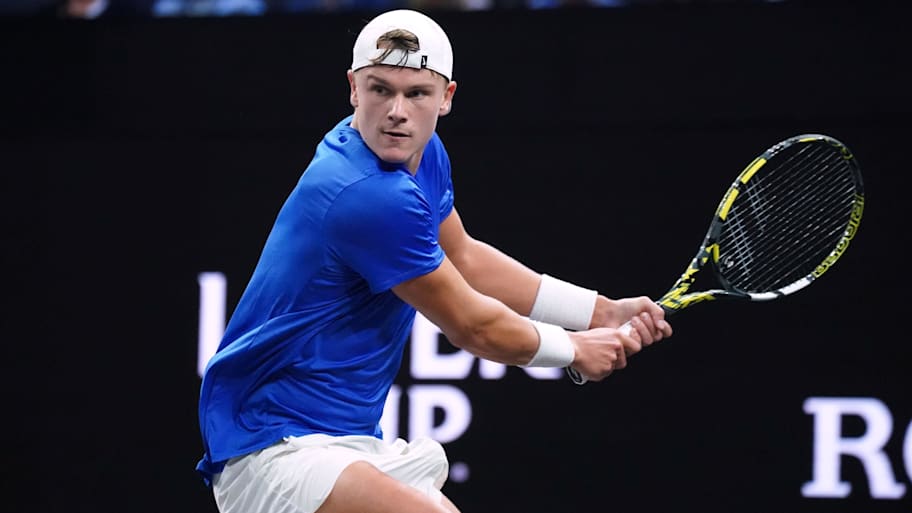
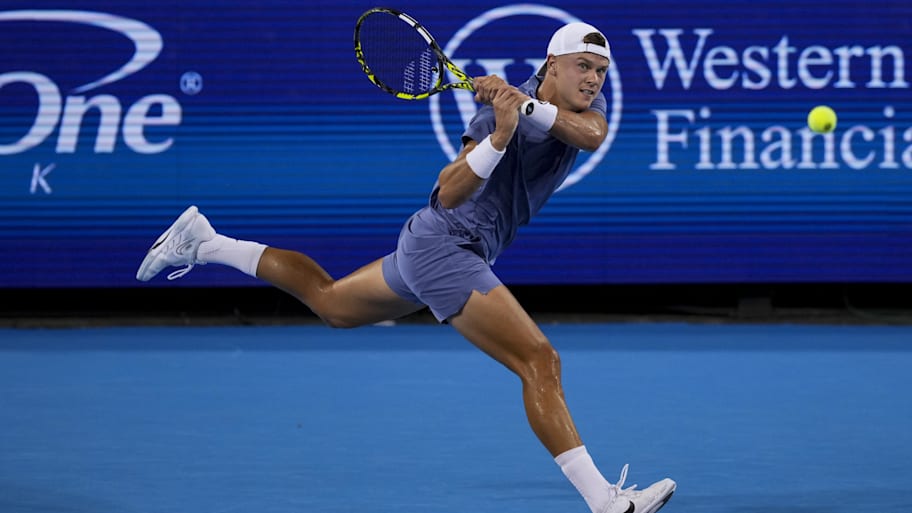
Holger Rune is 22. He’s been ranked as high as No. 4, but still has lots of winning to do. Yet, this we already know about his career. It will be divided into chapters. Everything before Stockholm 2025 and everything after. At that quiet, indoor event—adjacent to his home in Denmark—Rune reached the semifinals. Early in the second set, he dashed for a forehand, as he had countless times before. This time, his Achilles tendon gave out, and he became the latest athlete to suffer from a severe injury that has plagued sports of late.
Exiled from the sport for months—potentially for 2026—Rune has not disappeared. He posts about recovery, issues frequent updates and vows to return to tennis “as a beast,” more mature, more aware and more rested. Between rehab sessions, he sat for an interview with Sports Illustrated.
This interview has been lightly edited for brevity and clarity.
Sports Illustrated: I was thinking, usually we say, How are you? as a throwaway line. But literally, how are you doing?
Holger Rune: It’s rehab right now in Doha, Qatar. So a lot of good people are taking care of me today. Also my team is very closely involved, so it’s going in the right direction. Now it’s exactly seven weeks since they did the surgery, so it’s been slightly quicker than the steps that they were [laying] out for me. So that’s always a good thing.
SI: What are they telling you?
HR: We put some goals up for week by week. Coming here, it was to be out of here walking again. I’m already walking without my boot on, but when I’ll be leaving here, which is Dec. 18, we’ll be walking in normal shoes with a little heel raised in my shoe. So I’m a bit elevated to not torture [myself] because that’s really what you want to avoid right now. We’re loading the tendon almost every day in different ways. We have a day off to recover as well. But we’re doing it really hard, I think, and I have good people that have experienced this injury around me now, so it’s going well.
SI: How are you mentally? What’s been the impact of this psychologically?
HR: Honestly, I had a few days that were tough. But it’s been moments. And I’ve had my family and my team around me from the beginning, which has been very important. It’s meant a lot. I wouldn’t have gone through it the same way without them. Obviously, the day that it happened, it was devastating, and it was tough to swallow. But after that? We have a big challenge ahead of us, and I have to focus on that. I can’t allow myself to be too down … I have so much work that I’m doing, so there is not much time to think about much else.
SI: Even without going to Gasoline Grill [thanks to Clara Tauson for this recommendation] I imagine this is gonna change your body. How are you staying as fit as possible and as toned as possible?
HR: I can say already now, I will be fitter when I get it back in my body. I’m doing a lot of physical effort where I can and where I’m not limited at the moment—which is the core, the upper body. So there are other things to do, and I did it Day 1 after my surgery. I was in a gym doing the upper body. I’m not a guy who can stay still for too long. You know, tennis is not a sport about just getting big. It’s about getting fit. We’re taking care of my nutrition, as I’m not burning as many calories as I do when I’m playing. What I probably will learn from this injury—to the benefit of my body—is accepting that sometimes you need another rest day.
SI: What else is this going to allow you to do, this time off? You’re gonna write a novel or you’re going to learn how to play drums—
HR: My hand-eye coordination and like some kind of different mental training, that’s something we started a few weeks ago. I’ve been trying to read a little bit. So that’s nice. I don’t normally read. That’s a good thing. And then I’ve been really busy with rehab. You know, people say, you can gain new hobbies. I don’t see where I have the time for new hobbies. I’m doing my physio, I’m doing my rehab, I’m doing my strength, things for [the] rest of the body, and then I’m enjoying time with my loved ones, which is so important and makes this time a lot easier.
SI: I know you’ve heard from a number of players on social media and probably privately, what’s the best advice you’ve gotten so far?
HR: I would say the best advice that I’ve gotten so far is a very basic one—about taking your time. When I’m coming back, I’m going to be a beast because there’s no reason for me to come back and not feel ready. So you know, I’m a very eager person. I’m very hungry to come back. At the same time, I want to come back as the best version of myself, a version that doesn’t break, a version that’s unstoppable, a version that can beat everyone, not only one week, but all tournaments. And I think now I have the time to build that person, both physically and when I get back to the tennis court.
SI: What do you think your relationship is going to be with tennis in 2026? Do you think you’ll watch Australia, for example?
HR: After the injury, I was watching a little bit of Paris and Turin. And it gives me the hunger to come back more. I don’t watch every match because I think it’s necessary. But yeah, for sure, I’ll tune in and watch something I love to watch. That is, I’m a big tennis fan myself, so I’m probably not going to be able to not watch and I think that’s totally fine. Then for me coming back, it’s going to be just an amazing feeling, you know. And whenever I have a tough moment, I will remember what’s a real tough moment, right?
SI: It sounds like a very healthy attitude. Are you working with a sports psychologist to navigate this?
HR: Basically it’s my family and everybody around me that has helped me. I just think having good support, a clear picture in my mind of where I want to go has made it very simple for me. I don’t think a mental coach can help you overcome things. I think it’s up to yourself. It’s up to your own mind, how you put it up … I believe that I’m a fast healer. But, of course, I need to respect my tendon as well. But I believe with all positive mindset, with belief, I’m young, I’m doing the right things; the right nutrition; I will heal faster … so that makes me kind of positive.
I also see the process I’m doing, the progress I’m doing every week and every day, and it’s getting bigger and bigger. You know, this next couple of weeks are going to be big, because that’s where I get back to full walking, weight bearing with normal shoes with a little heel.
SI: Are you a basketball fan at all?
HR: There are some guys that I’m watching sometimes.
SI: I ask because there have been a number of basketball players that have also had Achilles injuries recently, and I wonder if the doctors had any explanation to you why we’re seeing this injury more and more in sports now.
HR: I think every player now on the tour is extremely fit. Which makes some players very explosive. I would put myself in there as a very explosive player. And then fatigue is another thing. Scheduling is another thing, the demand of the tour, which just has turned into basically every week from January to end of November, which makes it tougher to recover. … I had a chance to make the ATP Finals in Turin. And of course, I’m not gonna stop—that’s why I don’t regret playing in Stockholm. And I was playing really well. But it’s tough. It’s too many tournaments. The demands of the sport and scheduling is too much for players. And I think not just me. Mine is a big injury, but we’ve seen other players getting injured, not being able to play full calendar. And I think especially the two weeks Masters is completely unnecessary. And I think every player is agreeing on that. I’ve spoken to all the top players, and I feel like they agree on that. But again, I think it’s really good. I mean, we need to be really fit also. And the game is really fit. You know, before maybe it was only the top 50 who were super fit. Right now it’s 250 players that are super fit. So I think it makes a game more physical, for sure.
SI: You think the schedule and the calendar still bears some blame here.
HR: I don’t want to blame anything. But I also don’t believe in bad luck. I believe things happen for a reason. And you know, the main reason of these injuries is fatigue. … We’re still humans, we’re not machines or robots or anything. All of us understand we have to be so fit. We can play five-hour matches, and that’s not every athlete that can do that in sports. So I think we do what we can to be ready now. I think the [ATP] should also have to adapt a little bit to the players. Right?
JW: How do you assess your career so far?
HR: How do you mean?
SI: If this were a movie, what do you make of the story up to this point?
HR: I would say my dream as a kid was to be the best player in the world. So the dream is still ongoing. The dream hasn’t been succeeded yet. I’m definitely playing the tournament that I want. I’m living the life that I always dreamed of. But I’m hungry for more. I’m not satisfied with where I am. I’m proud of many of the steps that I’ve done throughout the journey and stuff. But this is something that I’ve spoken with my team closely about. If I asked myself, like, as a 6-year-old, Would you be happy if this was the end, and I’ll say, No, not at all, I wouldn’t be happy.
So I have so much more work to pursue I feel, and I have so much more that I want to achieve. And that gives me the hunger to keep going, to go for this injury, no matter what it takes to come back, and also be more clear in my mind of what I really want. … I think I can be the best player in the world.
SI: Social media is poison. I hope you know you have 99 fans to every one hater. You have a lot of fans out there. What do you want people to know?
HR: I think I want people to know that I’m in good spirits. I’m fighting with all my heart to come through this injury and I think, all the support from the fans means everything. I miss [competing] so much, and all the messages that I had … it sounds maybe [dramatic] to say, but without them, it’s really not the same. After my injury, there were so many sweet messages, I get all emotional talking about it. But I will be back. I’ll be back a better version of myself, and make them very proud.
SI: You mentioned Roger Federer/Rafael Nadal before. When you come back … are you the guy to take down Jannik Sinner/Carlos Alcaraz? Is that how you see yourself?
More Tennis on Sports Illustrated
This article was originally published on www.si.com as Holger Rune on Injury Rehab: ‘I’ll Be Back a Better Version of Myself’.