The latest cases of infection with the new coronavirus brought the number of confirmed infections in Hokkaido to 52, surpassing the number in Tokyo, which stood at 37 as of Friday noon.
Two of the 52 infected people in Hokkaido have died.
The number of infections, the largest in the nation, drastically increased in various places in Hokkaido as the spread of the disease coincided with the winter tourist season, which is popular among Chinese visitors.
The virus was first detected in Hokkaido on Jan. 28 in a tourist from Wuhan, China. Since the first case of an infected Hokkaido resident was reported in Sapporo on Feb. 14, the virus has spread to a wider range of areas -- including Hakodate, Tomakomai, Nemuro, Asahikawa and Nakafurano.
Given that respiratory infections usually occur in large and densely populated cities, and then spread to rural areas, it is quite unusual that the infections started at the same time in various locations.
"Chinese tourists with the virus may have initially been the source of infection in various parts of Hokkaido," said Sapporo Medical University Prof. Shinichi Yokota, who specializes in microbiology.
According to 2018 statistics by the Japan Tourism Agency, the number of Chinese tourists staying in Hokkaido in January and February totaled 600,000, almost the same as the number of tourists in Tokyo at 700,000, which ranked first.
Besides Sapporo, they visited various places in Hokkaido, including Hakodate and Furano.
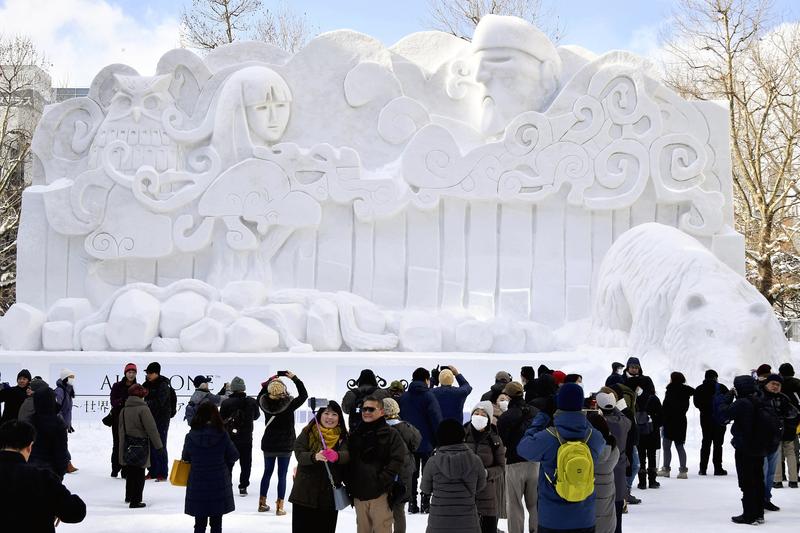
At the Sapporo Snow Festival, which attracted 2.02 million people this year, two staff members were found to have been infected with the virus. It also was found that several infected people from inside and outside Hokkaido had visited the festival before the symptoms appeared.
The risk of infection should not be high as the venue is outdoors, but Yokota said, "The possibility cannot be ruled out that the infection spread via hotels, restaurants and tourist facilities."
In Hokkaido, where it is extremely cold, the airtightness of buildings and the use of underground pedestrian passageways might have increased the risk of infection, observers said.
"People tend to stand closer to each other in winter in Hokkaido, which may make them susceptible to airborne droplet infection," said Juntendo University Prof. Satoshi Hori, who specializes in infection control.
There are 252 public health nurses, including part-time workers, who conduct epidemiological survey work for the Hokkaido public health center. But the number is not enough to trace all routes of infection, sources said.
The center is accelerating its investigation of the cases with the help of experts who are being dispatched from the National Institute of Infectious Diseases to places in Hokkaido.
"Initially, the infections occurred mainly among Chinese, but it is now thought there have been multiple 'cluster' outbreaks among Japanese," said Tohoku University Prof. Hitoshi Oshitani, who also is a member of a government panel of experts.
"The only way to stop the spread of infection is to conduct thorough epidemiological studies and contain the clusters," he said.
Read more from The Japan News at https://japannews.yomiuri.co.jp/