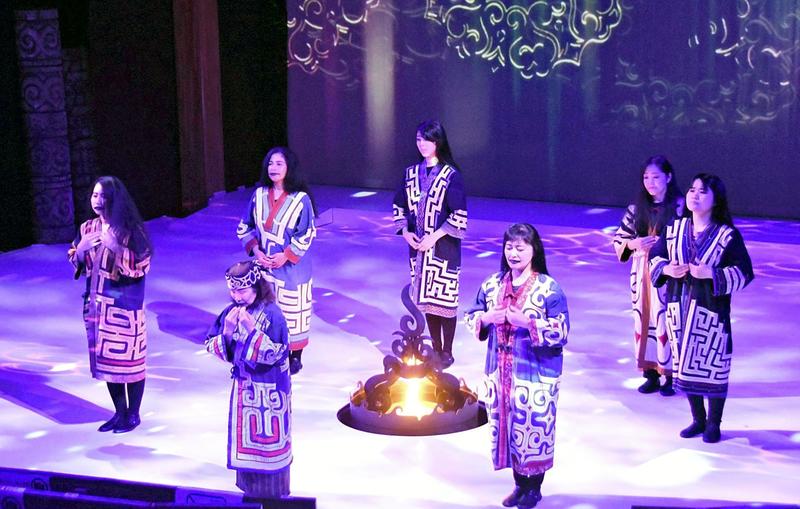
KUSHIRO, Hokkaido -- A dynamic stage performance that combines Ainu ancient ceremonial dance and contemporary dance is gradually attracting visitors again at a theater in Kushiro, eastern Hokkaido, after the performance was suspended due to the coronavirus pandemic.
"The Ainu believe that everything in the world has a soul. Typhoons, earthquakes, everyday tools, plants and animals, all are gods or kamuy," said Mari Natsuki, a famous actress in Japan, in her narration in the opening of the production "Lost Kamuy."
The Ainu are Japan's indigenous people, mainly of Hokkaido, and the word "kamuy" means gods in their language.
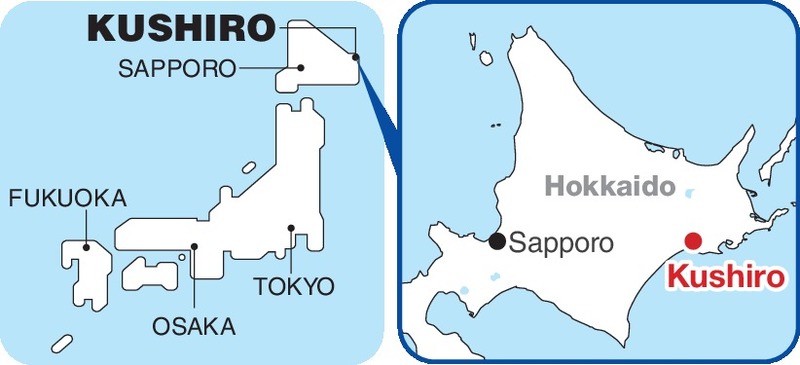
Kushiro is a place where the Ainu culture is deeply rooted. The Lake Akan Ainu Theater Ikor is located in Akanko Onsen, a hot spring resort on the coast of Lake Akan, in the city.
"Lost Kamuy" is an about 30-minute stage show that stresses the importance of coexistence, as it deals with the extinction of Hokkaido wolves or ezo-okami, which the Ainu people had feared. This is a popular performance that has been seen by a total of about 21,000 people since April of last year, far exceeding the target of 15,000.
"I was drawn into the story by the powerful acting," a 65-year-old woman said. She came to the theater from Kitami, which is located farther north than Kushiro, to see the play in early July.
The dancers and backstage crew are mainly local Ainu. Kayo Watanabe waves her long hair in the air to represent a pine tree swaying in a strong wind.
"Ainu dances are performed for the kamuy to watch. I've been dancing since I was little, so my body moves naturally," the 49-year-old dancer said.
A digital image of a band of light flowing behind a running wolf was created by stage supervisor Shusei Toko, 54, who was inspired by a yukar, an epic handed down from Ainu ancestors.
"I hope that many people, including the younger generation, will be able to learn about the Ainu culture, which is enhanced by modern technology," he said.
The Ainu culture is in danger of disappearing due to a set of assimilation policies that was enacted in the late 19th century under the government in the Meiji era (1868-1912). Some Ainu had given up speaking about their culture to their descendants, and others mocked their dance performances in what is referred to as "Ainu tourism."
But Toko has lived in a kotan Ainu village on Lake Akan as a woodcarver and has been proud of his people's culture.
"We have used our culture as a means of making a living. And we've been thinking every day about how to get people to come to our shows," he said.
Toko believes that it is important to have a place to dance, which will lead to a revival of Ainu culture, because he sometimes hears his friends saying that their pride in being Ainu has grown as a result of being on stage in "Lost Kamuy."
The problem is how to increase the number of repeat visitors to Lake Akan. In order to encourage people to come back to the theater again and again, "Lost Kamuy" has also been further refined. One of the measures was adding popular actress Mari Natsuki as a narrator in April of this year. The replacement of a male dancer with a female dancer in the role of a wolf has also added strength to the show.
The Kushiro city government has set a target of increasing the number of overnight guests at Lake Akan to 700,000 in 2023, an increase of 100,000 over the current number. The municipality will mainly use subsidies from the central government to support guided tours by the Ainu people and other activities.
"Now that many people are tired of the coronavirus, it's the time for us to perform," said Masao Nishida, 74, representative director of the Akan Ainu Industrial Arts Association, which runs the theater. "I hope that people will be soothed and enriched through the experience of Ainu culture."
Read more from The Japan News at https://japannews.yomiuri.co.jp/