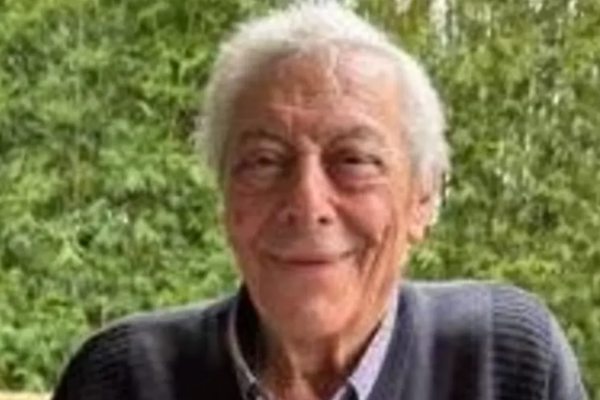
(Bloomberg Businessweek) -- Hong Kong’s richest man broke his silence on Aug. 16. Li Ka-shing, the nonagenarian founder of CK Hutchison Holdings Ltd., the city’s most important conglomerate, published statements in Chinese- and English-language newspapers urging a halt to the unrest wracking the territory.
Li was the most prominent of a group of local property tycoons throwing their weight behind Hong Kong Chief Executive Carrie Lam’s calls for calm. Among those also making statements were Peter Woo, retired chairman of Wheelock & Co., one of the city’s largest landlords, and Henry Cheng, head of a property-to-jewelry empire that’s building a HK$20 billion ($2.6 billion) shopping-and-entertainment complex at the city’s airport. Meanwhile, Adam Kwok, executive director of Sun Hung Kai Properties Ltd., the city’s largest developer, joined a pro-government rally on Aug. 17.
Hong Kong’s billionaires have good reason to discourage the demonstrators. The tumult is hitting many of their businesses as tourists cancel their trips and stores along protest routes shut their doors. The economy will contract 0.3% this year, and property prices could decline up to 10% in the next 9-12 months, according to a Morgan Stanley forecast. There’s also the possibility that, once the unrest subsides, the government will take aim at policies that have helped property developers accumulate huge fortunes in a city where homeownership is out of reach for millions of ordinary people.
Besides demanding universal suffrage and other political reforms, many of the protesters are frustrated with Lam’s inability to make the city more affordable. Addressing those concerns means challenging the property barons, according to Regina Ip, a pro-Beijing lawmaker who calls the current crisis “a turning point for Hong Kong.”
The outsize role of a few family-owned conglomerates is a legacy of colonial rule. Under the British, land couldn’t be bought outright but had to be leased from the government, an arrangement that guaranteed a steady flow of revenue into state coffers. The system, which endured after the handover to China in 1997, constrained the supply of residential and commercial real estate, enriching a few well-connected local families such as the Lis.
Hong Kong’s tycoons leveraged their money and connections to expand into such sectors as telecommunications, hotels, logistics, and retailing. They invested in projects across the border, winning the trust of leaders in Beijing and gaining perks such as seats on government bodies including the 1,194-member election committee that selected Lam to lead the Hong Kong government in 2017.
Consensus is building across the political spectrum that the cozy relationship between property developers and Hong Kong’s rulers constitutes a threat to stability. Ever-rising real estate prices have widened the divide between the haves and have-nots, supplying additional fuel for the unrest, says David Dodwell, executive director of the Hong Kong-APEC Trade Policy Study Group, a local think tank. “The pressure is on the property barons,” he says. “Because housing is such a critical social issue now and emotionally distills the crisis, they are going to be in the firing line in a way that other sectors are not.”
For Lam, shifting attention from her failed extradition bill toward economic reforms is an attractive option, according to one of her advisers. Her administration is working on proposals to address basic problems that previous governments have long neglected, says the adviser, who asked to remain anonymous because the discussions are confidential.
Some developers have amassed large property holdings that they’ve yet to develop, exacerbating the housing crunch. Henderson Land Development Co. controls more than 45 million square feet of agricultural land, an area slightly larger than New York City’s Central Park, while Sun Hung Kai has an additional 31 million square feet. All this acreage could support tens of thousands of new homes, helping to bring down prices across much of the city.
To spur construction of apartments, politicians say Lam should resort to a rarely used resumption law (akin to eminent domain) that allows the government to take back land and put it to public use. “The government has to explore every means to increase land supply,” says Starry Lee, chairwoman of the Democratic Alliance for the Betterment and Progress of Hong Kong, the city’s largest pro-Beijing party. “If they cannot engage in a healthy dialogue with the tycoons, then the government should resume the land.”
“President Xi Jinping has said houses are for living in, not for speculation”
Local property developers aren’t the only companies that could be affected. Hong Kong Disneyland, a venture between Walt Disney Co. and the local government, has an option for an additional 6.5 million square feet near the theme park, whose attendance projections have fallen short since doors opened in 2005. The lot set aside for an expansion of the park has been sitting vacant for years. It’s time for the government to take it back and develop it for public housing, Lee says.
Many of Hong Kong’s conglomerates are better positioned than in the past to withstand challenges at home. CK Hutchison last year got 15% of its revenue and just 2% of its net income from Hong Kong, down from 21% of revenue and about 5% of profit in 2015. More than half of the group’s revenue and earnings comes from Europe, where its business units operate trains, telecommunications networks, and utilities. On Aug. 19, CK Asset Holdings agreed to pay £2.7 billion ($3.3 billion) for British pub, restaurant, and hotel operator Greene King Plc.
Read more on Hong Kong’s unrest:
- China’s Warning to Global CEOs: Toe the Party Line on Hong Kong
- Hong Kong Faces Worst Earnings Recession Since the 2008 Crisis
- Why Hong Kong’s Still Protesting and Where It May Go: QuickTake
Hong Kong’s superwealthy also have practice navigating policy turbulence. After years of debate, the city finally enacted a competition law in 2015, but opposition from business led lawmakers to water down the legislation before approving it, says Sandra Marco Colino, an associate professor at the law school of the Chinese University of Hong Kong. In the almost four years the statute has been in effect, the government has initiated only four cases.
The scope for meaningful change may be limited by the political reality that Lam can’t afford to alienate a powerful constituency when millions of Hong Kong residents are calling for her resignation. “I still think the government is pretty conservative when it comes to policymaking,” says Tommy Wu, a senior economist in Hong Kong with Oxford Economics, who discounts the likelihood of major reform from Lam’s administration. “To me, it looks like they are tinkering on the margins.”
On the other hand, Lam’s taking on the tycoons may ensure that she retains the support of China’s top leadership, which views rising income inequality as potentially destabilizing not only to Hong Kong but also to the mainland. “President Xi Jinping has said houses are for living in, not for speculation,” says Andrew Wan, a member of the legislature from the Democratic Party, which has called on Lam to step down. “Tackling Hong Kong developers would be in line with his views.”
To contact the authors of this story: Bruce Einhorn in Hong Kong at beinhorn1@bloomberg.netShawna Kwan in Hong Kong at wkwan35@bloomberg.netXiaoying Zhao in Hong Kong at xzhao306@bloomberg.net
To contact the editor responsible for this story: Cristina Lindblad at mlindblad1@bloomberg.net
©2019 Bloomberg L.P.