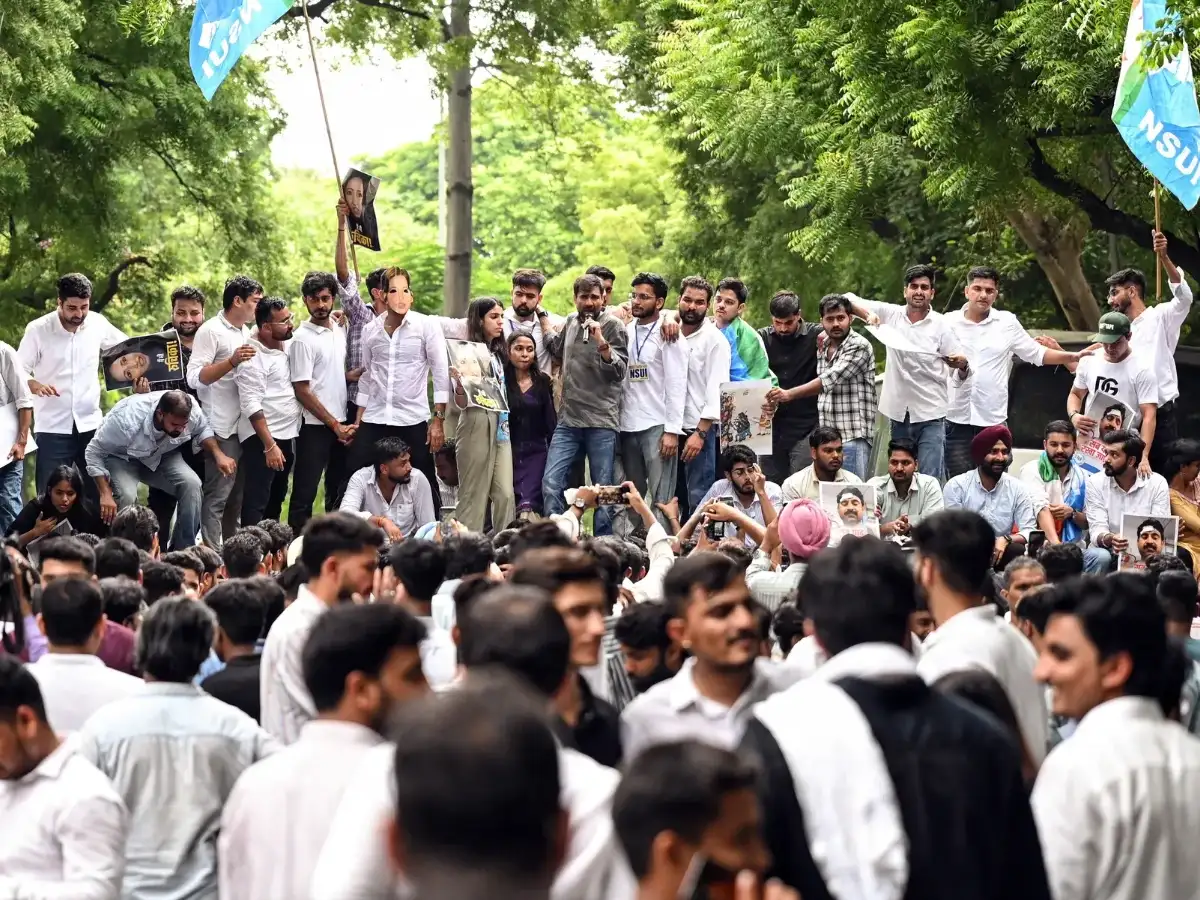
The Delhi Police has stood by its controversial July 20 decision to use force during the "Chalo Sansad" protest in Delhi, telling the Supreme Court that the agitation was hijacked by "anti-social elements" and “history-sheeters”, resulting in a breakdown of law and order that left more than 240 police personnel injured.
The Delhi Police affidavit, filed by Deputy Commissioner of Police Sachin Sharma of the New Delhi district in response to a batch of petitions alleging excessive use of force against protesters, said the force was willing to have its actions examined by a court-appointed panel.
"The use of force by police can be gone into by a Committee appointed by this Hon'ble Court and the Delhi police will fully cooperate with such Committee and provide all details necessary.
"At the cost of repetition, it is submitted that since a Committee may be appointed by this Hon'ble Court which will examine all the issues related to use of force by the police officials,” it said.
On August 3, a bench headed by Chief Justice Surya Kant, while hearing petitions on the issue, had clarified that the expression "criminal antecedents" in its order on releasing student protesters referred only to those involved in grave and heinous offences. It had also said states could close or withdraw FIRs against the remaining students in accordance with law.
The affidavit said more than 30,000 people, including alleged miscreants and anti-social elements, had gathered in and around Jantar Mantar on July 20 during the protests, which later turned violent.
Also read | New age limit for EV, hydrogen & CNG vehicles on way
The police said the protest had initially been permitted, but the permission expired on July 20. Despite this, the gathering continued and a subsequent call for a march towards Parliament led to a sharp increase in mobilisation.
The affidavit said protesters subsequently crossed several layers of barricades and did not comply with police instructions to remain within the designated area. The situation, according to the police, deteriorated as attempts were made to move towards Parliament on the opening day of the Monsoon Session.
The force said its responsibilities included protecting people and public property and preventing protesters from reaching sensitive locations. These included Parliament, Rashtrapati Bhavan, Seva Teerth, Kartavya Bhavan, central government offices and residences of Union ministers.
The police also cited injuries sustained by its personnel. More than 240 police officers were injured during the violence, it said, adding that the injuries suffered by protesters and police personnel should both be examined during an impartial investigation.
The affidavit said the police had video and other digital evidence showing groups of protesters allegedly attacking individual officers with stones and sticks. It argued that the use of force became necessary only after the barricades were breached and violence began.
At the same time, the Delhi Police acknowledged the right to peaceful protest as a fundamental right. It said the issue arose when a peaceful gathering became violent and posed risks to people, police personnel and public property.
Also read | Cut, copy, paste: Another exam cancellation brings NTA's question papers under spotlight
The police also told the court that it would cooperate with any independent committee appointed to examine its conduct during the protest. It said all relevant information and records could be made available to such a panel.
The affidavit comes amid petitions before the Supreme Court alleging excessive use of force against protesters. The court had earlier clarified that references to “criminal antecedents” in its order concerning the release of student protesters applied only to those accused of serious and heinous offences.
The police said any eventual investigation would need to consider the complaints raised by protesters as well as the injuries and grievances of officers deployed at the protest site. It maintained that the circumstances surrounding the use of force should ultimately be assessed on the basis of evidence and a detailed inquiry.