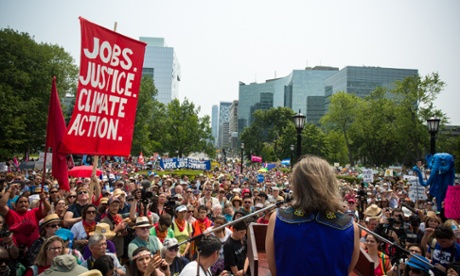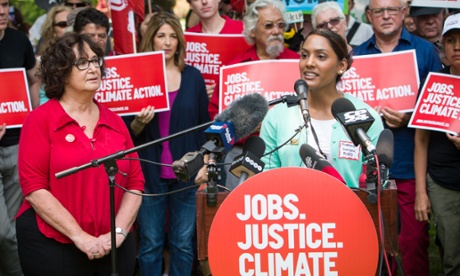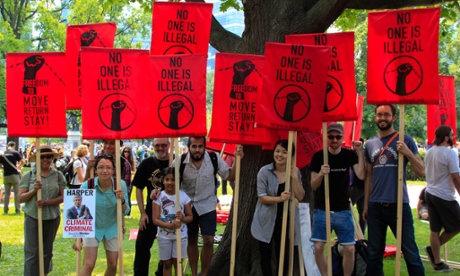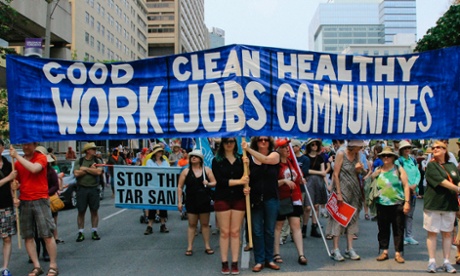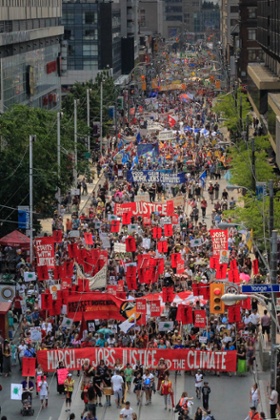
Demonstrators from a huge diversity of organizations marched boisterously through downtown Toronto on Sunday calling for a paradigm-shift in how climate change is addressed.
Not a typical protest of environmentalists, it attracted labour unions, First Nations, anti-poverty and faith groups, health workers and immigration rights activists who all underlined the need to change an economic system so it “works for people and the planet.”
Marchers carried banners broadcasting a wide range of demands but were united around a single message: that tackling climate change can make society much more fair and equitable.
It was the largest march related to climate change in Canadian history, outside of the province of Quebec, attracting more than 10,000 participants according to organizers, though some police estimated the number as high as 15,000.
One organizer from an anti-poverty group called the march, which came in the lead-up to a Pan American climate and economic summit in Toronto, the “launch of a powerful new movement.”
Marchers chanted for an end to the federal Harper government, some for fossil fuel divestment, other for vast investment in renewably energy and accessible public transit, increases to the minimum wage and affordable housing, and respect for the rights of Indigenous peoples, who live on lands across Canada that hold huge fossil fuel deposits, including Alberta’s tar sands.
“If we treated the climate change as the emergency it is, we would create many more times the jobs than we have now, and in the way we design the next economy, we could make sure that we don’t repeat the failures and injustices of the last one,” said author and activist Naomi Klein, who attended on the heels of an “unlikely alliance” struck between her and Pope Francis over his climate encyclical.
While it has been rare to see unions, environmentalists and First Nations march side-by-side, organizers believe these are very much “likely alliances” that will lay the foundation for more actions and campaigns bringing pressure to bear on policy-makers in the run-up to the UN climate negotiation in Paris in December and beyond.
The march’s diversity even attracted the star power of US actor Jane Fonda.
“I’m here because I think that the coalition that is represented in today’s march and rally, and not just today but ongoing in Canada — First Nations, labour unions, working people, students — this is the kind of coalition that will make the difference,” she said.