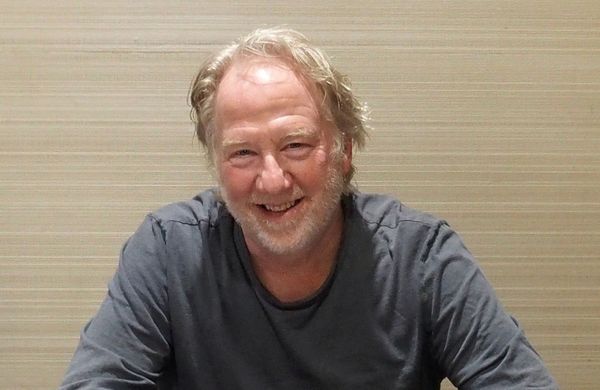
Ford Motor Co. has hired away Coca-Cola's image historian, who will essentially sculpt Ford's story and seek to reframe how America and the world think of the carmaker.
In recent weeks, Ford brought aboard Ted Ryan an Atlanta native who swore after 21 years of doing what he loves that he'd never leave Coca-Cola or Georgia.
"Ford is the only brand in the world I would have left Coca-Cola to go to," he said.
It goes beyond the story of Henry Ford, who left the family farm in the 1870s near Dearborn to apprentice at the Michigan Car Co., a railcar manufacturer in Detroit. Soon after he devised the first mass production of cars in America.
Ryan will collect physical and digital artifacts, help with communications, marketing, product development and weave the legacy of the company into the narrative of where it's headed.
"If you have history on your side, how do you make it relevant? How do you make people care?" said Jennifer Flake, executive director of communications at Ford. "This is what Ted does successfully."
Ryan has a global reputation, and he is a past chairman of the business archives section of the Society of American Archivists. Before working for Coca-Cola, he worked at the Atlanta History Center, where he curated the Atlanta Braves Museum at Turner Field and the Bobby Jones Golf Collection. He won an Emmy as an associate producer and researcher for a documentary on minor league baseball in the South.
"What I do is organize, disseminate and preserve the history of a corporation," Ryan said. "I'm reading book after book on Ford now. At its core, we preserve the materials to tell the story of the corporation, automobiles, the brand. We preserve those for the future with an eye toward activating the materials in a meaningful way that helps the business."
His past work included how to license, promote and market the famous Coke bottle that turned 100 in 2015.
"I'm not there to tell anyone how to do advertising." Ryan said.
Instead, his role is to inspire and encourage colleagues to think about things in a different way.
"When you wax nostalgic, there's always a feeling of comfort. This gives Ford a lot of credibility. It shows they're the original innovators, and that's cool," said advertising executive Robert Davidman, a partner at The Fearless Agency in New York.
At Coca-Cola, for example, Ryan worked on the centennial campaign for more than two years. A highlight was an exhibit developed for the High Museum in Atlanta featuring the history of the bottle and it was used in artwork by Andy Warhol and others.
Mark Truby, vice president of communications at Ford, led an international search that resulted in Ryan's hiring.
"Ensuring we preserve Ford's history and leverage it properly has always been important," Truby said. "Our unique provenance and heritage, 115 years of ideas, innovation and progress is an advantage for Ford. When brought to life in a modern context, heritage can build reputation and link past innovations to today, building trust in our ability to lead in the future."
Marcus Collins, a Ross School of Business lecturer at the University of Michigan, said the strategy "allows the brand to preach the gospel about its conviction and evoke a sense of trust because of its tenure. This requires walking the fine line between 'old' and 'experienced.'"
Pepsi is currently running a legacy archival campaign to say it is now, and always has been, the choice of generations, Collin said.
Using the legacy approach will effectively assist Ford as its direction has changed over the past year to go beyond the traditional car industry.
"I imagine the brand will use the legacy approach as a pivot to signal a widening of their business," Collins said. "That is, they're not in the car business, they're in the mobility business."
Few people in the U.S. or worldwide know the story of Ford as it relates to the growth of a nation, assisting with World War II and unprecedented wage support for working families, analysts said.
Ryan, the son of an interior decorator and an industrial laundry owner, graduated from Emory University in Atlanta with a bachelor's degree in history. He and his wife have purchased a home in Royal Oak, "a beautiful 1922 fire alarm building built to house the volunteer fire department." He'll commute from Atlanta until his youngest child finishes school.
"I never thought I would leave Atlanta. Just the idea would've made me laugh," Ryan said. "I do have some questions about Detroit. Like, why is the Coney Island hot dog such a big deal 600 miles from Coney Island? And the snow. I'm worried about the snow."