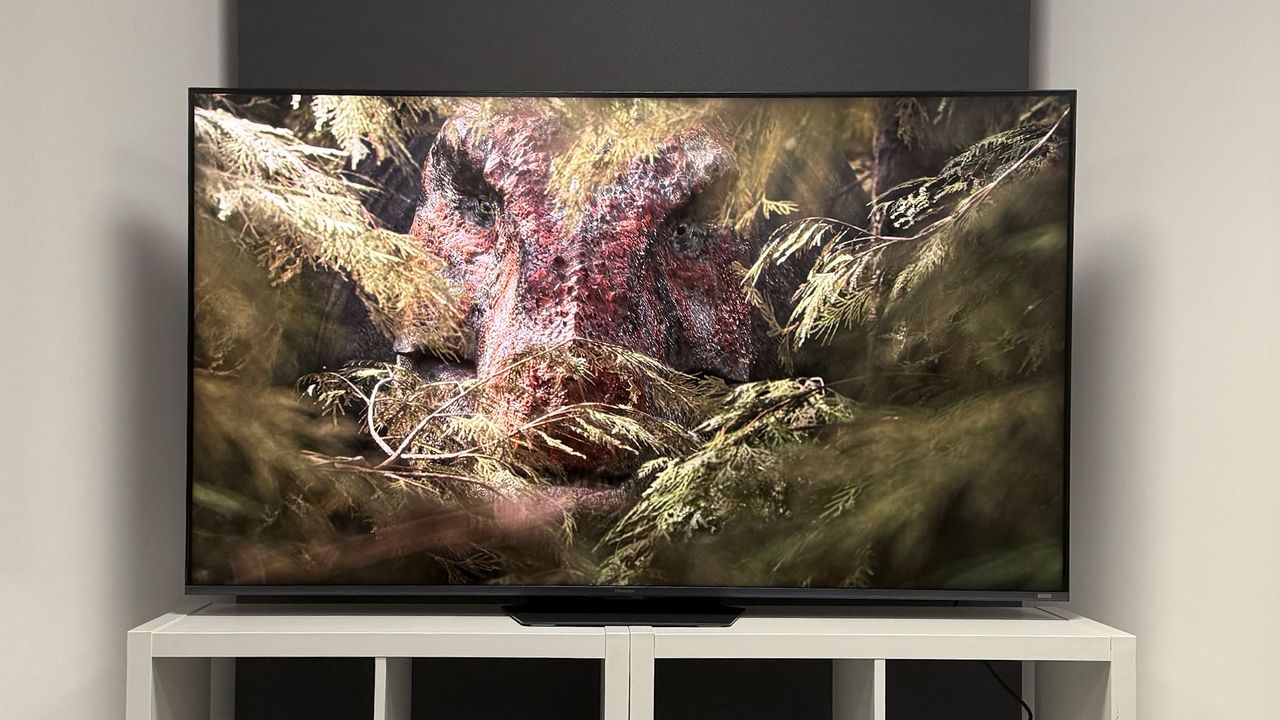
Here it is, folks: our first full review of an RGB Mini LED TV.
We have previously run extensive hands-on tests of a couple of RGB Mini LED TVs – most notably the huge Hisense 116UX – but, due to their astonishing sizes and prices, we’ve had to do the testing outside our own facilities. In our world, that’s not a full review, so those TVs haven’t received star ratings.
The 65-inch Hisense UR9 we have before us today is designed to address the size and price issues that have until now prevented more people from hopping on the RGB Mini LED bandwagon.
This set, then, is leading the mainstream RGB Mini LED charge. And, while it’s a fair way short of perfect, particularly next to a flagship OLED TV, the UR9 is an impressive TV in its own right and a tantalising glimpse at the technology’s long-term potential.
Price
Price is always a hugely important factor whenever we test a product, but it’s particularly crucial to how the Hisense UR9 will be viewed.
In the UK, the launch price of £2999 places the 65-inch UR9 in the same category as flagship OLED TVs such as the new LG G6 and last year’s Award-winning Sony Bravia 8 II.
In Australia, though, the AU$3999 price puts the Hisense UR9 up against step-down OLEDs such as the LG C6.
Most interestingly (and confusingly), while the announced launch price in the US was a super high-end $3500, when the TV actually arrived in shops, the tag was a vastly cheaper $2000, placing the UR9 in an entirely different category, below even step-down OLED models.
Essentially, then, this Hisense is a rather different proposition in each of those three regions. Seeing as we are UK-based and it’s a UK sample we’re reviewing, though, it’s the UK price that we are primarily working with here. And that means the UR9 is going to have to face off against the mighty Bravia 8 II QD-OLED.
Design
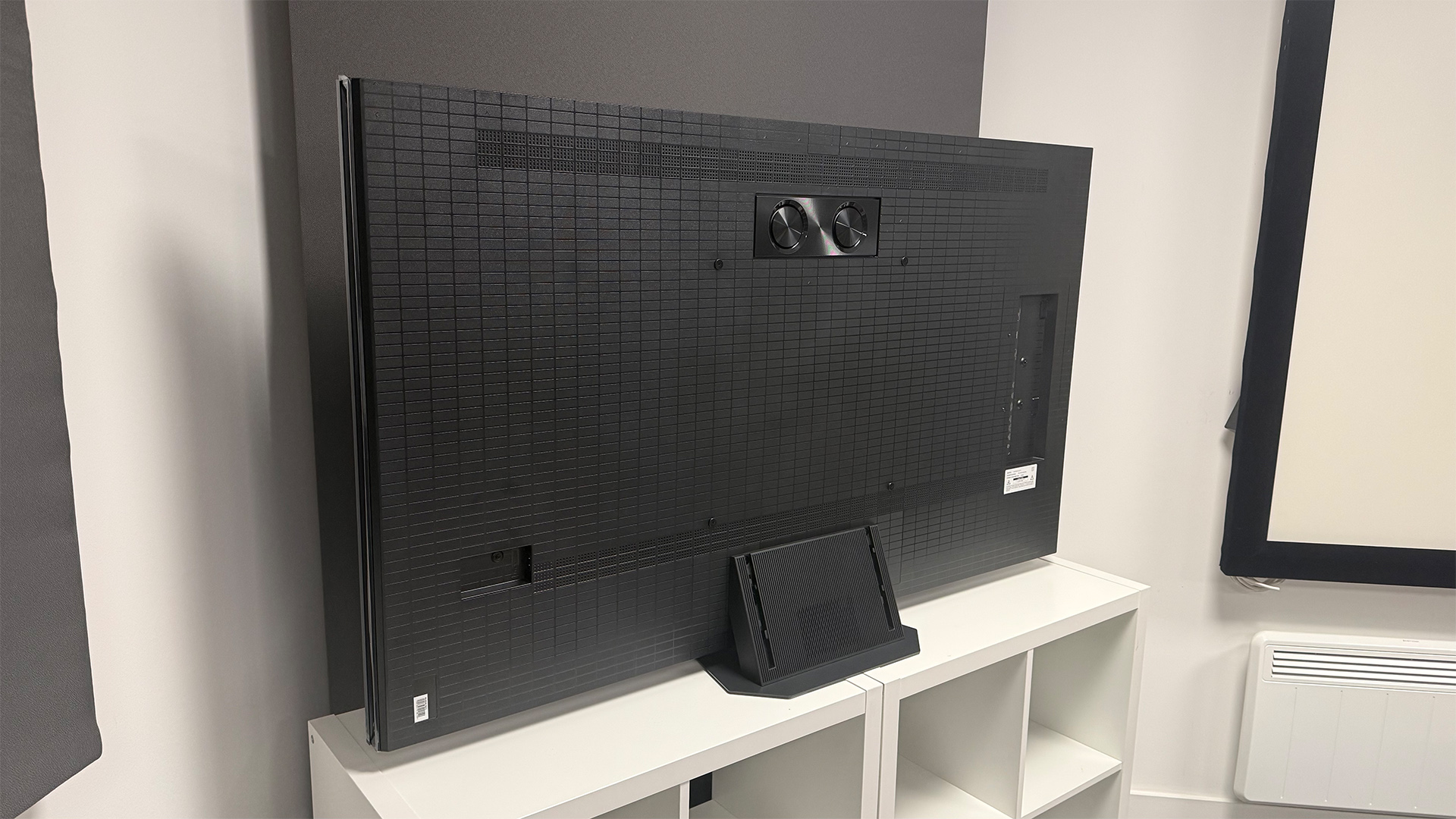
The Hisense UR9 is not one of those modern flagship TVs that disappears into your living room.
At 4.5cm thick, it’s decidedly chunky by current premium TV standards, particularly next to the impossibly slim OLED models with which it competes on price.
The rear panel is completely flat, though, which makes the UR9 fairly tidy for wall-mounting, and the overall build feels solid and substantial.
The TV’s general styling is perfectly pleasant, too, though it stops short of being genuinely luxurious. Bezels are slim enough, the dark metallic finish is smart, and the overall aesthetic is clean and restrained, but the UR9 lacks the slick elegance and premium flair of rivals such as the Sony Bravia 8 II and Samsung S99H/S95H.
Hisense has made some nice, practical decisions, though.
The centrally mounted pedestal stand has a relatively narrow footprint of around 42cm, making the UR9 easier to place on narrower furniture than many similarly sized rivals. It also offers two height positions, allowing you either to keep the screen sitting low and tidy or raise it slightly to create extra clearance for a soundbar.
Rows of tiny perforations run down both sides of the set, while larger openings line the top edge. These house the UR9’s side- and up-firing speakers, which form part of its integrated Devialet sound system.
Overall, then, the UR9 is more functional than fashionable – a practical, purposeful TV rather than a particularly glamorous one.
Features and specs
Screen size 65 inches (also available in 75 and 85 inches)
Type LCD (VA)
Backlight RGB Mini LED (980 dimming zones)
Resolution 4K
HDR formats HLG, HDR10, HDR10+, Dolby Vision
Operating system VIDAA
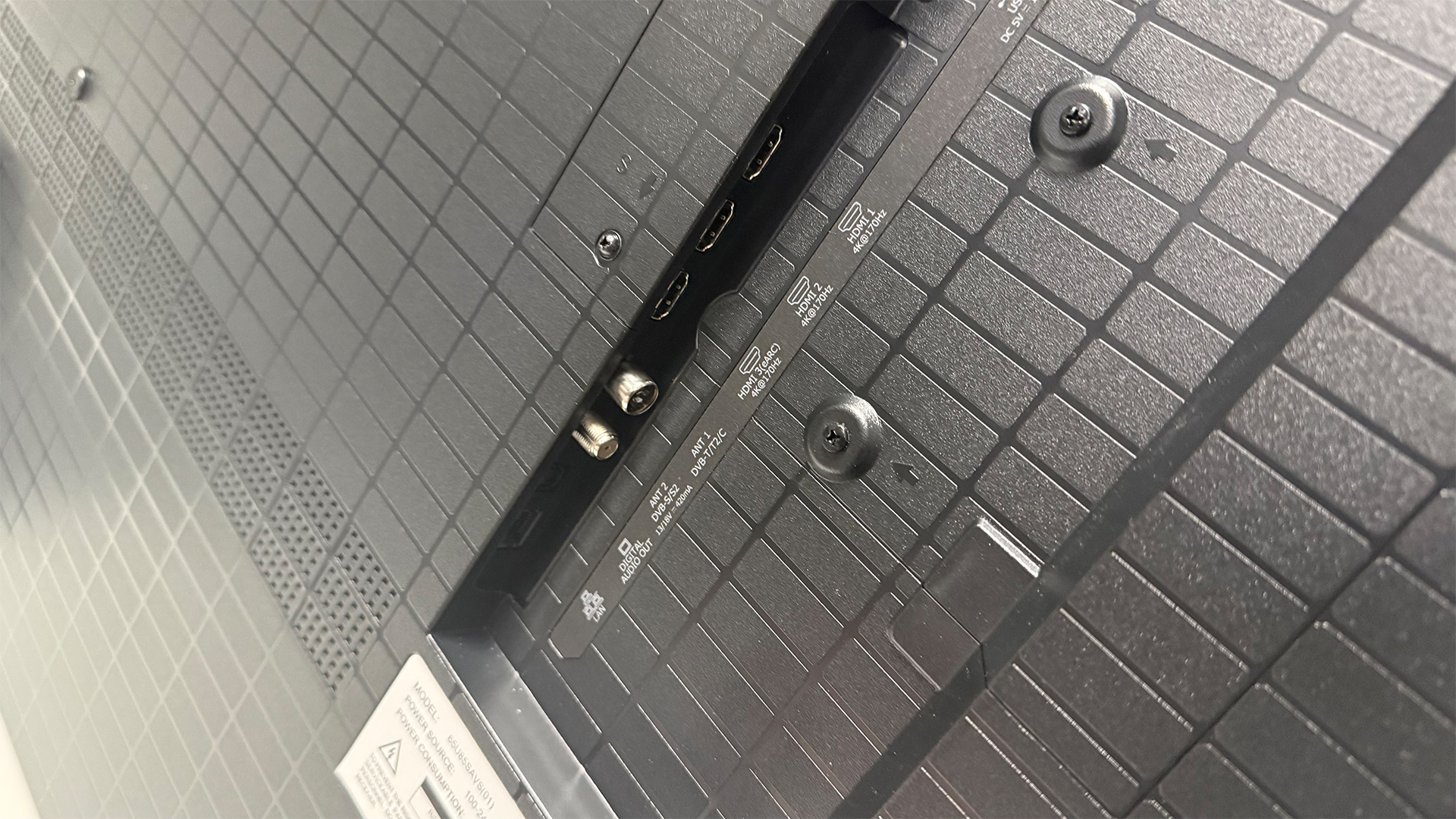
HDMI inputs 3 (all 48Gbps HDMI 2.1)
Gaming features 4K/170Hz, 4K/120Hz, VRR, ALLM, Dolby Vision game mode
Input lag 24.6ms at 60Hz
ARC/eARC eARC
Optical output? Yes
Dimensions (hwd, without stand) 84 x 145 x 4.5cm
The headline feature here is, of course, the UR9’s RGB Mini LED backlight.
Unlike a conventional Mini LED TV, which uses a white backlight shining through a colour filter layer, the UR9 instead uses separate red, green and blue Mini LEDs to generate colour directly. In theory, this approach allows for both greater brightness and more precise colour reproduction.
Hisense claims peak brightness of up to 3500 nits for the 65-inch model we’re testing here, alongside 980 local dimming zones and a native 170Hz panel, all driven by the company’s Hi-View AI Engine RGB processor.
Gamers are generally very well served – with one unusual caveat. Unlike most premium TVs, which have four HDMI sockets, the UR9 has just three. These are accompanied by a PC-gaming-friendly DisplayPort connection – something that remains extremely rare on TVs.
Is a DisplayPort connection more valuable than a fourth HDMI socket? We have our doubts, but to a small number of very committed PC gamers, it may be very useful.
All three of the HDMI sockets are 2.1-specified, though, with support for 4K/170Hz (and the console-friendly 4K/120Hz), VRR and ALLM. Some brands, including Sony, still offer just two HDMI 2.1 sockets on their TVs.
The UR9’s input lag is decent rather than exceptional. We measured 32.5ms at 60Hz in the standard Game mode, though enabling the Refresh Rate setting reduces that figure to a more respectable, though far from groundbreaking, 24.6ms.
The UR9 supports every significant HDR format currently in use – HLG, HDR10, HDR10+ and Dolby Vision – plus the intelligent Dolby Vision IQ and HDR10+ Adaptive variants that respond to ambient room lighting conditions.
It is also IMAX Enhanced certified, and the UK version of the TV features an anti-reflective, anti-glare screen coating that proves fairly effective at combating bright-room reflections.
Audio specifications are unusually ambitious by TV standards, too. The UR9 features a Devialet-tuned 4.1.2-channel speaker system with dedicated up-firing drivers, plus support for both Dolby Atmos and DTS:X soundtracks.
In the UK and Australia, the UR9 runs Hisense’s own VIDAA smart platform, while the US version instead uses Google TV.
VIDAA still isn’t the prettiest smart system around, but it’s fast, responsive and logically laid out. App support is broadly very good, too, with all of the major streaming services and UK catch-up apps present and correctly supporting the relevant picture and sound formats.
There are, however, a few frustrating omissions. Most notably, the Apple TV app lacks access to the Apple TV store and users’ purchased libraries, so it can’t be used for movie purchases and rentals. That’s a real disappointment, as Apple’s pay-as-you-go store is the best around.
While far less important for a TV, it’s worth noting that music streaming support is sparse, too, with Spotify, Tidal, Apple Music and Qobuz all absent. There are no cloud gaming apps, either.
The inclusion of Freely is welcome, though, as it allows live TV channels to be streamed over the internet without an aerial connection.
Picture quality
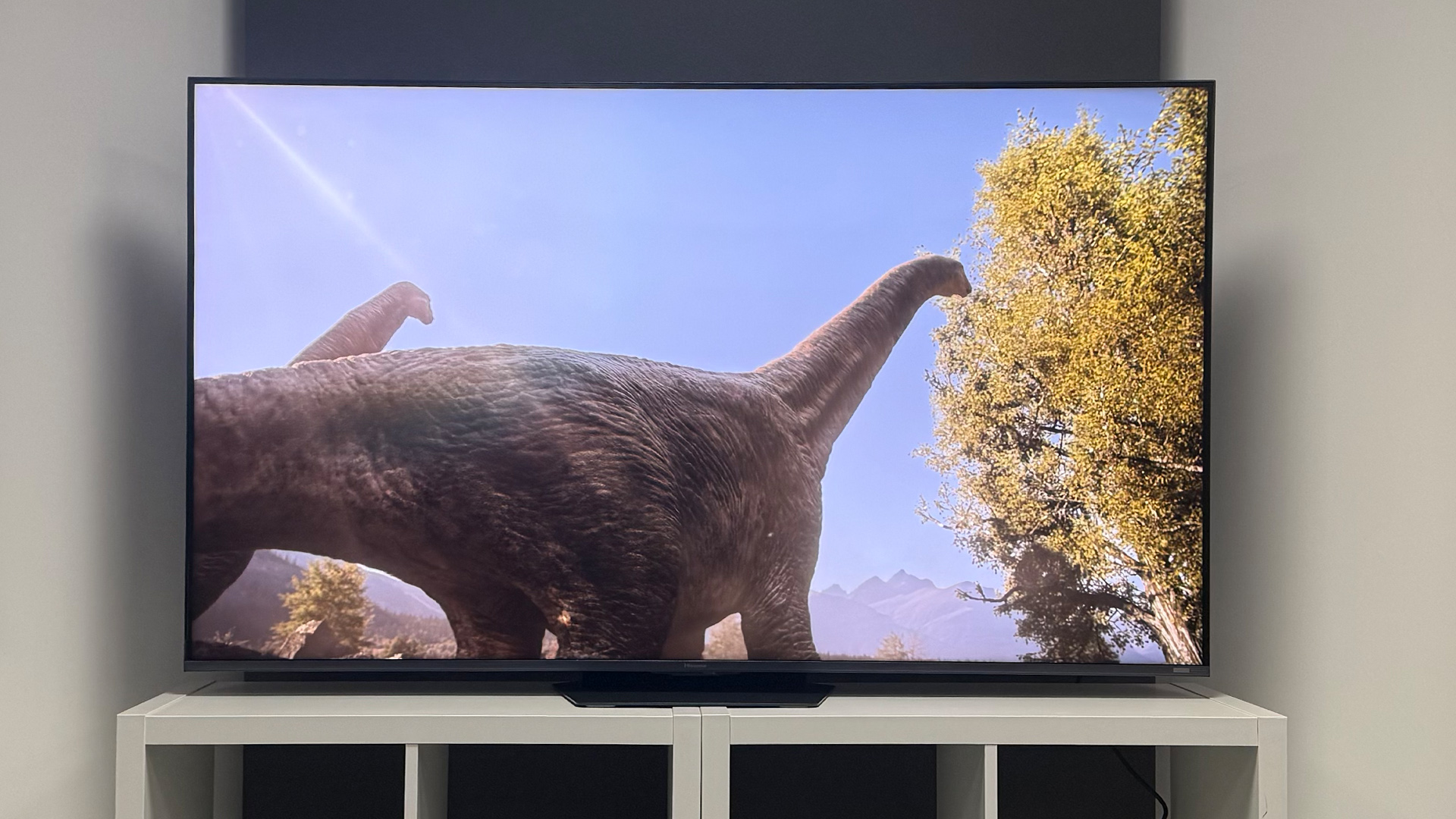
The Hisense UR9 makes a superb first impression. In fact, perhaps the most impressive thing about it is just how rarely it behaves like a traditional backlit TV.
Before getting into that, though, some setup advice is required, because the TV’s default HDR settings do it few favours.
When first fed HDR10 content, the UR9 automatically switches into its HDR Energy Saving mode which, despite its name, is surprisingly aggressive. Colours skew cool and bluish, motion processing is overly intrusive, and the overall image looks unnatural and overcooked.
HDR Standard and HDR Dynamic are similarly best avoided, both pushing sharpness, brightness and processing much too hard.
Thankfully, Filmmaker Mode proves far more successful. It delivers the most accurate and balanced picture of the available presets, and it quickly becomes our preferred overall option.
Interestingly, though, IMAX Cinema is also unusually compelling. While its underlying settings appear almost identical to those of Filmmaker Mode, it consistently produces a noticeably brighter and punchier image without obviously compromising balance or naturalism.
As a result, we would stick with Filmmaker Mode for dark-room and purist viewing, but happily switch to IMAX Cinema during the daytime or whenever we fancy a little extra visual intensity.
Once properly configured, the UR9 is an extremely accomplished performer.
Play 1917 on 4K Blu-ray, and the opening logos immediately demonstrate just how well controlled the TV’s backlight system is. Blooming around the bright white text is minimal, black depth is strong, and colours look rich, warm and nicely cinematic.
More importantly, the local-dimming system generally goes about its business without drawing attention to itself. Throughout our testing, the UR9 almost never exhibits the flickering, brightness pumping or visibly shifting backlight behaviour that can make many Mini LED TVs distracting.
That consistency quickly emerges as the UR9’s defining strength. While many bright Mini LED TVs constantly remind you that they are dynamically manipulating a backlight behind the scenes, the Hisense instead achieves a broadly very composed, stable and natural delivery that often feels surprisingly OLED-like.
Blade Runner 2049 showcases this particularly well. Black depth is consistently strong, shadow detail is excellent and subtle blooming is tightly controlled. There’s also impressive richness and stability to colours, especially reds, which look wonderfully pure and saturated without drifting into pink or magenta tones.
Extra-bright HDR material suits the UR9 especially well, too. Pan looks spectacular here, with dazzling highlights and bold, vibrant colours that comfortably outgun the Sony Bravia 8 II for outright brightness in many scenes. Sunlight bursting through clouds and glinting off the fantasy scenery of Neverland is delivered with real punch and intensity.
Crucially, though, the UR9 generally achieves this brightness without sacrificing balance. Skin tones remain natural, and there’s a pleasing cinematic warmth to the image – and it doesn’t drift into gaudiness.
Motion handling is strong, too. The default Film setting is decent enough, but switching Motion Enhancement to Clear results in noticeably smoother pans without introducing the distracting soap-opera effect or processing artefacts that such systems often create.
The notoriously difficult Matera cemetery and chase sequence from No Time To Die is handled particularly well, with impressively little judder to the panning shots and clean rendering of drifting smoke and rapid camera movement.
Dropping down to standard-def and SDR, our Kiss Kiss Bang Bang DVD is reproduced with pleasing warmth, strong detail and impressively clean upscaling. Colours are arguably pushed a touch too hard at times, but the overall presentation remains highly enjoyable and consistently cinematic.
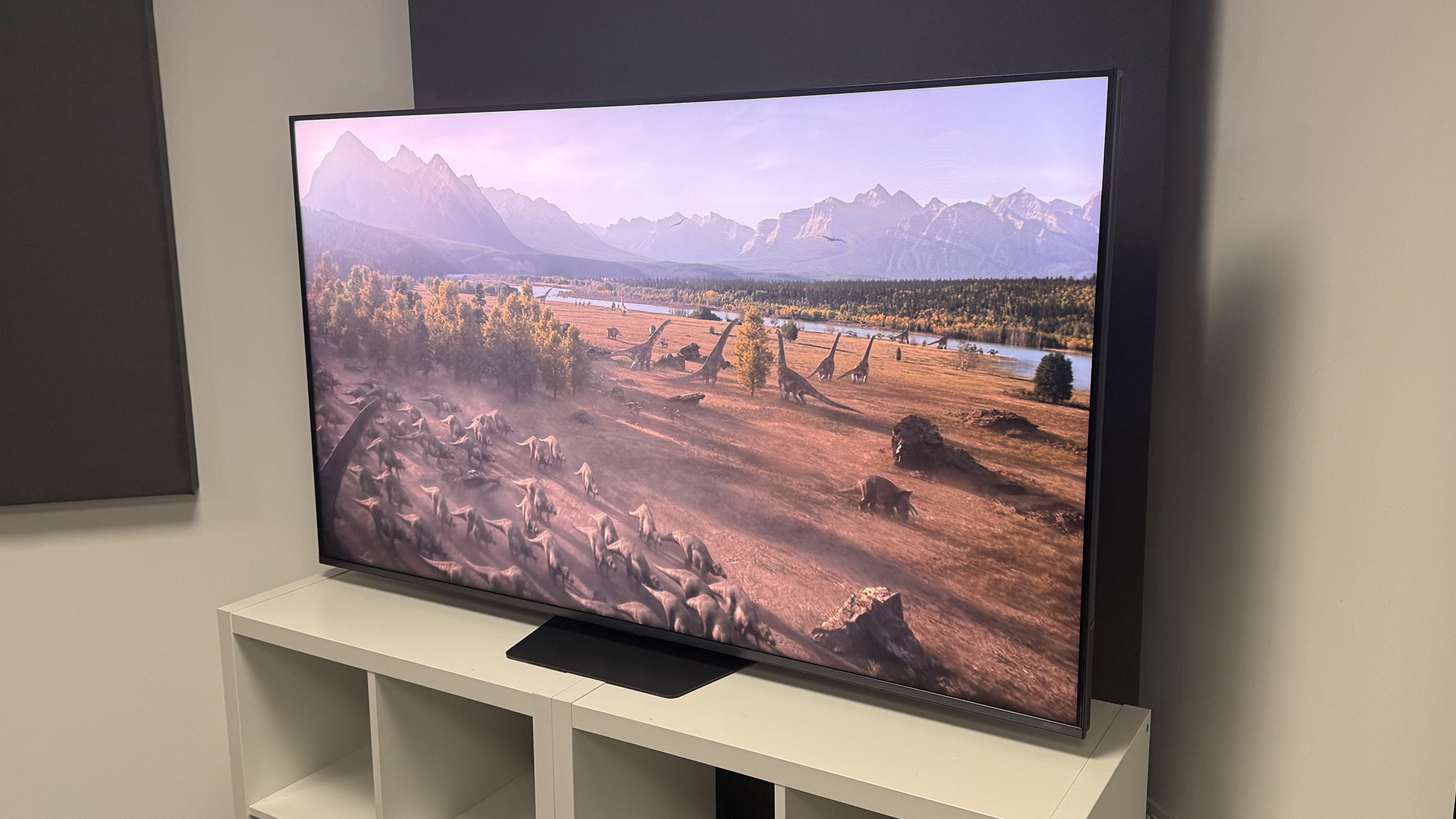
For all of the UR9’s strengths, though, direct comparisons with a top-tier OLED TV still reveal the limitations of even this undeniably refined RGB Mini LED model. Despite its impressive local-dimming system, the Hisense simply cannot match the pixel-level contrast control of the Sony Bravia 8 II.
Extremely bright highlights against deep black backgrounds are sometimes handled slightly conservatively, presumably to avoid blooming. Perhaps counterintuitively, those bright white logos against pitch-black backgrounds appear more intense and impactful on the Sony OLED than on the much brighter, on paper, Hisense.
More significantly, the OLED TV produces a more solid and perceptually three-dimensional image across the board. Objects and characters stand out from their surroundings with greater depth and dynamism, while subtle gradations within clouds, shadows and highlights appear more convincing and refined, creating a more rounded look.
This isn’t a new phenomenon: we have documented that extra solidity you get from OLED plenty of times previously, most notably when we used the Sony Bravia 8 OLED as a comparison in our Bravia 9 Mini LED review. But it bears repeating for those who are choosing between an OLED and a backlit TV.
Viewing angles are another clear OLED advantage. While the UR9’s picture performance doesn’t entirely fall off a cliff when you move off-axis, the sweet spot in which it performs at its very best is surprisingly narrow.
And while the UR9 usually keeps blooming impressively well controlled, especially for a backlit TV, particularly torturous scenes can still expose its limitations.
The bomb-test sequence in Oppenheimer is a great example. From the UR9, there’s a slight general greying to the image, plus some visible glow around isolated spotlights in the darkness. The opening starfield of Alien: Romulus, meanwhile, reveals that the UR9 cannot simultaneously maintain truly inky blacks and perfectly intense star highlights in the way an OLED can.
To be clear, the Hisense performs well in these scenes by LCD standards, and many owners may never notice such shortcomings during normal viewing. But they do prevent the UR9 from truly matching the effortless contrast precision and dimensionality of the best OLED TVs.
Sound quality
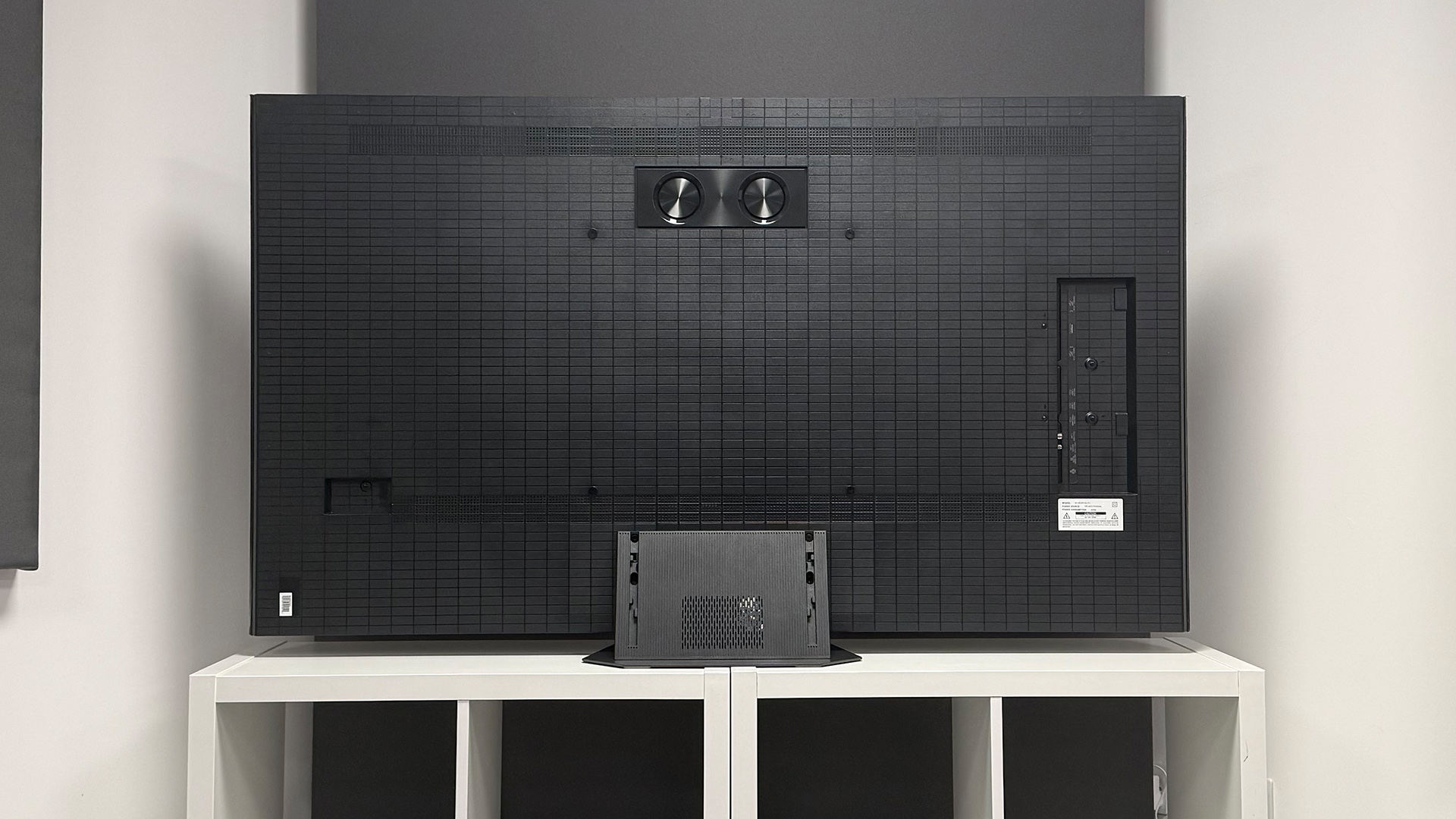
Developed in partnership with Devialet, the UR9’s 4.1.2-channel speaker system delivers a surprisingly expansive and full-bodied presentation by TV standards, with particularly impressive width and height effects.
The Theatre sound mode is the most immediately striking of the available presets, producing a presentation that extends well beyond the physical boundaries of the TV and creating a convincing sense of spaciousness with Dolby Atmos soundtracks.
There’s decent bass depth, too, and the UR9 maintains good composure at high volumes, avoiding the harshness and distortion that can afflict many flatscreen TVs when pushed hard.
The overall presentation is smooth and rich in character, which makes the UR9 an easy and enjoyable listen over long viewing sessions.
It isn’t perfect, though. Dynamics are a little stunted, and action scenes lack some of the punch and excitement they deserve, while dialogue could be projected with greater clarity and emotional expression.
The Theatre mode also slightly overplays its hand at times. While its extra spaciousness is undeniably appealing, it introduces a faintly diffuse and echoey quality to voices, along with a slight sense of delay that makes speech sound less natural than it should.
As a result, we find ourselves preferring the Standard sound mode for most content. It still sounds pleasantly spacious and open, but delivers dialogue with greater focus and cohesion while maintaining good weight and scale.
Ultimately, while even a modest dedicated soundbar will comfortably outperform it, the UR9’s audio system is better than that of most TVs, even at this lofty level.
Verdict
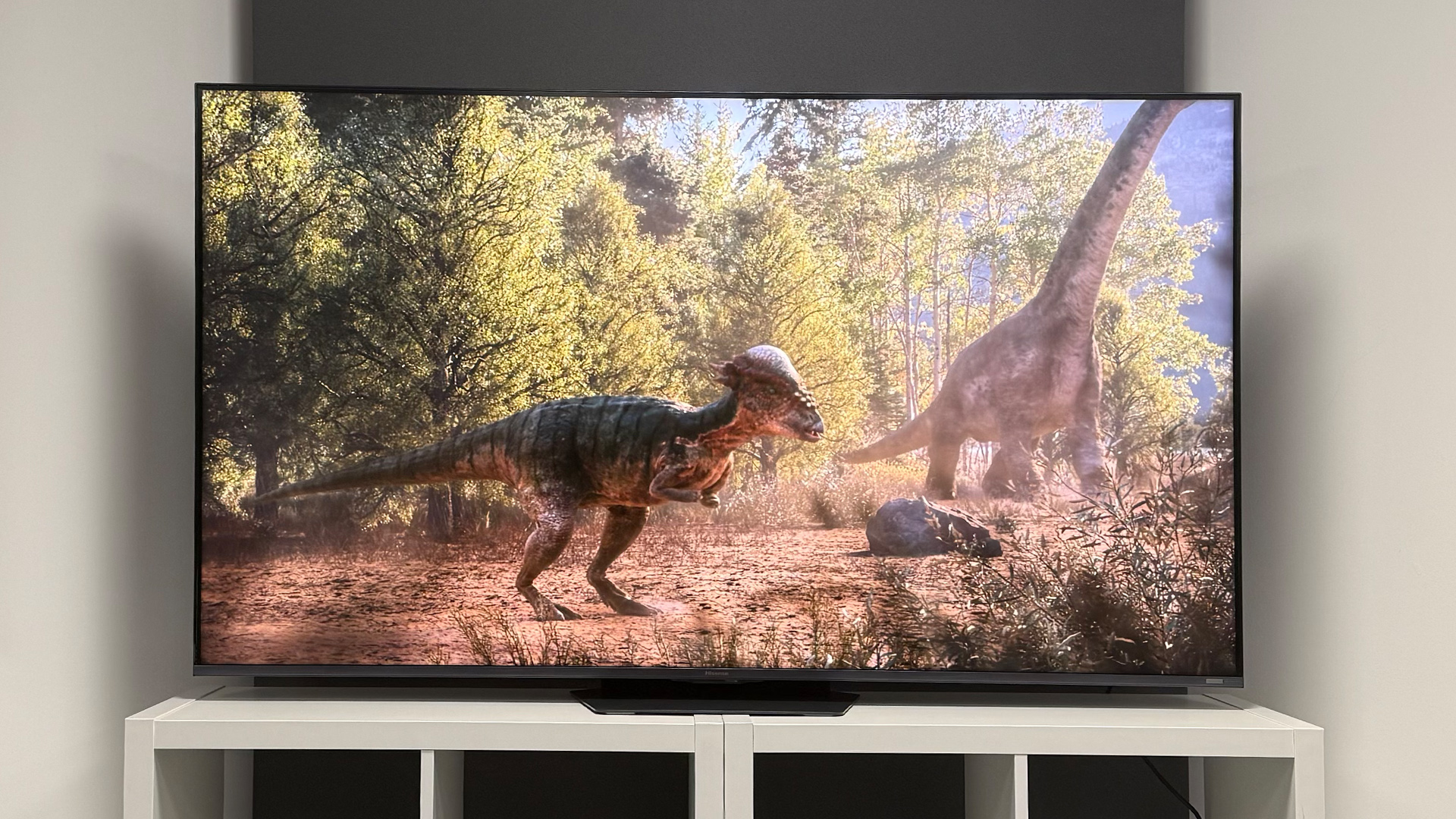
In several ways, the Hisense UR9 is one of the best backlit TVs we have ever tested.
Most of the time, you’re not even made aware that it is a backlit TV, so good are its black levels, its control of blooming and its consistent, flicker-free contrast.
While it is possible to trip up the backlight, it’s quite hard to do so, and many buyers may never see an unsightly bloom in their period of UR9 ownership.
But while this first mainstream RGB Mini LED TV is broadly mercifully free of the flaws that generally afflict backlit TVs, it still can’t match the overall picture quality of the best OLED models.
The pixel-level contrast control of OLED brings benefits in several areas. There are the notably brighter highlights on very dark backgrounds that even accomplished backlit sets, such as the UR9, are too cautious to go all guns blazing with for fear of blooming. There are the almost flawless viewing angles, too, which the UR9 is a long way from matching.
The biggest thing, though, is the generally more solid, more perceptually three-dimensional image that OLED provides. Next to the Bravia 8 II, the Hisense UR9 simply looks flatter, less dynamic and less impactful.
Ultimately, as enjoyable and technically impressive as the UR9 is, we can’t think of a good reason you would buy it over a flagship-grade OLED, and that’s the level at which Hisense is pitching it – at least in the UK.
Of course, if you are someone who has a flagship-level budget for their next TV and a general aversion to OLED, the Hisense UR9 should be right around the top of your list.
If you’re a UK buyer, it’s probably a good idea to wait and see if we get a massive US-style discount before placing an order, though.
SCORES
- Picture 4
- Sound 4
- Features 4
MORE:
Also consider the Sony Bravia 8 II, LG G6 and Sony Bravia 9
Here are all of the best TVs you can buy right now