Seventy-five years have passed since the atomic bombings of Hiroshima and Nagasaki. With the average age of hibakusha, or surviving atomic bombing victims, surpassing 83, questions have been raised over how to pass down their memories to future generations. Given the situation, a photographer is striving to connect hibakusha and their children and grandchildren through family photos.
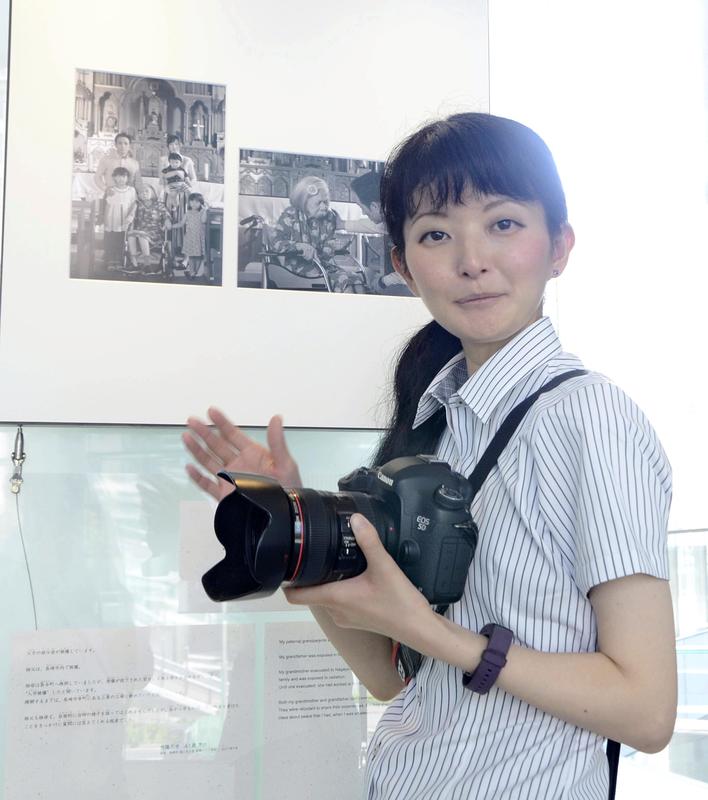
On July 26, four family members had their photos taken with the Atomic Bomb Dome in Hiroshima in the background. While taking photos, photographer Hiroko Doune, 38, said to them, "It's okay to speak naturally."
Naoko Dehari, 44, smiled at the camera while playing with her 3-year-old daughter, Hinami, who did not stay still even for a short period of time. Standing next to her is her mother, Yoshiko Maeda, 81, and her uncle, Iwao Nakanishi, 90, who are both survivors of the Hiroshima bombing.
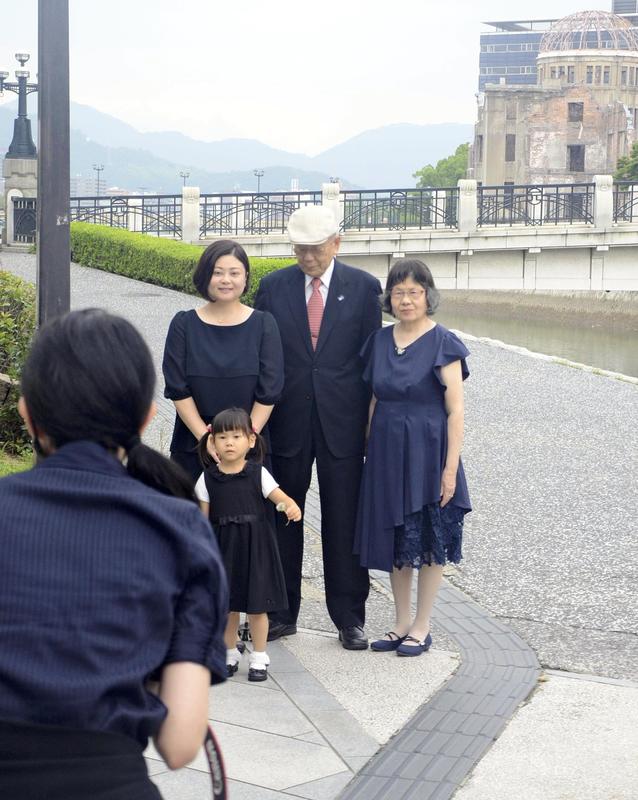
Maeda was 6 when the atomic bomb was dropped on the city. However, Dehari has not heard much about the bombing from her mother. She was wondering what would happen if the number of people who do not know about the atomic bombings increases. Around that time, she learned about Doune who takes family photos of hibakusha.
Dehari then contacted Doune as she hopes her daughter will have some thoughts about peace by seeing such family photos in the future.
A native of Hiroshima, Doune always wanted to work for peace. But she began to think if there is anything she could do by herself to pursue peace as many years have passed since the end of World War II.
A breakthrough was brought about by a suggestion from a friend who is a third-generation hibakusha. To raise the issue of ongoing discrimination against hibakusha family members, her friend asked her, "Why don't you try taking my picture?"
Doune thought at the time: "I don't know what I can do through just photos. But I will still be creating my own photos and something might arise from them. So I might as well try to take the photos."
In 2015, Doune quietly started her family photo project.
One day when she was developing hibakusha family photos, she looked at many children and grandchildren who surrounded an elderly woman who survived the bombing and realized, "If she didn't survive the atomic bombing, everyone in the photos wouldn't have been born."
She was scared by such thinking, but at the same time, she was moved about the connection of lives. Since then, she has become aware that her project can be a record of connected lives.
Taking such family photos can serve as a way to inherit victims' experience of the atomic bombings. One survivor, who had never told anyone about the painful experience in the past, was asked by a grandchild about the bombing when they were having their photos taken. The survivor then began talking about the experience from more than 70 years ago.
Doune has taken photos of about 90 families and published a photo collection in May.
She receives reservations for photo sessions, but 70% of them had to be canceled due to the death of elderly hibakusha or the deterioration of their health. She feels the pressure as there is not much time left.
"I hope young people will have an opportunity to learn about their family members' past through the taking of photographs and exhibitions," Doune said.
An exhibition featuring Doune's photos of three generations of hibakusha family members is being held at the Shiodome Media Tower in Minato Ward, Tokyo, and will last through Sept. 7.
Read more from The Japan News at https://japannews.yomiuri.co.jp/