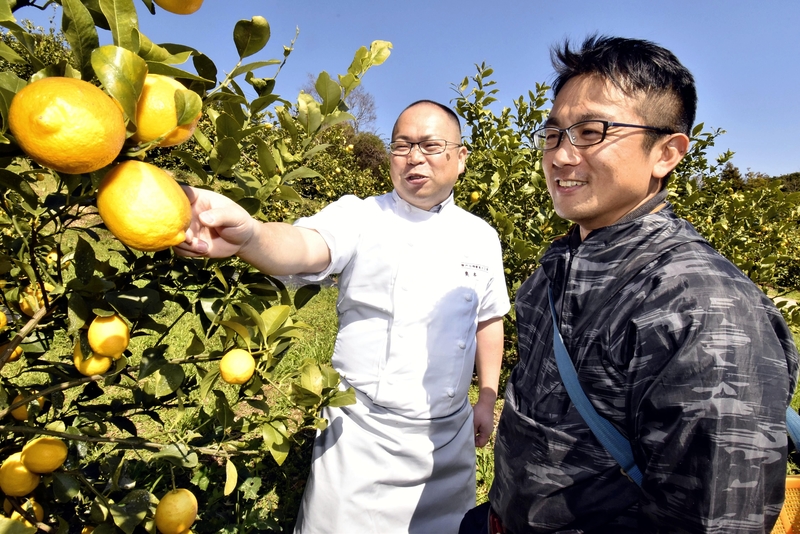
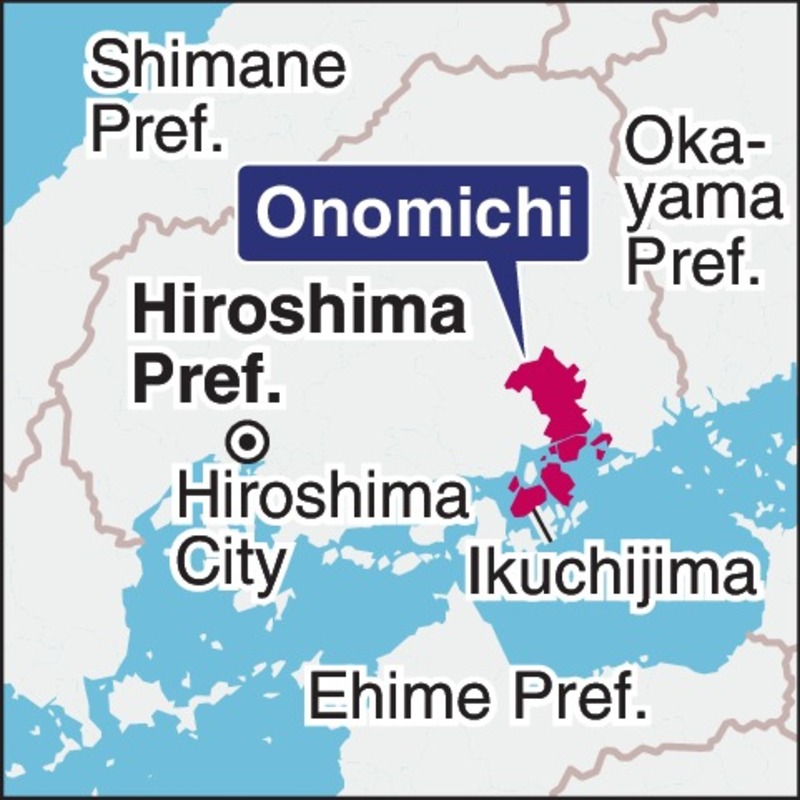
ONOMICHI, Hiroshima -- Surrounded by the calm waters of the Seto Inland Sea, Ikuchijima island and its neighboring islands have long been known as the home of quality lemons.
Located in the Setodacho area in Onomichi, Hiroshima Prefecture, Ikuchijima is home to about 8,800 people. During the harvest in early spring, the "Lemon Valley" in the southwestern part of the island is blanketed in the bright yellow citrus.
"I want more people to know the name Setoda Lemon," said Ryuzo Okumoto, a 38-year-old local patissier.
In 2008, Okumoto moved from Kobe to the island, his hometown, and now runs a cake shop.
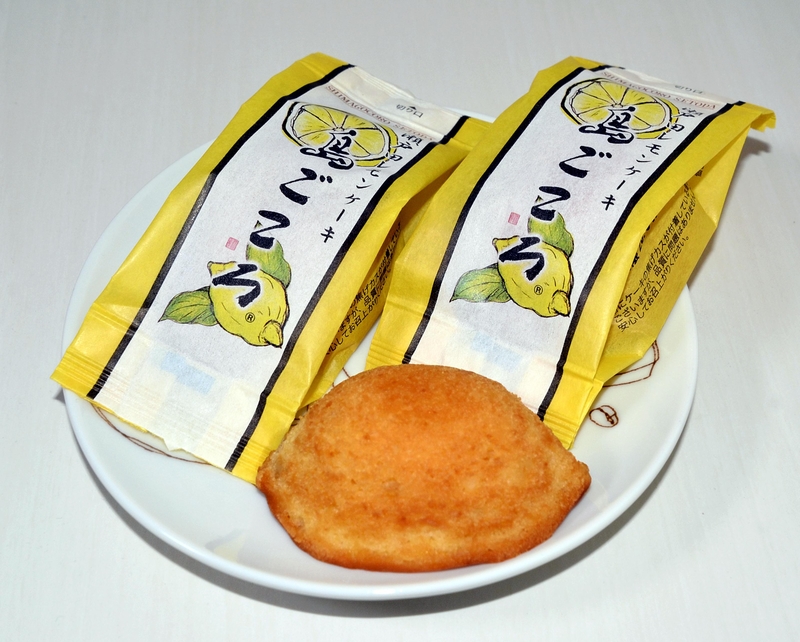
The skin of a Setoda Lemon is also a source of pride for citrus producers as the lemon is produced without preservatives and grown using mild agricultural chemicals. Using the zest of a Setoda Lemon, Okumoto began selling lemon-shaped cakes called Setoda Lemon Cake Shima Gocoro in 2009.
The name is a nod to his home island as he hoped the cake would make locals proud.
It has a zingy and bright flavor, and he sells as many as 1 million units a year.
In May 1999, the Setouchi Shimanami Kaido Expressway opened soon after Okumoto left the island to train as a patissier. The expressway comprised seven bridges that connect six islands in the Seto Inland Sea with Onomichi and Imabari, Ehime Prefecture.
It initially drew crowds of tourists to the area, but its popularity had waned by around 2007. Locals were searching for a new magnet for tourists.
At that time, lemons branded as being from Hiroshima Prefecture was a hot topic locally. In 2008, the prefecture's fruits cooperative association union of the Japan Agricultural Cooperatives acquired the regional organization trademark of "Hiroshima Lemon."
This achievement spurred locals to seek wider use of the locally produced lemons, such as for salads and pasta dishes, in addition to conventional products like beverages, confectionery and seasonings.
The price of Setoda Lemons has surged to 400 yen per kilogram compared to about 150 yen to 200 yen over the past decade.
Young farmers are actively participating in the citrus farming research group at the fruits cooperative association union. Forty percent of the island's 50 or so members are in their 40s or younger.
Mitsuaki Harada, a 36-year-old lemon farmer who supplies lemons to Okumoto, returned from Higashi-Hiroshima, Hiroshima Prefecture, last spring to take over the orchard of his 67-year-old father, Satoru.
"My father's efforts to protect the orchard are being rewarded," Mitsuaki said, referring to the situation of local lemon farmers.
Okumoto also focuses on nurturing young people who lead the island's future. He worked as a part-time lecturer at a local junior high school last year and taught about 40 first-year students about developing new products using Setoda Lemon.
The students shared their ideas for recipes with each other and proposed a madeleine flavored with lemon juice and topped with lemon jam and slices. Wrapped in a package designed by local primary school students and bearing sales copy made by local high school students, the product is now on shelves at Okumoto's shop.
Okumoto said he let students think for themselves and make decisions when developing the sweets. He feels this process helped students learn more about their home.
"I learned the lemons my grandmother grows are really important for our island," said Mai Tanaka, a 13-year-old student who was involved in Okumoto's project.
"I want young people to see the lemon as an opportunity to make a Setoda everyone can be proud of," Okumoto said.
With its mild climate, the Setouchi region is great for growing lemons. The total domestic lemon harvest in 2017 was about 8,260 tons, with the prefectures of Hiroshima (about 4,790 tons) and Ehime (about 1,897 tons) accounting for 80% of the total, according to statistics from the agriculture ministry. About 1,800 tons were harvested on Ikuchijima. Other major lemon producers in the nation include Wakayama, Kumamoto and Miyazaki prefectures.
Lemon production in Hiroshima Prefecture is said to have started in 1898 in the Meiji era (1868-1912), when saplings were planted in a place currently known as Kure. By the early Showa era (1926-1989), full-fledged lemon production had also begun on Ikuchijima.
Domestic lemon production saw a sharp decline after the liberalization of lemon imports in 1964. However, domestically produced lemons have regained attention in recent years thanks to consumers' desire for food safety.
Ocho Lemon is also a famous brand of lemon produced in Hiroshima Prefecture.
Read more from The Japan News at https://japannews.yomiuri.co.jp/