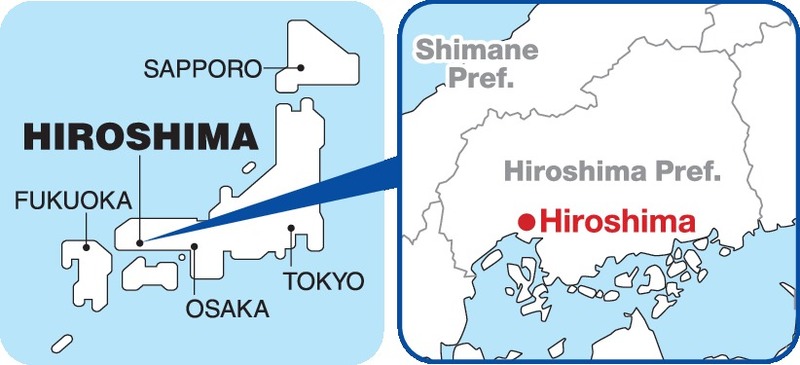
HIROSHIMA -- A British film director will make a film about Sadako Sasaki, who was exposed to radiation from the atomic bombing in Hiroshima and died from leukemia at the age of 12 after making hundreds of origami cranes on her sickbed.
The production of the film, which was to start this year, will probably be delayed due to the coronavirus pandemic. The production team is hoping to start filming as soon as possible.
Sadako's bereaved family is also looking forward to the completion of the film, "One Thousand Paper Cranes."
"I hope the film depicting the truth about Sadako will help unite the world in prayers for peace," one family member said.
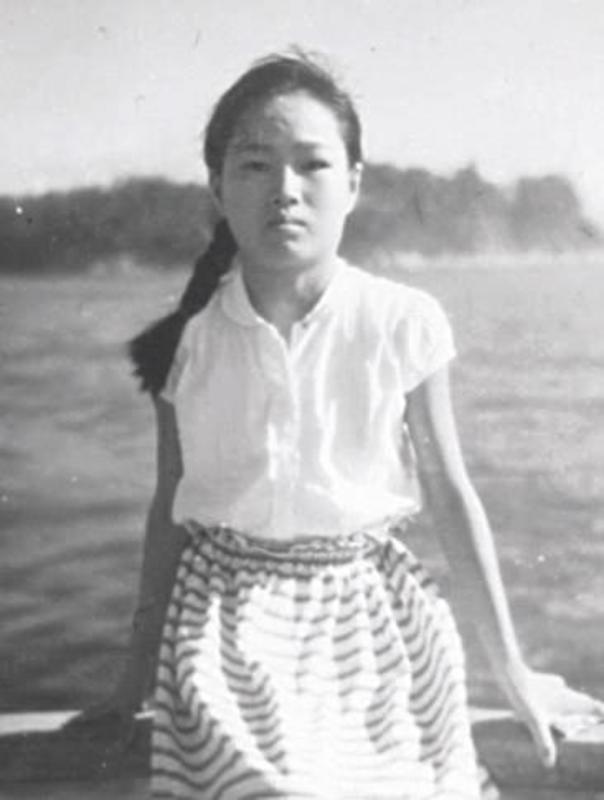
Sadako was exposed to radiation at her home, about 1.6 kilometers from ground zero, when she was 2, and was diagnosed with leukemia when she was in the sixth grade of elementary school. She died in 1955, but her death paved the way for the erection of a memorial monument in the Peace Memorial Park in Hiroshima in 1958.
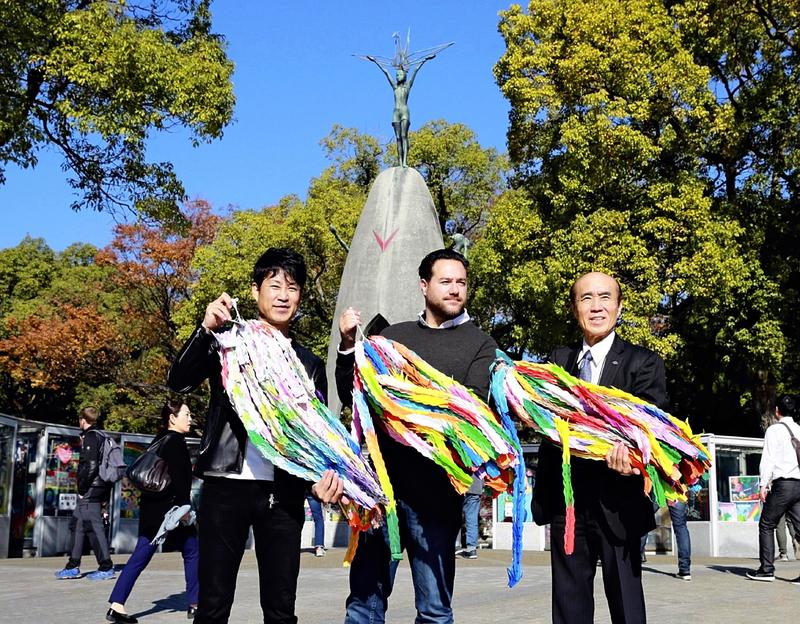
The monument, Genbaku no Ko no Zo, mourns the deaths of children from the atomic bombing and receives about 10 million paper cranes every year.
Sadako's story has been adapted into several films, such as "Senbazuru" (One thousand paper cranes) in 1958.
The new film, slated for international release, will be directed by Richard Raymond, the first non-Japanese director to make a feature-length film on the subject.
It is also the first feature-length film for Raymond, who has won top prizes in the short film competition at the Hiroshima International Film Festival for two consecutive years since 2018. The cast will include well-known actress Shinobu Terajima.
In addition to the life story of Sadako, who made paper cranes praying for her own recovery, the film will also feature Eleanor Coerr, whose book, "Sadako and the Thousand Paper Cranes," told the story of Sadako's life and helped spread her story outside Japan. Coerr, who hailed from Canada, died in 2011 at the age of 88.
Coerr visited Hiroshima after World War II as a newspaper reporter and researched the life of Sadako, who had already died.
Raymond, 43, learned about Sadako after reading Coerr's book in a school lesson. He said he was touched that a child no different from himself continued making paper cranes even after learning her days were numbered, because she just wanted to go to school with friends.
After becoming a film director, Raymond mainly made films on social problems, such as poverty. He decided to make a film adaptation of both Sadako's and Coerr's stories because he had a wish that children, who will lead the world in the future, will learn from them and gain the power to wish for peace at a time when wars and conflicts continue in many places around the globe and it is difficult to maintain hope.
He started the project in 2011. The film now has a distributor, and some cast members have been fixed.
Raymond will also try to explain in the film why Coerr wrote in her book that Sadako made 644 paper cranes when in fact she had made more than 1,000. Raymond took it as Coerr's idea to spark fire in children's motivation to complete the 1,000 paper cranes on behalf of Sadako, which he weaved into the script.
"I felt that he really wanted to tell the story of Sadako," said Sadako's 78-year-old elder brother, Masahiro Sasaki, who has met Raymond many times.
In November last year, Sadako's nephew, Yuji Sasaki, joined her brother, Raymond and others in a visit to her memorial statue in the Peace Memorial Park.
"I hope the film will send a message all over the world that peace is something we can build together," Yuji, 50, said.
Auditions for the role of Sadako will be held in Japan and the United States in due time. Raymond said the hibakusha (people affected by the bombing) told him to share their experiences, and he wants to make the film a torch that connects peace wishes together.
Read more from The Japan News at https://japannews.yomiuri.co.jp/