A prosecutor said the match commander, a former South Yorkshire Police chief superintendent, had “criminal responsibility” for the deaths of men, women and children who were crushed in the disaster.
Mr Duckenfield, now 74, sat metres away from victims’ relatives as all 95 names were read out at Preston Crown Court on Tuesday.
He denies manslaughter, while Sheffield Wednesday’s former safety officer Graham Mackrell pleads not guilty to two health and safety offences related to the stadium.
Richard Matthews QC, for the prosecution, told jurors that “many individual failures” played a part in the “appalling” events that unfolded on 15 April 1989.
“Undoubtedly, each of the deceased has been failed by many, in many ways and over a protracted period; before, during and even after this disaster,” he added.
“But is the prosecution’s case that Mr Duckenfield’s failures to discharge his personal responsibility were extraordinarily bad and contributed substantially to the deaths of each of those 96 people who so tragically and unnecessarily lost their lives.”
Ninety-four of the 96 victims died on the day of the disaster, while Lee Nicol passed away as a result of his injuries two days later.
There can be no prosecution over the death of the 96th victim, Tony Bland, as he died more than a year and a day after his injuries were caused.
Opening the prosecution’s case, Mr Matthews said that the match itself was not extraordinary, and mirrored the 1988 FA cup semi-final that was played between Liverpool and Nottingham Forest at Hillsborough.
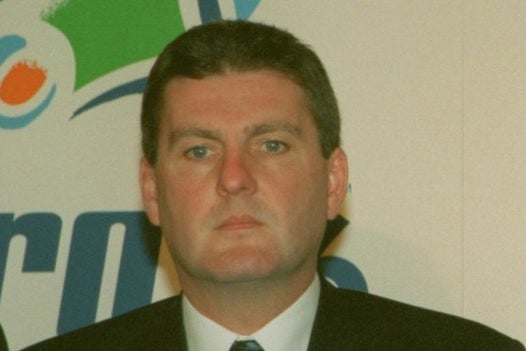
David Duckenfield, match-day police commander at the Hillsborough football stadium disaster, arrives at court in Preston on Monday (AFP/Getty)
He told the jury that in addition to failures in planning, organisation and management of the arrival, entry and accommodation of 50,000 football fans, there were also “many collective and individual failures to intervene effectively once the disaster unfolded”.
Mr Matthews said Mr Duckenfield did not declare the situation a “major incident” in good time, to put in place emergency measures to release those trapped and to provide adequate emergency medical attention and resuscitation.
“In the minutes before and after 3pm, 96 people received fatal injuries as a result of crushing in the central pens of the west terrace of the Leppings Lane end of the Hillsborough stadium,” he added, saying the youngest victim was just ten years old and many were teenagers.
“Each of those who died did so as a result of participation in the wholly innocent activity of attending a football match as a spectator, as a consequence of the obvious and serious risk to life posed by crushing from poor management of the expected capacity crowd … and as a result of the extraordinarily bad failures by David Duckenfield.”
Graham Mackrell denies health and safety offences (PA)
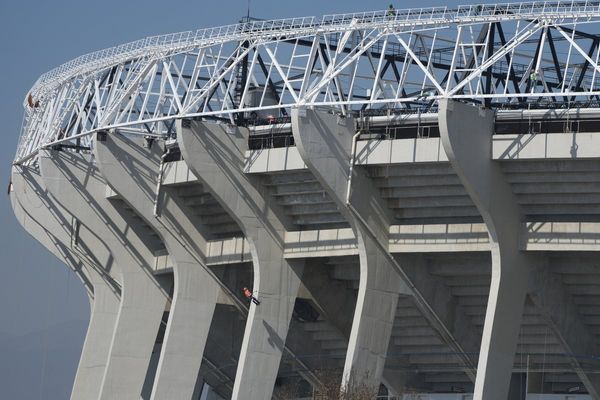
The jury was shown images of the areas of Hillsborough stadium, which was the third-largest football ground in the UK at the time, where around 24,000 Liverpool fans attended the match.
Mr Matthews said that as thousands of spectators arrived, there were fears of injuries at turnstiles outside the stadium and a large exit gate known as Gate C was opened “following requests for Mr Duckenfield to do something to alleviate the crush”.
He told the jury that a large crowd was “naturally drawn” through a tunnel directly in front of the turnstiles, down a slope and into fenced pens where there were “no means to escape”.
Mr Duckenfield “gave no thought to the inevitable consequence of the flood of people through Gate C,” the prosecutor added. “He made no attempt to even monitor what was occurring, let alone take a step to avert the tragedy.”
Mr Mackrell, Sheffield Wednesday’s former safety officer, is accused of violating a government-issued safety guide and the terms of the stadium’s safety certificate regarding entry arrangements.
“It is the prosecution’s case that Mr Mackrell effectively shrugged off all responsibility for these important aspects of the role he had taken on as safety officer,” Mr Matthews added, detailing a lack of signage for alternative routes to standing terraces.
Mr Mackrell denies two health and safety offences.
Judge Openshaw said the Hillsborough disaster has received a “huge amount of publicity” for the past 30 years.
“What any of you have heard or read or seen in the past is entirely irrelevant to your task,” he told the jury.
“You decide what happened and whether these charges have been proved and you do so based on what you see and hear in the court, and nowhere else.”
Good morning and welcome to our live coverage of the Hillsborough trial. The jury has been sworn in and prosecutors are to open their case against match commander David Duckenfield and former Sheffield Wednesday club secretary Graham Mackrell.
The judge has warned the jury not to consider any past inquests or judicial proceedings over the disaster, or any evidence or views they hear outside the courtroom
Judge Openshaw has acknowledged that the Hillsborough disaster has received a "huge amount of publicity" for many years.
"What any of you have heard or read or seen in the past is entirely irrelevant to your task," he tells the jury.
"What any other inquiry or court or inquest or jury or indeed anyone else has said or decided or failed to decide is entirely irrelevant to your decision. You decide what happened and whether these charges have been proved and you do so based on what you see and hear in the court, and nowhere else."
He cautions that jurors who conduct research out of court "might imperil the trial" and could lead to a prosecution.
"In the minutes before and after 3pm, 96 people received fatal injuries as a result of crushing in the central pens of the west terrace of the Leppings Lane end of the Hillsborough stadium."
He says the youngest victim was 10, while others were aged 14 and 15.
Another 27 of those killed were older teenagers, while 40 victims were aged in their 20s. The oldest person killed was 97.
94 of the 96 succumbed on 15 April 1989, Mr Matthews says. Another man died two days later, and one person - Tony Bland - suffered brain damage caused by oxygen deprivation in the coma and was in a vegetative state until he passed away in 1993.
His death happened too long after the disaster to be covered by the manslaughter charges.
Mr Matthews says each victim was a Liverpool fan who had travelled to Hillsborough stadium for the match, and that their attendance should have been "properly planned for and safely anticipated"
"There was nothing extraordinary about that FA cup semi-final match," he adds, pointing out that the same engagement between the same teams had happened the year before. "It may well be that there was an extraordinary series of collective and personal failures of those resonsible for planning and management [of the game]"
Mr Matthews says there were also failures to intervene as the disaster unfolded, or to declare it a major incident, to put in place emergency measures, release those trapped and get adequate medical assistance.
"On that day, David Duckenfield was the very senior police officer in charge of the match," he adds.
"WIth that role came not just ultimate responsibility for the police operation to ensure the safe arrical and acommodation of fans, but a personal responsiblity to take reasonable care for the arrangements put in place. A personal responsibility to take reasonable care in the command of those beneath him and in the orders he gave, and the decisions he took.
"It is the prosecution's case that David Duckenfield's failures to discharge this personal responsibility were extraordinarily bad and that they contributed substantially to the deaths of each of those 96 people, who so tragically and unnecessarily lost their lives".
Mr Matthews says the victims died as a consequences of the "obvious and serious risk to life posed by crushing caused by poor management" of the expected crowd size for hte match.
"Each died as a result of the extraordinarily bad failures by Mr Duckenfield in the care he took to discharge his personal responsiblity on that fateful day."
Mr Matthews calls the loss of life "appalling" and says the scale of tragedy was "extraordinary".
"Undoubtedly each of the deceased, and all 50,000 who attended, were entitled to rely upon those who had such responsibility to discharge it, to have carried out their jobs with appropriate care and having regard to the safety of all. Each of the deceased has been failed by many in many ways, over a protracted period of time - before, during and even after this disaster."
Mr Matthews says it's the prosecution's case that none of the individual failures that also contributed to the deaths of the 96 men, women and children lessen Mr Duckenfield's "gross failure" to discharge his responsiblity to ensure their safety.
"Mr Duckenfield's criminal responsiblity for the deaths of the 95 flows from his gross failure to discharge his responsibility as match commander," he says, accusing Mr Duckenfield of failings in planning, roles, responsiblity and command of the match.
The prosecutor says the arrival of thousands of fans into a confined area in a short time before kick-off was "uncontrolled, unsupervised" and resulted in the forcing of "far too many people into a terribly confined space".
Mr Matthews says no one was charged with monitoring numbers for safety and that officials had been ordered to keep access gates to the pitch closed, and only open them with the command of a senior officer.
"Mr Duckenfield owed a duty to each of those who died, to take reasonable care to discharge his duty as match commander for the safety of spectators" for entry, filling of and departure from the stadium, he tells the jury.
Mr Matthews says the Leppings Lane end of the ground was where about 24,000 Liverpool fans were directed.
"Almost inevitably bearing in mind what was in place there, but certainly the prosecution allege reasonably forseeably, even obviously, there became pressure to get through limited turnstiles and a bottleneck of a crowd."
Mr Matthews says an exit gate known as Gate C was opened following requests for Mr Duckenfield to do something to alleviate the crush just outside the gates, and fears people would be crushed outside the stadium
"He didn't at any time cause the start of the match to be put back wtih a view to avoiding any crush at the turnstiles or calm the desire of a large crowd seeking entry to the match," he adds.
"Beyond gate C, fans were confronted by a prominent sign labelled 'standing' in front of a tunnel leading to two pens."
Pens 3 and 4, the central pens behind the goal, were fenced with no visible exit, he says.
All 10,100 tickets for the terraces at Leppings Lane were marked standing. By the time Mr Duckenfield ordered gate C to be opened they were "packed", Mr Matthews tells the jury, but "at no time" did the commander do anything to check capacity.
"He did nothing to ensure those pens or their capacity were monitored, he did nothing to ensure the crowd were directed in any way into emptier pens or that most critically access to the tunnel leading to pens 3 and 4 was stopped or even inhibited to prevent what was the inevitable crush of fans, effectively carried down the slope of a tunnel into the packed pens."
Mr Matthews says the crowd were "naturally drawn" into the pens and Mr Duckenfield "gave no thought to that inevitable consequence of the flood of people through Gate C. He made no attempt to even monitor what was occuring, let alone take a step to avert the tragedy."
Mr Matthews says the jury may hear that some of Mr Duckenfield's failings in the aftermath of the crushing were also "exceptionally bad" but the prosecution's case that his failure to show reasonable care as match commander prior to 3.05pm when the crushing had already occured, that failure was a significant cause of the deaths.
"His failings substantially led to the pressure of crushing in pens 3 and 4 that caused the fatal injuries to all those whose lives were lost," he adds.
Mr Matthews is now moving onto Graham Mackrell, Sheffield Wednesday’s safety officer, who he says "was in a position of real responsibility for managing how the club followed the safety guidance in what was known as the Green Guide – A Home Office publication entitled ‘Guide to Safety at Sports Grounds (Football)’."
The prosecution brings two charges against him – the first relates to the club’s breach of one of the terms of its safety certificate, the prosecutior says.
The Safety of Sports Grounds Act in 1975 required that certain designated sports stadia, with a capacity of more than 10,000 spectators, were required to hold a safety certificate and that violating the conditions was an offence
Hillsborough stadium was granted a safety certificate in 1979 by Sheffield County Council, Mr Matthews says. It set out various conditions, including to ensure the safe operation of the stadium for large crowds