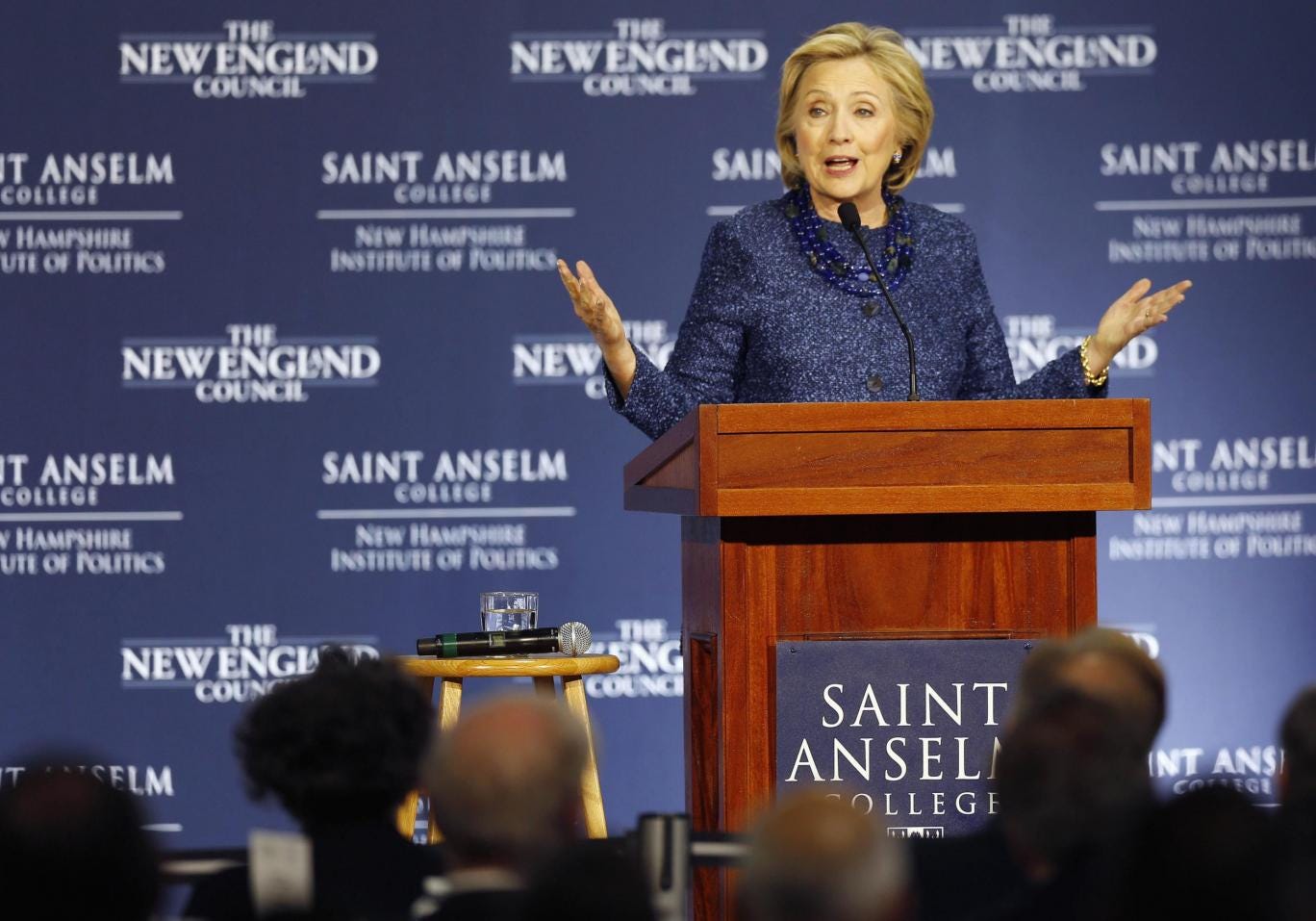
Hillary Clinton will call today for a shake-up of drug laws in the US which unfairly discriminate against African Americans, but activists have called for the Presidential hopeful to make a bolder move.
In her first speech unveiling specifics on criminal justice, Mrs Clinton will announce in Atlanta today that the law should no longer distinguish between crack and powder cocaine when it comes to imprisonment. Her comments have been long awaited by criminal justice activists and are part of a re-fuelled debate among the Democrats surrounding the legalization of drugs and racial profiling by law enforcement.
Ethan Nadelmann, executive director of Drugs Policy Action, said he will welcome the move but Mrs Clinton will have to make “much bolder” commitments in the future.
“President Obama took that position [on cocaine] since he first ran against her eight years ago. And even Joe Biden [spoke out] in 2007-08,” he said. Nadelmann said a more "inspiring" move would be to cut the population of federal prisons by 50%.
Democrat Bernie Sanders joined the debate on Wednesday when he called for the possession and use of marijuana to be de-criminalised in federal law. He spoke out against racial bias and said a black person is four times as likely to be jailed for possession of the drug as a white person.
Maryland governor Martin O’Malley has also unveiled details on his criminal justice program, but Mrs Clinton is one of the last Democratic Presidential candidates to make her move, although she did speak loudly for criminal justice reform following riots in Baltimore earlier this year.
A spokesperson for Mrs Clinton told the Washington Post that Mrs Clinton’s comments today on policing, incarceration and re-entry into society are just a small part of a full program to be announced in the coming days.
A law from 1986 stipulated that a person convicted of possessing crack cocaine got the same prison sentence as someone holding 100 times the amount of powder cocaine. That ratio decreased to 18:1 under the 2001 Fair Sentencing Act but still has a disproportionate effect on African Americans, say activists.