The pandemic has ripped apart our habitual ways of living. It has revealed the deep divisions in our country – and the limitations of top-down, industrial welfare systems.
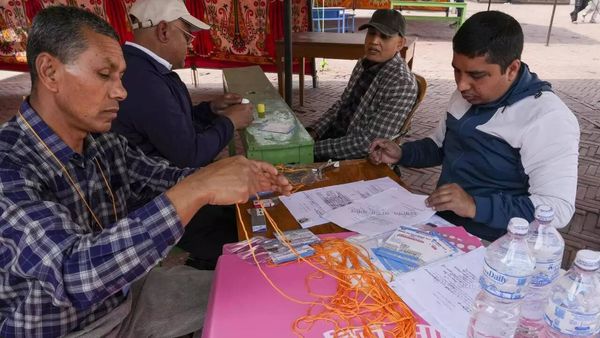
But while national leaders and centralised institutions struggled to command PPE or take care of the vulnerable, a new form of spontaneous social infrastructure mushroomed: neighbours taking care of each other, sorting medicines, making masks, preparing Iftar suppers or simply making time to chat. These new forms of support were not about fixing each other, but about taking care and forging bonds of connection.
Imagine a welfare state that worked in the same way: one that understands the path to good work lies in a diverse network of relationships; that a good old age is not just about the cleanliness of the home, but the warmth of the care; that family life can be tough, and light-touch, early support rather than judgment is key in a crisis.
Ten years ago, I started a series of experiments that showed the benefits of this human, relational way of working. Circle – part concierge service, part social club – offered community members (aged over 50) on-demand practical support and a social calendar. Ten thousand people experienced a very different model of care, and as friendships increased, hospital readmissions went down. In another experiment, Life, families in distress were asked how they wanted to make change, and professionals worked to their agenda.
Others have started similar work. In East Ayrshire, the Vibrant Communities project has reshaped public sector roles: staff can work intuitively, supporting community initiatives without recourse to institutional rules and regulations. Home Link workers are meant to enforce school attendance in the area, but the role has been interpreted deftly. A small team are at the service of families: they drop in, make a cuppa and listen. With this support, no enforcement has been needed. Under the banner of Love Barrow, people in the Cumbrian town are conducting similar experiments.
“A revolutionary moment in the world’s history is a time for revolutions, not for patching,” William Beveridge boldly declared as he ushered in the postwar welfare state. That time has come again. The desire to connect and take care of each other – glimpsed in lockdown – will help remake the welfare state for the challenges of today.
• Hilary Cottam is the author of Radical Help (Virago)