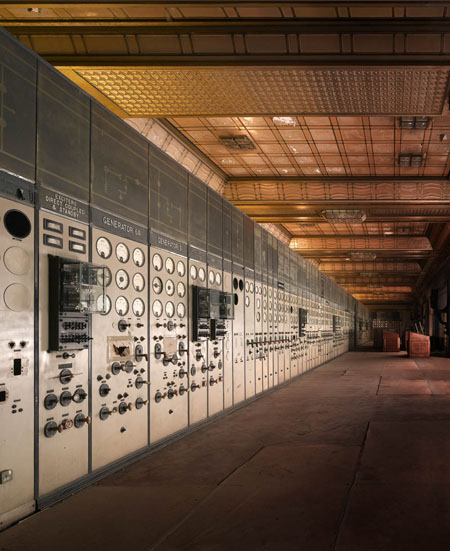
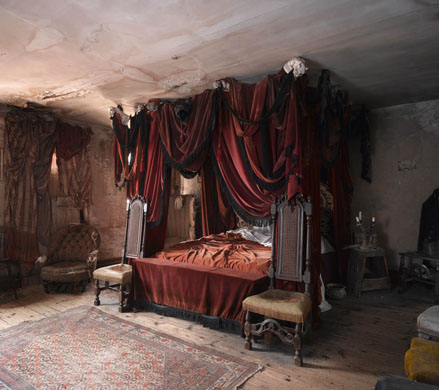
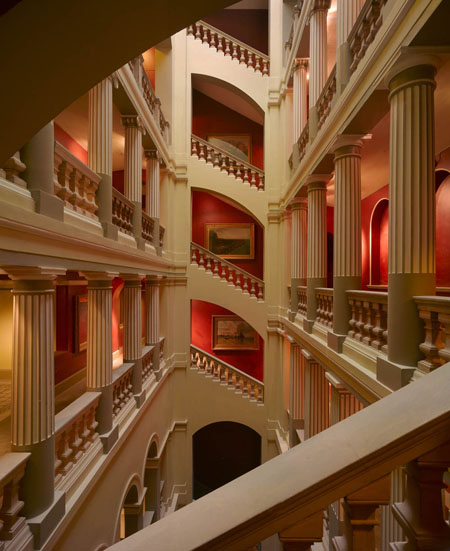
Five storeys up inside Giles Gilbert Scott's Battersea power station is Control Room A, designed and built in the 1930s. It was mothballed in 1975 and has been derelict since 1983, when electricity production endedPhotograph: Alan Williams/PRDennis Severs' House in Spitalfields was kept by the artist as a time capsule - sometimes opened up to paying visitors. Its ten rooms harbour ten 'spells' which capture the periods between 1724 and 1914Photograph: Alan Williams/PRThe six storeys of Cadeby stone staircases are no longer on public view as the Henry Cole Wing of the Victoria and Albert Museum now houses offices and reserve collections of paintings and archives. The wing was originally built as the Science Schools between 1867 and 1871Photograph: Alan Williams/PR
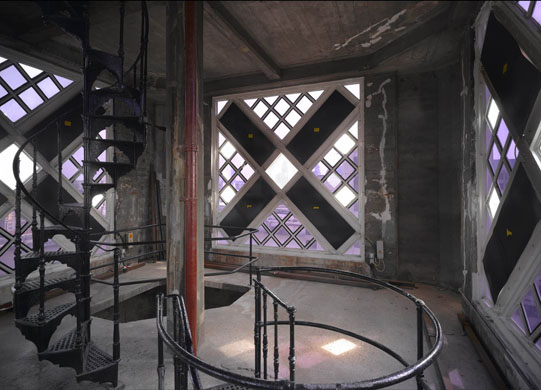
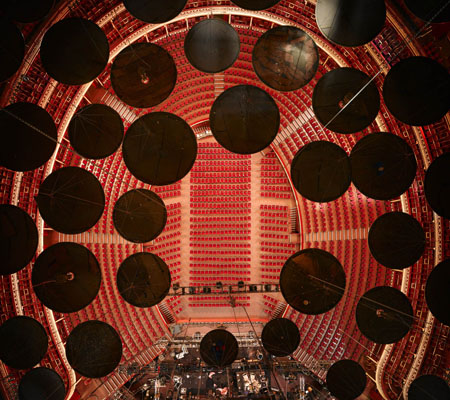
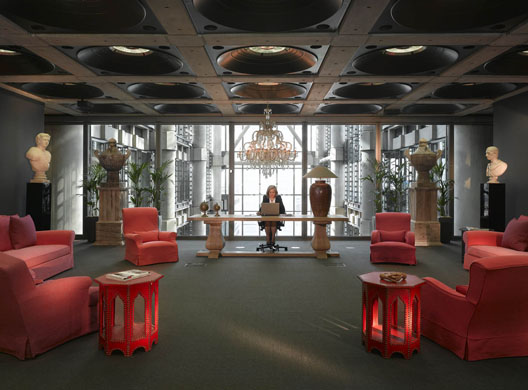
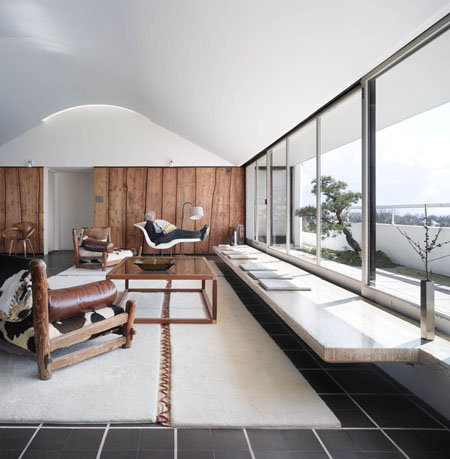
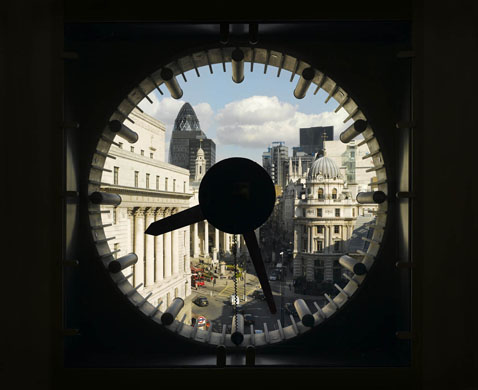
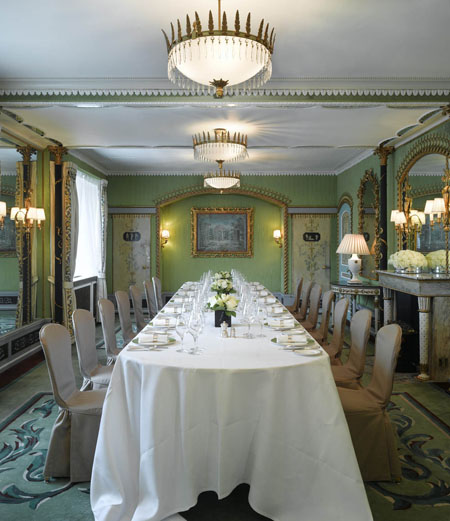
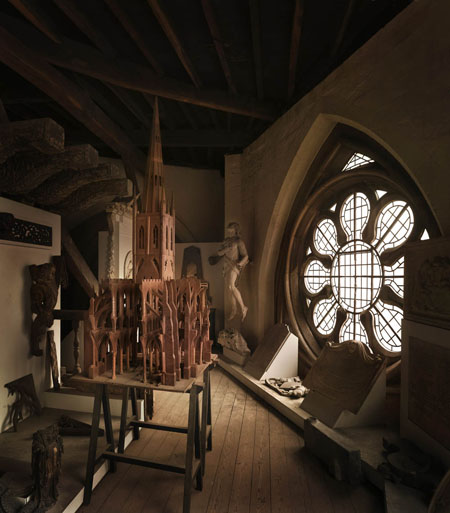
The 1929 Oxo Tower was built on the banks of the Thames with illuminated windows spelling Oxo to bypass 1920s advertising restrictions. It and the neighbouring wharves now house bars, cafes, galleries and shops. The spiral staircase below leads from the eighth floor to the window level and is closed to the publicPhotograph: Alan Williams/PRA view of the auditorium of the Royal Albert Hall, from above the diffusing discs installed to improve the notoriously problematic acousticsPhotograph: Alan Williams/PRThe atrium of Canopius' offices on the tenth floor of Richard Rogers' 1986 Lloyds Building at 1 Lime Street was designed to subvert expectations of a bland, corporate interiorPhotograph: Alan Williams/PRBerthold Lubetkin's Highpoint was singled out for particular praise by Le Corbusier. Photographer Alan Williams says of his exhibition: "Upshot aims not just to show some spectacular architecture, but to tell the story of the people who built, lived and worked in these places."Photograph: Alan Williams/PRThe Clock Room at No 1 Poultry is a fourth floor meeting space for the fund management company, Morley, which is notable for its 2.5-metre clock window, looking out over the City of London, with the Royal Exchange in the foregroundPhotograph: Alan Williams/PRThe pavilion in Sir Owen Williams' world famous Dorchester Hotel. The Upshot collection was conceived as a counterpoint to Alan Williams’s 2006 exhibition SubUrban, which explored the vaults, catacombs and cellars hidden beneath LondonPhotograph: Alan Williams/PRHidden in the upper levels of Westminster Abbey is the Lapidarium, a storage area for items which have been removed from the abbey. In the foreground is a model built for Sir Christopher Wren in around 1720, showing a 12-sided spire that would have dominated the London skyline, but the plan had to be shelved because the building could not support the spire’s weightPhotograph: Alan Williams/PR
Sign up to read this article
Read news from 100’s of titles, curated specifically for you.