Televising the PDC World Darts Championship is a monstrous operation. Planning began 11 months ago, the day after Luke Littler won the world title last January. In total, there are 23 cameras, 56 microphones (including five hidden mics embedded in the board to deliver that iconic “thunk” sound), with 200 sleep-deprived people deployed to broadcast every dart thrown across 144 hours of action.
It is an orchestra, and at its heart is the conductor, Sky Sports director Tim Brown, who I find hunkered down at the back of an expandable truck that sits in the middle of a warren of trailers and temporary structures backstage. After a few minutes in the dimly lit room, it quickly becomes apparent why his role is called “the hardest job in television”, as Brown manoeuvres our picture between the stage, the boisterous crowd and across the board for the six seconds each player visits the oche, on repeat.
Every orchestra needs someone in a darkened corner counting time, and that person at Alexandra Palace is known as the spotter. They are the reason our TV screens zoom in on treble 19 before the dart has left the player’s fingers, and it is the spotter’s predictive powers that ensure camera operators know which of the multiple checkout routes they will choose.
There are four rotating spotters at this year’s championship, and today I find Charlie Corstorphine in the hot seat behind the director. Costorphine is also a match referee; his mesmerising skill is to both work out the possible checkouts at double-quick speed and know the players’ preferred areas of the dartboard intimately. He can read out three different solutions to the question of how to get from 121 to zero faster than I can multiply three 16s. Or two, come to think of it.
Corstorphine guides the camera operators, producers and directors who hang on his every word. “OK, up first,” he says into his microphone, leading the wide-angle camera to the top half of the board as rising star Charlie Manby steps up to the oche needing 90 to win the leg. “Treble 20 for double 15. If he hits the single, 20 for bull or treble for double five...”
Manby hits single 20. “Staying up! 20 for bull, or treble for double five...”
Manby hits single 20 again. “Bullseye! Bullseye!” There’s a distant “woooah” in the room as the director switches camera just in time to see Manby’s third dart miss the bull by millimetres.
Corstorphine knows if a player prefers to finish on tops (double 20) or 16s, although it is not always that straightforward. Luke Littler, for example, was always tops or 10s, but recently he has taken a liking to 16s and eights, which has thrown the spotters off the scent. And when Littler starts showboating, it’s anybody’s guess.
“He’s just reinventing checkouts all the time, there’s not a lot of conventional routes that he tends to do,” Corstorphine says during a break between sets. “Especially some of the setup shots. Like on 306, for example. Most players would go treble 19, treble 19, then bull, but what he does is he goes 57, then he goes bull, and back to 19s. It still leaves a finish, but it’s a different way of doing things.”
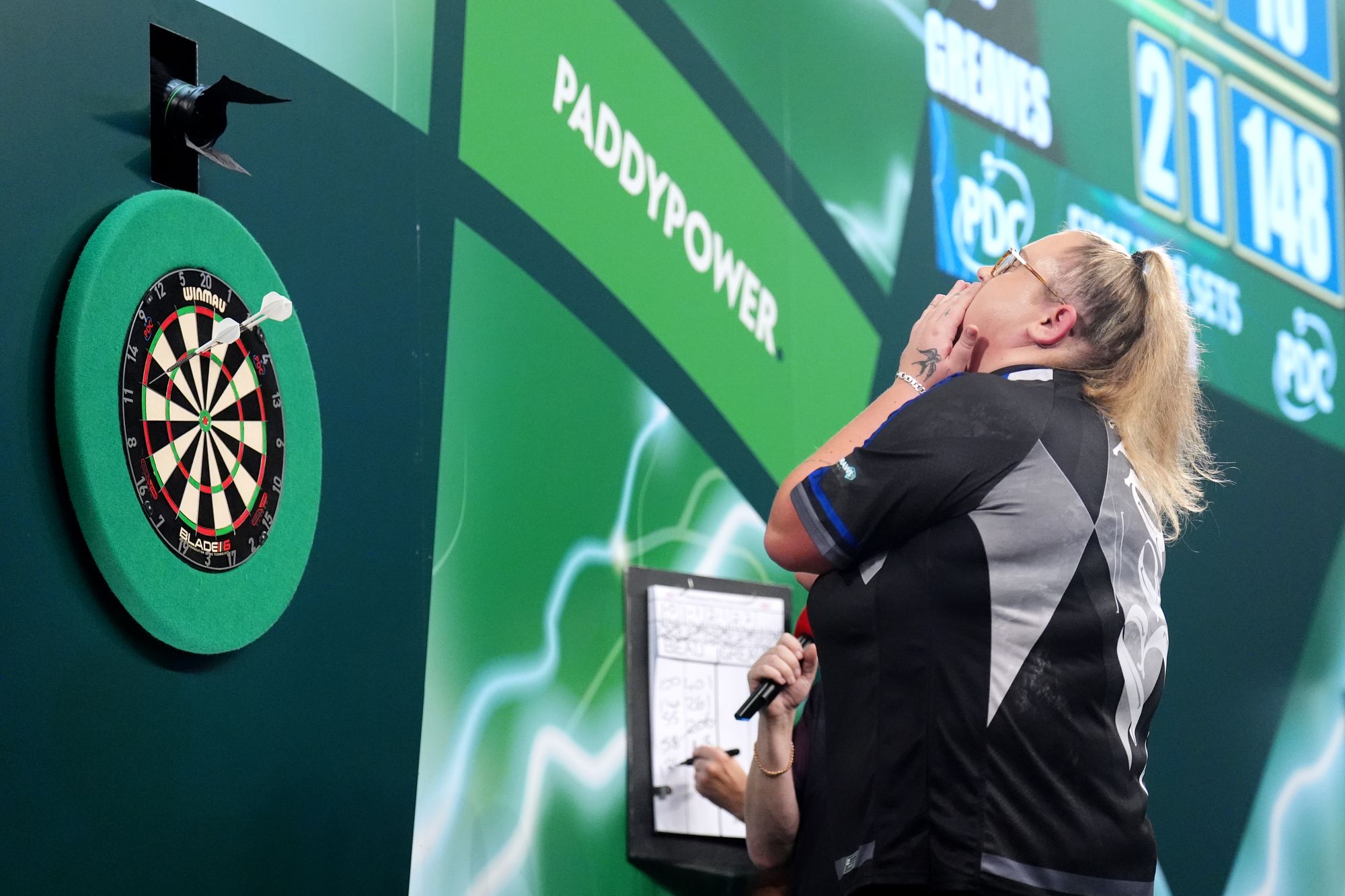
Who is the hardest player to read? “I’d probably say Madars Razma,” he says, referring to the 37-year-old known as the Latvian Razmatazz. “A lot of the time he likes to switch to 19s, or start legs on 19s, so that makes it hard for us.”
If Corstorphine is refereeing in the evening after an intense session spotting for the cameras, it can be a long day. “It can be mentally tiring, having to memorise all these different scores and combinations, it can be taxing. But there’s worse things I could be doing,” he smiles.
Deep in the bowels of Alexandra Palace is another darkened room where camera operators are listening intently to Corstorphine’s instructions beaming down from the truck above. One of those is Chris Pendlebury, who has his fingers hovering over a specially designed dartboard screen which, when he touches a number, fixes our TV picture automatically on that segment of the board. With one touch, he can select a preset zoom anywhere on the board for those clutch moments at the end of the leg.
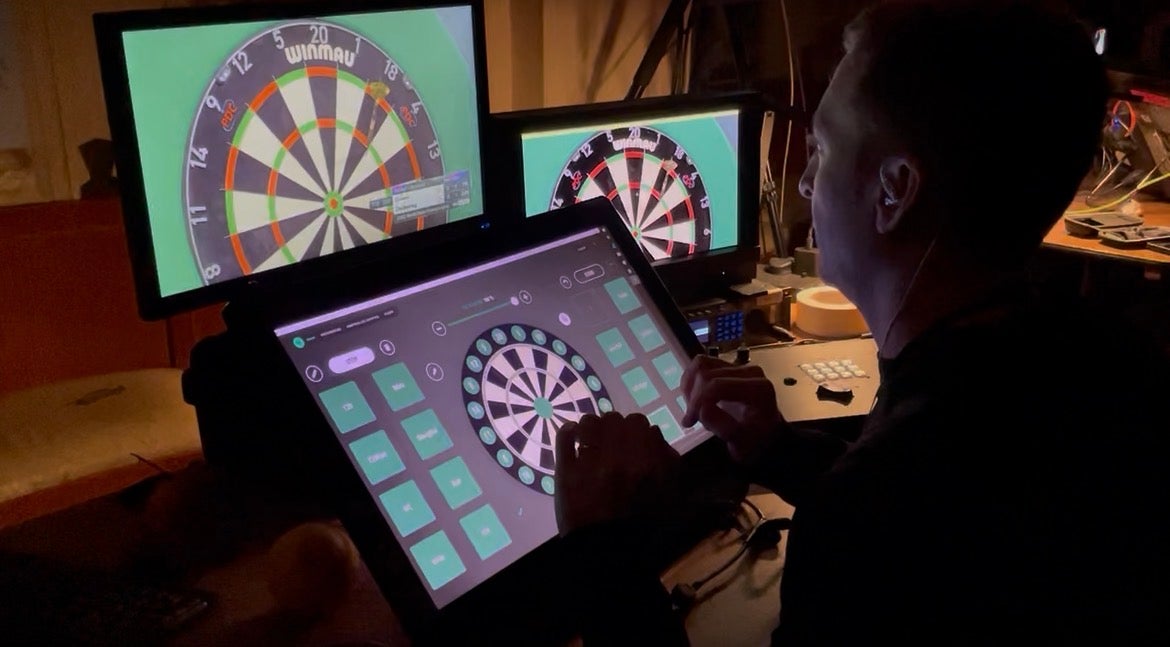
It is equally fast-paced and only a few know how to operate his screen at full tilt. As a result, those few who do work plenty of hours. “I usually fall asleep on my Christmas dinner,” he says.
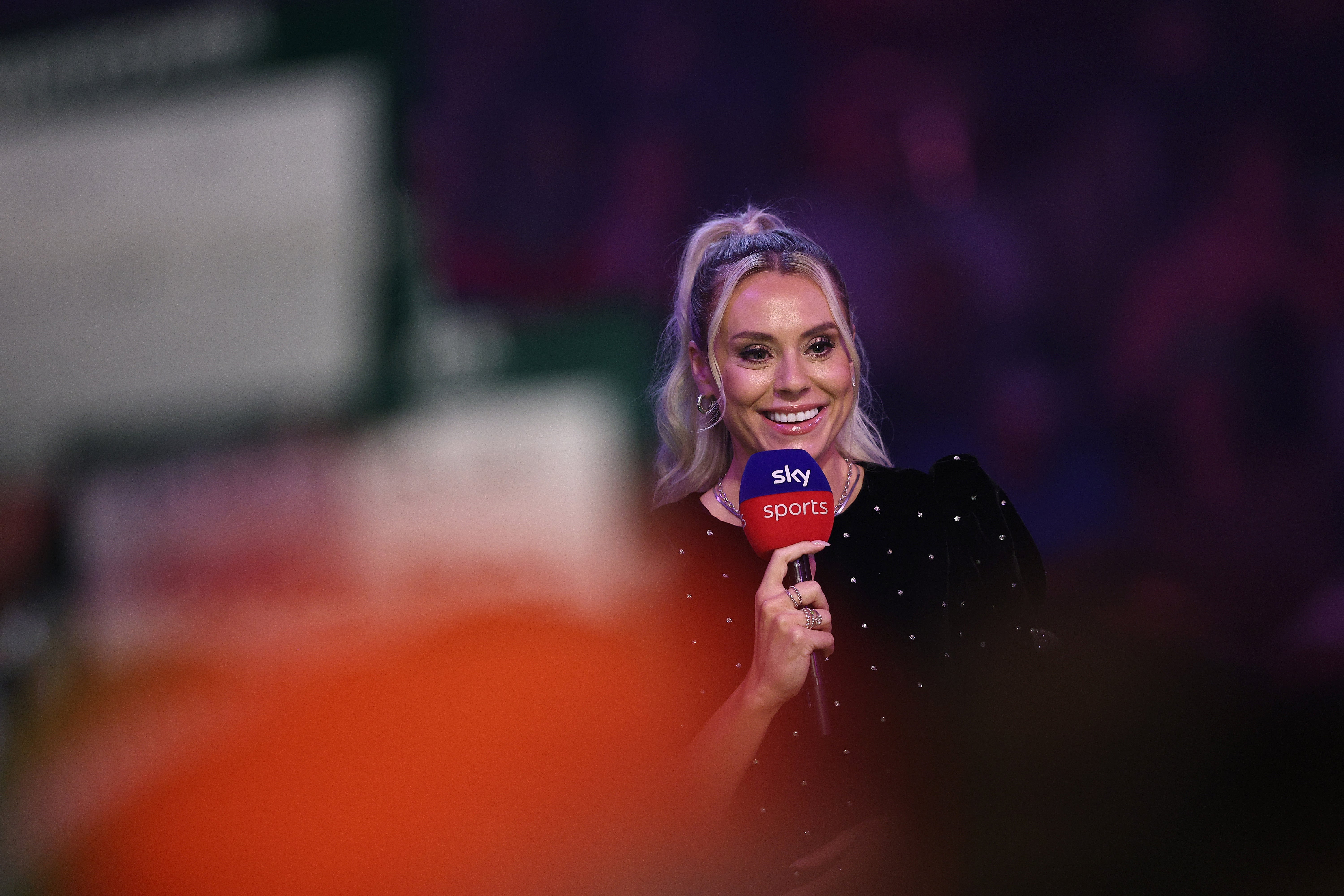
Further exploration behind the scenes finds two men up a long ladder sitting directly behind the stage, working the cameras that look out into the crowd, sitting next to the wire mics that feed into the back of the board. Sky Sports’ presenter Anna Woolhouse is sitting in a goldfish bowl over the auditorium, ready to present the show, while in a cramped metal box beneath her sit the commentators, who watch on four screens with copious notes in front of them and the relentless chatter of producers in their ears.
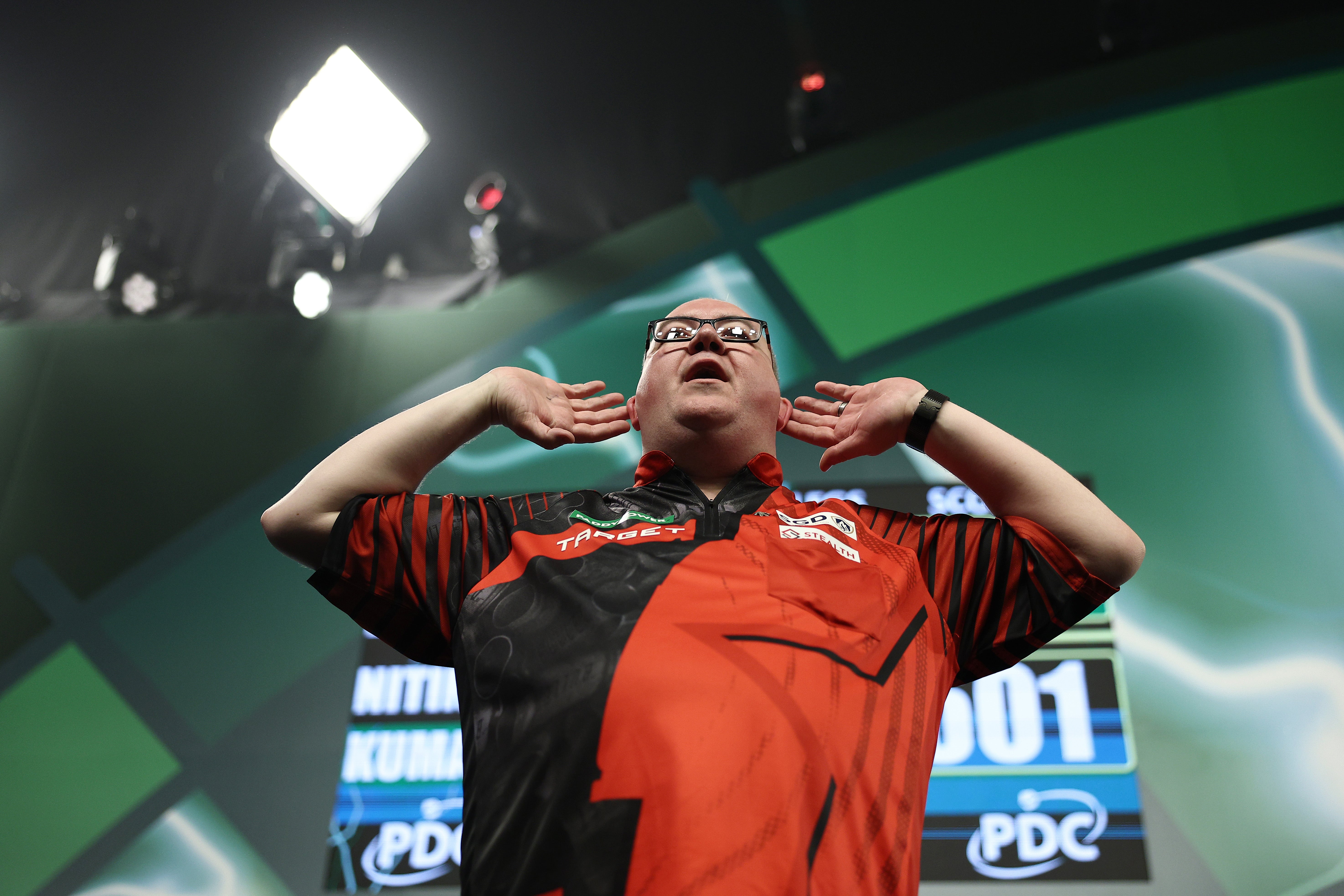
Darts has always been a complex sport to broadcast, but these days it is bigger and more sophisticated than ever. Littler’s emergence brought about Sky Sports’ highest-ever non-football audience when more than 4 million tuned in to see the 16-year-old prodigy lose the 2024 final to Luke Humphries. The sport has exploded; you can see it in the bare facts of this year’s tournament, where there are more players than ever and a record prize pot of £5m, with £1m on the line for the eventual winner.
It has become what camera operator Pendlebury describes as “the Wimbledon of winter”, in the way that, for a couple of weeks each year, it captures a far broader audience than only darts aficionados. Briefly over Christmas, darts is the centrepiece of the sporting landscape.
Millions are tuning in again to see if Littler can retain his crown, a feat not achieved since Gary Anderson a decade ago. The entire show will be beamed into their living rooms. And they won’t know it, but their eyes will be guided by someone out of sight, with only a microphone and an encyclopaedic knowledge of the board.
Luke Littler reveals plan to deal with darts rival after ‘cheating’ claim
Bruno Fernandes’ injury a ‘massive’ blow for Man Utd – Diogo Dalot
World Darts Championship 2026 schedule and results
Luke Littler eases into third round after Gerwyn Price suffers shock exit
Smith among seeds to crash out in World Championships second round
Who is Nitin Kumar? The Indian darts sensation making history at Ally Pally