When the Thai government discusses the Land Bridge, the conversation almost always centres on GDP growth and economic returns. The mega-project, expected to cost at least 1 trillion baht, forms part of the planned Southern Economic Corridor, another effort to boost development in the South.
The idea itself is not new. Since the reign of King Rama V, Thailand has explored ways to connect the Gulf of Thailand and the Andaman Sea. Earlier proposals focused on a canal; the Prayut government almost a decade ago scaled the idea down to a land-based transport corridor linking two deep-sea ports by road and rail. Yet the project has long faced opposition from local communities, environmental groups and some logistics experts.
Last week, the Anutin government reportedly decided to halt the project amid growing public resistance and pledged to review its geopolitical, environmental and economic viability. But infrastructure costs may not be the only thing at stake.
One thing is clear: the environment and nature are perceived as vulnerable. Indeed, natural resources can become a source of national income. Nature isn't just the environment -- it's an asset the state can cash in on.
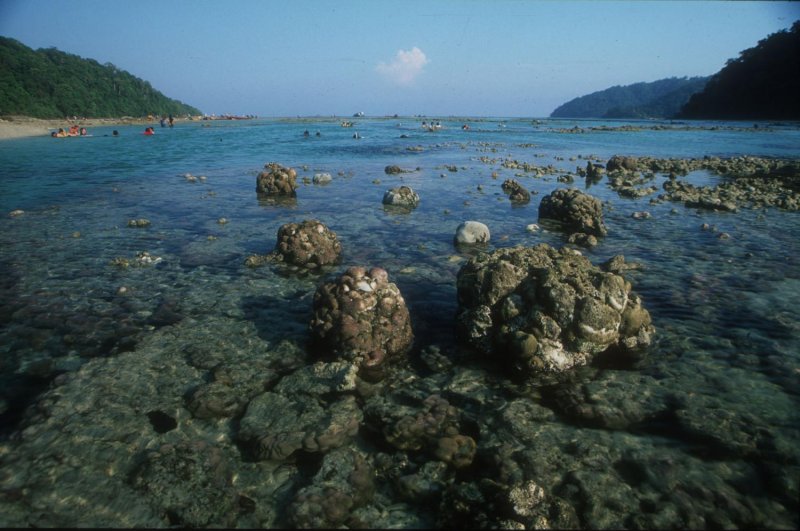
For the Land Bridge project, Thailand is gambling a total of 14,349.88 rai of seagrass coverage, 218,000 rai of mangrove forest, and the biodiversity of the Andaman Sea -- not to mention the economic cost of coral reefs that indeed are a magnet for the tourism economy, for a mega-project whose real benefit remains debatable and unverified.
The debate about the Land Bridge reflects our idea of prosperity. In this notion, prosperity is shaped by the choices we make and the opportunities we forgo. Under this extractive economy, nature has largely been viewed as a victim of extractive industrial development and something that must be protected from development.
We do not have to see this as a binary choice. Indeed, nature has a price tag. Natural resources -- mangrove forests and biodiversity are sovereign financial assets waiting to be valued and capitalised. In this respect, nature is not just an environmental concern; it is a form of national wealth.
In the case of the Land Bridge, Thailand is putting at risk 14,349 rai of seagrass meadows, 218,000 rai of mangrove forests and parts of the Andaman Sea's rich marine biodiversity.
These ecosystems also support tourism, fisheries and coastal protection -- benefits that rarely appear on a balance sheet but have real economic value.
This raises a simple question: what is natural capital, and could investing in nature deliver greater long-term returns?
As countries including Thailand make a transition to a low-carbon economy, ecosystems are increasingly being treated as economic assets rather than environmental afterthoughts. Natural capital refers to the value provided by nature, from carbon storage and flood protection to healthy fisheries and tourism revenues.
Thailand's bid to join the OECD raises the stakes. Thai government must not talk about sustainability. The country needs to recalibrate its economic policy to be sustainable, climate-friendly, and aligned with the OECD's.
In Chumphon and Ranong, nature already has a price tag. Mangroves, seagrass beds and coastal ecosystems can support financing mechanisms that link conservation directly to climate adaptation and economic resilience.
"Nature finance" may sound novel, but it is already happening around the world. Debt-for-nature swaps and blue bonds are showing that conservation and economic returns can go hand in hand.
Seychelles offers one of the best examples. With support from The Nature Conservancy, the country restructured US$21.6 million (715.8 million baht) in public debt and established the Seychelles Conservation and Climate Adaptation Trust to fund marine conservation and climate adaptation. In 2018, it also launched the world's first sovereign blue bond, raising $15 million for sustainable fisheries, marine protection and the blue economy.
The proceeds helped expand marine protected areas and strengthen the country's long-term climate resilience while supporting an economy heavily dependent on tourism and fisheries.
Following Seychelles’ example, Belize and Ecuador adopted similar debt-for-nature arrangements. Belize restructured public debt to support marine conservation, including the Belize Barrier Reef. Ecuador followed with a debt, creating long-term funding for the protection of the Amazon and surrounding ecosystems.
Thailand's circumstances are different, but its economy is also deeply connected to natural capital, tourism and fisheries. These examples show how governments can attract private investment by treating nature as a productive asset rather than a resource to be depleted.
So what comes next for the Land Bridge?
The government has options. Instead of committing vast sums to grey concrete mega-projects, it could invest in sustainable tourism, nature-based and clean industries, and climate-resilient projects.
Conservation areas can generate a good local economy. Mangrove forests or even biodiversity-rich areas can be developed into high-value tourism experiences that generate income for local communities.
Meanwhile, the government must view climate adaptation as a financial investment, not just an environmental afterthought. After all, climate-friendly projects can reduce future financial burdens such as cleanup costs and legal compensation. At the same time, debt-for-nature swaps in terms of blue bonds and other public-private financing models could help close Thailand's growing climate adaptation funding gap.
Thailand is not starting from zero. Programmes such as the Department of Marine and Coastal Resources' COAST initiative, blue carbon mapping efforts and the National Biodiversity Action Plan already provide a foundation for scaling up nature finance.
As climate risks intensify, GDP alone is no longer a sufficient measure of economic progress. It captures the value of infrastructure and industry, but not the ecosystems that underpin livelihoods, tourism, fisheries and climate resilience.
The real question is not how much GDP the Land Bridge might generate. It is whether those gains outweigh the value of the natural assets that could be lost.
The pause in approvals offers a rare opportunity to answer that question. A serious assessment of natural capital could shift the debate entirely, revealing that Thailand's greatest economic opportunity may lie not in replacing ecosystems with infrastructure, but in investing in the natural assets that already sustain its economy.
Satida Adsavakulchai is a Research Fellow of the Climate Finance Fellowship under The Global Good x Amani and Surge Climate Talent (SCT).