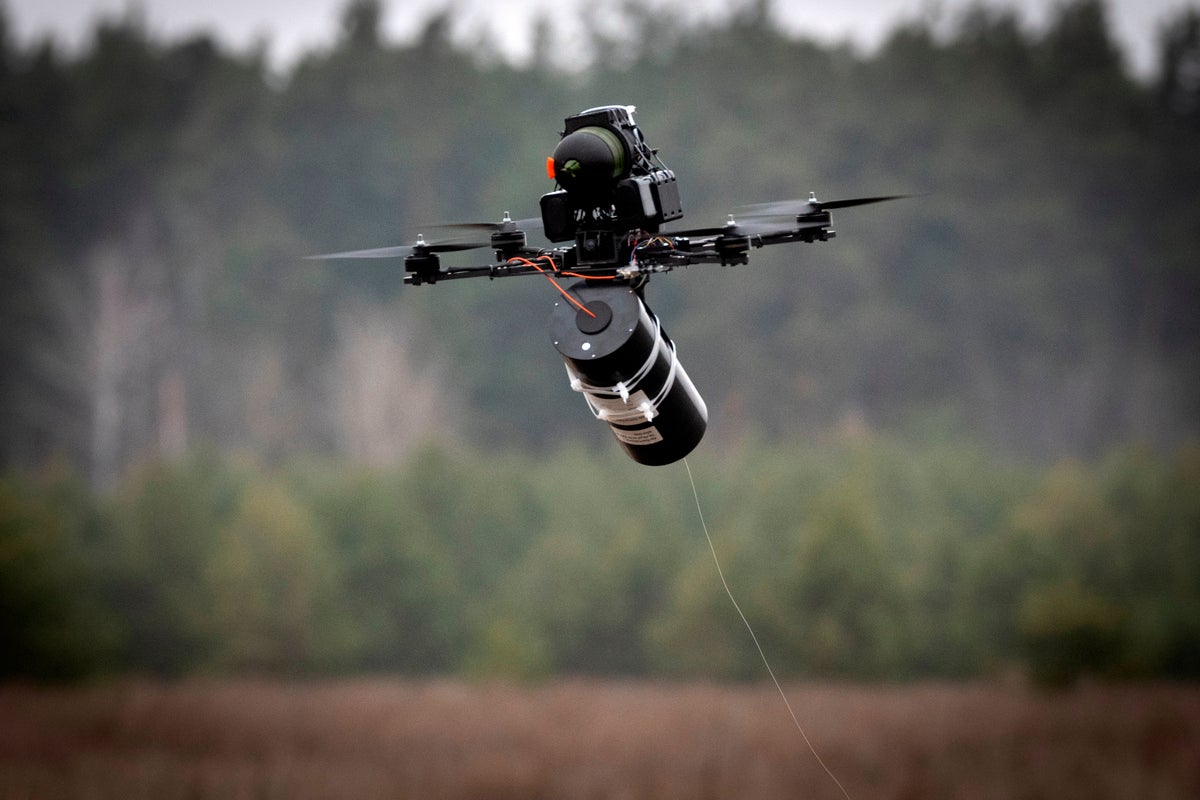
Hezbollah has introduced a new, difficult-to-detect weapon against northern Israel: small drones controlled by fibre-optic cables. These devices, with cables the width of dental floss, are designed to evade electronic detection, posing a fresh challenge to air defences.
Unlike many drones vulnerable to electronic jamming, which can cause them to crash, these fibre-optic variants are directly connected to an operator.
This direct link makes them impossible to jam electronically, a characteristic widely seen in the war in Ukraine. Though not infallible – wind or other drones can tangle their cables – their lethality is high.
Robert Tollast, a drone expert at the Royal United Services Institute in London, stated they are "absolutely deadly," explaining their ability to fly low and creep up on targets. Hezbollah, the Iran-backed militant group in Lebanon, has primarily deployed them against Israeli soldiers in southern Lebanon or border towns.
Experts suggest militaries must either intercept these small, short-flight-path drones, which is difficult, or find a way to snip their nearly invisible cables.
Here’s a closer look at these weapons.
An Israeli military official told AP the fibre optic drones are a relatively new threat during the latest round of fighting with Hezbollah. Hezbollah seems to have turned to them because Israeli air defenses have been successful against larger and more powerful rockets, missiles and other drones, said the official, who spoke on the condition of anonymity in line with military guidelines.
Israel believes the drones are made locally and are easy to produce – requiring little more than an off-the-shelf drone, a small amount of explosives, and transparent wire that is readily available on the consumer market, he said.
He called the drones the biggest threat to troops inside Lebanon but said the Israeli military is working on technological solutions. In the meantime, Israel is taking measures on the ground to defend troops, such as adding nets and cages to military vehicles.
The fibre-optic drones are the latest part of a cat-and-mouse race as Israel’s high-tech defenses race to intercept new threats, especially ones that are less sophisticated.
Ran Kochav, a former head of the Israeli military’s air defense command, said Israel is failing in its attempts to defend against the fibre-optic drones.
“They fly very low and very fast, and they are very small, it’s very difficult to detect them, and even after they’re detected, they are really hard to track,” he said.
Kochav said Israel spent years focusing on strengthening its air defense systems to improve protection against rockets and missiles. But drones were not seen as a top priority.
He said Israel should have been following the advances in fibre-optic drones in the war in Ukraine and assumed that like Russia, other Iranian allies would eventually use them.
Throughout the war in Ukraine, Moscow and Kyiv have been engaged in a race to develop new technology.
Russia pummels Ukraine almost nightly with Shahed long-range attack drones — originally from Iran. Although Moscow has made many improvements to the drones, some can still be taken down by electronic jamming.
fibre-optic drones were developed to get around that problem — although they do not have the same range as a drone that uses a radio link or artificial intelligence to navigate.
In some cases, fibre-optic drones have been recorded with cables extending as far as 31 miles (50 kilometers) said Tollast, the expert in London.
Russia and Ukraine are using many different types of drones “at a phenomenal scale,” he said.
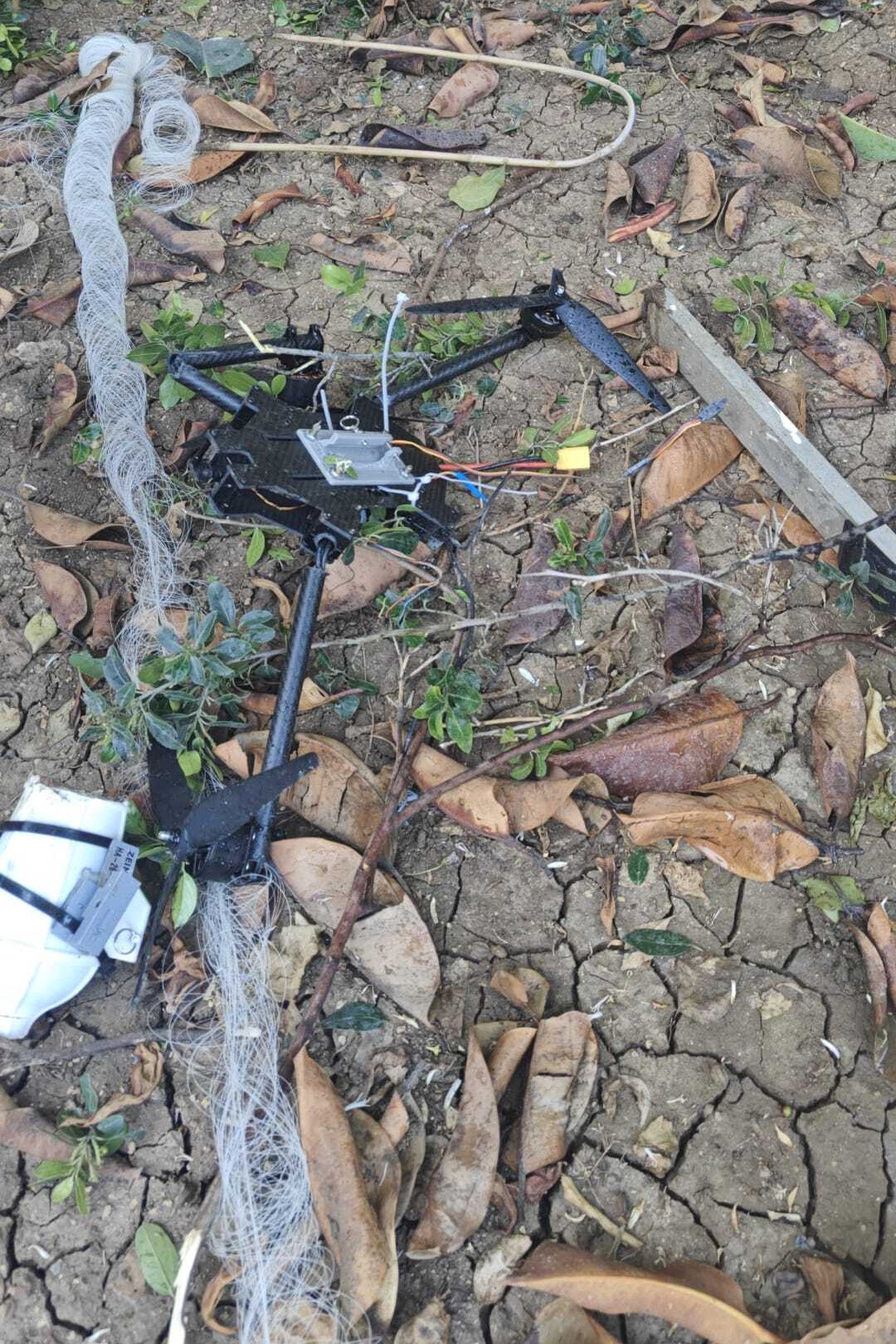
In Ukraine, some fields are coated with drone cables
The fibre-optic drones are in such wide use that footage shows front-line Ukrainian towns coated with shiny, fishing line-like strings, resembling massive spiderwebs shimmering in the sunlight.
Israel has sufficient firepower to intercept drones, but the key is early detection, Kochav said.
He explained that Israel already has suitable technology that tracks changes in light, identifies signals and communications, and can recognize the sound of drone propellers.
But he said these monitoring systems haven’t been widely deployed along the northern border.
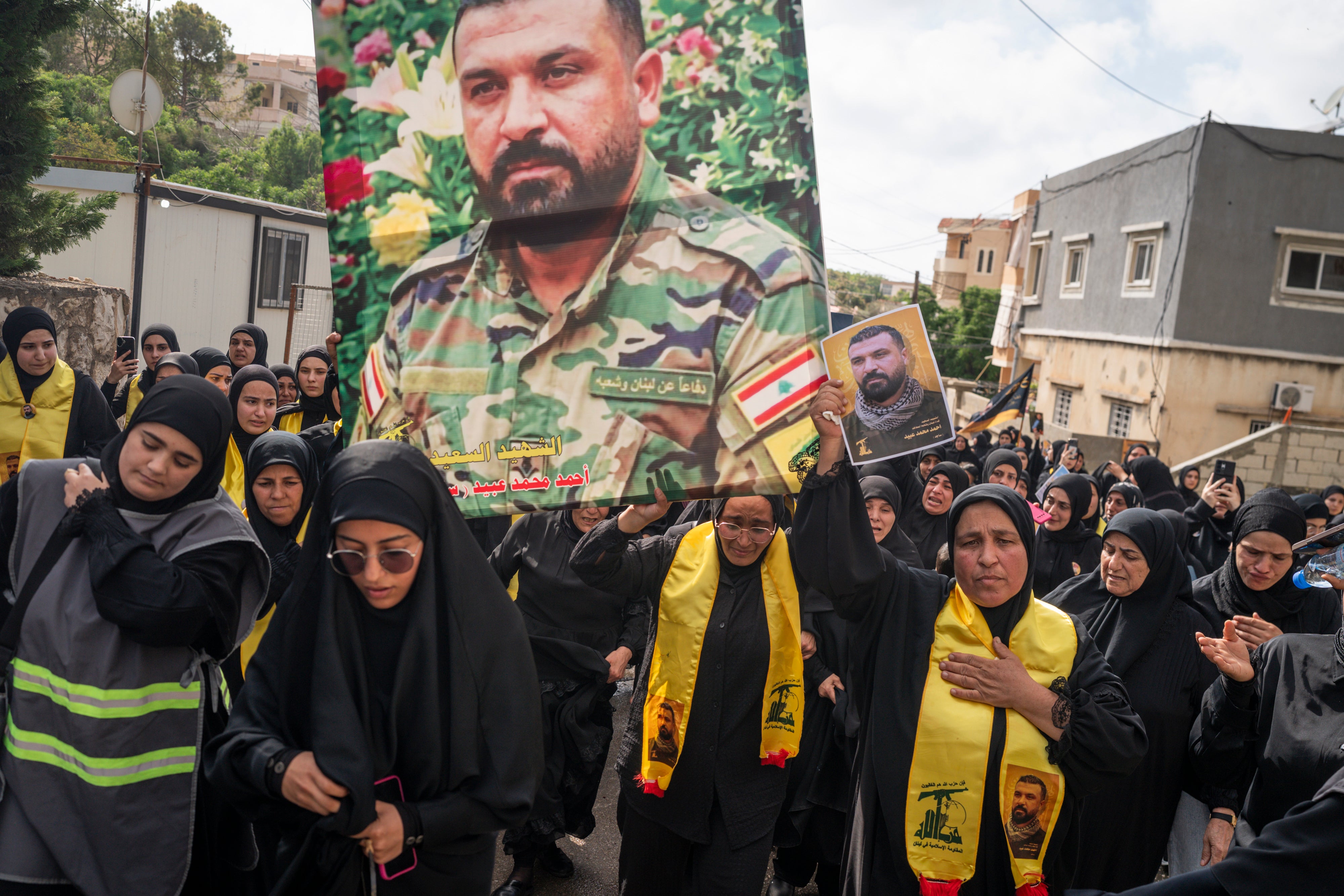
Over the past weeks, Hezbollah has aired videos through social media platforms and its Al-Manar TV station of attacks with these new drones, especially against Israeli troops in southern Lebanon.
These attacks have captured public attention. One attack killed one Israeli soldier and wounded six others, some of them seriously, last weekend. Another attack, on Tuesday, killed an Israeli civilian contractor in southern Lebanon.
In the attack that killed the soldier, Hezbollah issued a video taken by the drone until it exploded in the middle of troops gathering near a vehicle. Another drone was fired at the same location as a military helicopter landed to evacuate the wounded but narrowly missed.
Hezbollah announced that it began using fibre-optic guided drones for the first time during the round of fighting that began March 2, after using other types of drones for years.
Israel also has a fleet of drones that carry out surveillance and attacks, though not necessarily with the fibre optics cables, to target Hezbollah militants.
Zevik Glidai, a 78-year-old math teacher and volunteer ambulance driver, discovered coils of the translucent fibre-optic cables surrounding a drone that crashed into his backyard in the northern Israeli city of Kiryat Shmona on April 13.
His house is 2 kilometers (1.5 miles) from the Lebanon border. He was sitting at home when he heard a high-pitched shriek and a small crash. His neighbor yelled that the yard was on fire.
The two of them put out the fire with a garden hose but noticed something new: The destroyed drone was surrounded by loops and curls of a white thread.
“We are very worried about these drones because there's no way to shoot it down, because we can’t detect it,” Glidai said.
He said there was no warning siren before the drone crashed into his house, and the bomb squad that responded called it a miracle that nearly 2 kilograms (4.4 pounds) of explosives failed to detonate.
“They told me, ‘You have a lot of luck,’” said Glidai, who noted that he's lived through several iterations of Hezbollah weapons in his 48 years in Kiryat Shmona. “They picked up all of the pieces that they could pick up, and they left me a few optical fibre as a keepsake.”
Trump says Iran will ‘have to cry uncle’ to open Strait of Hormuz blockade
Trump eyes fresh Iran military strikes as war rages and oil prices soar
Activists say Israel has intercepted their Gaza aid flotilla near Crete, detaining crews
Iran-US war latest: Oil prices leap as Trump weighs military options over Hormuz
Gun-toting Trump posts extraordinary new threat to Iran: ‘No more Mr Nice Guy!’
Trump’s approval rating sinks to new low as Iran war drives affordability concerns