
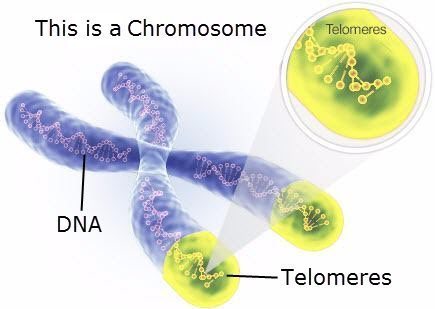
Washington DC: In a new, a research team from Instituto Gulbenkian de Ciencia (IGC; Portugal), led by Jose Escandell and Miguel Godinho Ferreira, discovered a key aspect of the regulation of telomeres – structures that appear at the tips of our chromosomes.
They work as a protective cap that prevents genetic material from unfolding and corroding away. However, when they do not work properly, telomeres can lead to the total erosion of genetic material and can trigger cancer and age-related diseases.
There is an increasing number of human syndromes attributed to telomeres malfunction. One such disease was recently identified as the result of a malfunction of a protein complex known as CST, which is responsible for maintaining telomeres.
Deficiencies in this complex give rise to a telomeropathy known as Coats Plus. This syndrome is genetically inherited and characterised by abnormalities of the gastrointestinal system, bones, brain and other parts of the body.
The work of the IGC researchers now unveils the regulation of the "S" component of that CST complex. The researchers discovered that STN1 (the protein that corresponds to the S component) is regulated by a chemical modification that results in the insertion of phosphorus in this protein, and it can be reversed by an enzyme, the phosphatase SSU72. In this way, it allows telomere duplication and telomerase regulation, which is the enzyme that elongates telomeres.
The researchers also showed that this process is identical both in yeast and in human cells. This means that the regulation of the ‘S’ component has been conserved throughout evolution of species, which somehow reveals the importance of this process for the correct functioning of cells.
This opens new avenues to the discovery of therapies capable of dealing with debilitating diseases associated to defects in telomeres. "The unanticipated role of this evolutionary conserved phosphatase is reminiscent of the regulation of the cell cycle by phosphatases that counteract the role of kinases, thus re-establishing the ground state of 'once and only once' cell cycle processes", said investigator Miguel Godinho Ferreira.
"With this work, we now understand better how telomere regulation works, a key process in cancer and ageing", says Jose Escandell, first author of the publication,” Ferreira added. (ANI)