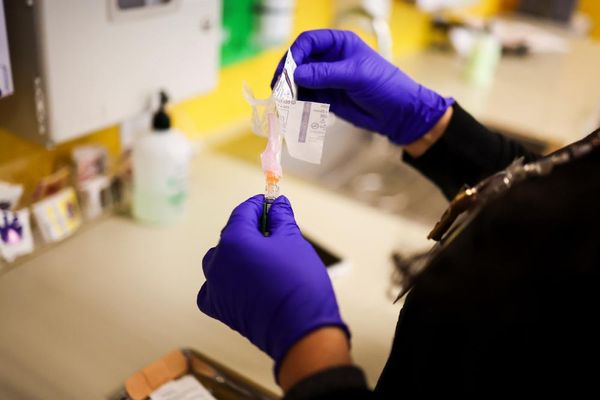
I recently saw a documentary concerning malaria on the French 24 TV station, which I believe should be of some relevance in the Thai context.
Malaria continues to be a problem for many developing nations in the world. The standard prescription treatment used is artemisinin-based combination therapy (ACT) which is prohibitively expensive and comes with numerous potential side effects such as exhaustion and suicidal thoughts.
However, it has been found that a genus of plants native to Africa called artemisia is even more effective in treating the disease.
For instance, doctors in Madagascar studied numerous malaria-afflicted patients and divided them into two groups. One group was given ACTs, while the other was given the artemesia plant in the form of a herbal tea.
The researchers found that while about 80% of the former group improved, well over 95% of the latter group's patients no longer had malaria.
Even more pertinent is the fact that, while patients in the drug group still had traces of the malaria parasites in their bloodstream, almost none of the artemesia-treated patients had any such traces left.
This is very relevant, as malaria has been known to reoccur again and again in patients who were previously affected by it.
Yet the World Health Organisation (WHO) continues to support the standard (ACT) prescription drug treatment, failing to even mention artemesia in its guidelines.
So the moral of the story is, if you know someone who is suffering from malaria or has had the disease in the past, there is an herbal tea treatment which basically cures the disease, and is five times cheaper than the standard medical drug treatment to boot.
Paul
Khon Kaen
Iodine beats uniforms
I suggest that Thai schools stop requiring students to wear uniforms. Instead, any clean and ironed clothing, patched if necessary, will be fine.
Uniforms are not vital to life or learning, yet cost low-income families many hundreds of baht which could be put to better use. A Thailand Development Research Institute panelist at a 2017 Chulalongkorn University seminar stated that 16% of Thai youth were malnourished, with the figure rising to 19% in Isan. This deficiency, of course, also affects brain development.
When asked for an easy way to solve the problem, the panellist replied, "Consume iodised salt." I will note that the WHO advocates worldwide usage of iodised salt for its well-known medical benefits and low cost.
For example, the WHO assumes a cost of US$0.10 (3.18 baht) per person, per year, so the cost of uniforms could be used to supply each family with iodised salt for each student for years.
Yes, requiring uniforms helps lessen the perception of the gap between the rich and poor among kids, but if students could wear whatever they wished, and more funds were used to improve physical and mental development, we would be attacking the gap between rich and poor at the root.
I suggest that we remove the uniform requirement and educate parents on healthy nutrition, including using iodised salt.
Burin Kantabutra
Cash over ethics
One can liken the Chiang Mai governor's attitude of not declaring the province a disaster area because "it could damage tourism" to Boeing's alleged knowledge of its airplanes' problems, but clamming up in the interest of making a profit.
Ethics and moral behaviour go out the window when they are seen as an obstacle to making money. Quite shameful.
Ron Martin
CONTACT: BANGKOK POST BUILDING
136 Na Ranong Road Klong Toey, Bangkok 10110
Fax: +02 6164000 email: postbag@bangkokpost.co.th
All letter writers must provide full name and address.
All published correspondence is subject to editing at our discretion.