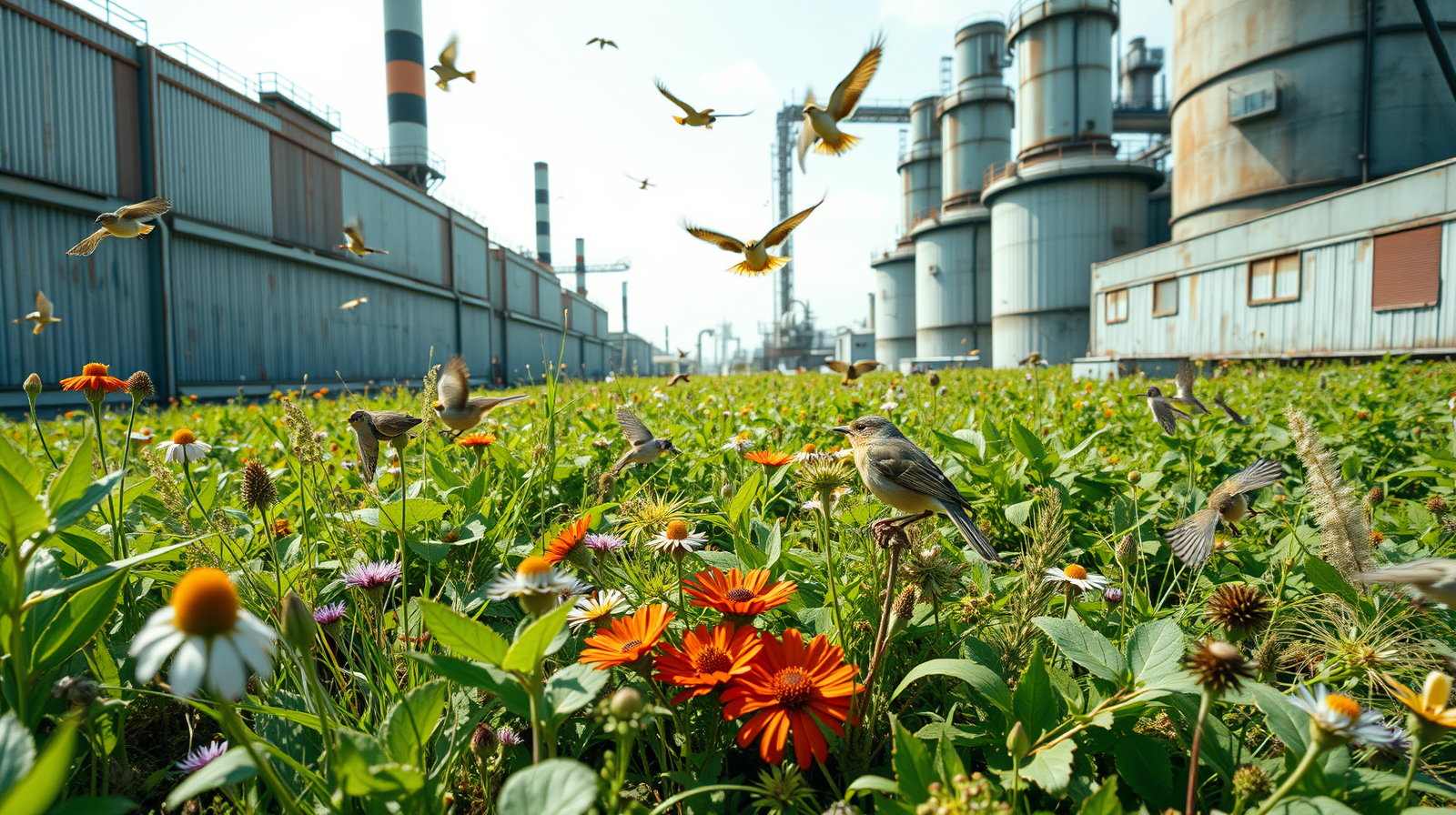
In 1915, Henry Ford bought around 2,000 acres of low-lying riverbank land outside Detroit with a specific dream in mind, turning it into a bird sanctuary. The First World War intervened before that dream could take shape, and the marshland instead became a shipyard, then grew steadily into the Ford Rouge Complex, completed in 1928 as the largest factory on Earth. For most of the twentieth century, Ford's original vision of birds nesting on that land seemed to have been permanently buried under 93 buildings and 16 million square feet of factory floor. Then, in 2000, engineers covered ten acres of one truck plant's roof with a thick carpet of low-growing succulent plants, and within days, birds were nesting there again, on top of the very factory that had replaced Ford's original sanctuary a century earlier.
Get breaking news anytime, anywhere. Download the TOI app now!
From bird sanctuary dream to the world's largest factory
The story of how Ford's land shifted from a planned wildlife refuge into an industrial giant began almost by accident. According to The Henry Ford's own account of the Rouge's history , the Rouge River property was not earmarked for any particular use when Ford first acquired it, and he had even considered turning the land into a large bird sanctuary before those plans changed near the end of World War I, when the United States Navy engaged Ford to build warships. Building B, the first substantial structure on the site, was erected in 1918 to produce these Eagle Boats, and although the war ended before they ever saw action, the effort allowed Ford to widen the Rouge River substantially, opening the way for ore carrying ships to reach the site directly and setting the stage for the sprawling complex that eventually emerged.
Why Ford decided to put a garden on top of a truck factory
Nearly a century later, Ford Executive Chairman Bill Ford Jr. worked with architect William McDonough to redesign the ageing complex, and the centrepiece of that redesign became a 10acre living roof laid across the Dearborn Truck Plant. According to Ford's own landscape master plan developed with William McDonough and Partners , the underlying idea was fairly simple, the soils and grasses that make up a functional living roof absorb water in much the same way that soil and plants do in any healthy natural landscape, allowing the roof to manage rainfall the way open ground once did before the factory existed. The roof became the centrepiece of a wider natural stormwater system, and according to The Henry Ford's account of the redevelopment, rain falling on the living roof is absorbed or filtered by sedum plants before excess water drains into stone storage basins and treatment wetlands, where plants act as natural filters before the water eventually returns to the watershed.
How quickly nature moved back in
What happened next surprised even the people who designed the project. According to William McDonough and Partners' own project record , local killdeer birds had already nested and laid eggs in the sedum within just five days of the plants going down. Ford has continued documenting new nests appearing on the roof in the years since, and beyond birds, the living roof has developed into a genuine ecosystem supporting dozens of species of insects, spiders and birds. Ford has also placed honeybee hives on the wider factory grounds, adding yet another layer of life to a site originally built purely for heavy industrial manufacturing.
What the roof actually does beyond hosting wildlife
Beyond its role as an accidental wildlife habitat, the living roof performs a genuinely practical function for the factory beneath it. The roof is capable of cleaning up to four million gallons of water every year as part of its natural stormwater management role, while also decreasing the building's overall energy consumption by seven percent and improving surrounding air quality by as much as forty percent. The layer of sedum also protects the underlying roof membrane from thermal shock and ultraviolet degradation, extending how long the roof itself lasts compared to a conventional industrial roof.
A record breaking roof that helped launch an entire industry
The scale and ambition of the Ford project made it stand out immediately within the still emerging green roof industry of the early 2000s, back when there were only around fifty green roofs of any kind across the entire US. In 2004, the 10.4-acre Ford truck plant roof was formally recognised by Guinness World Records as the world's largest living roof, a distinction widely credited with helping jump-start the broader North American green roof industry that has continued growing steadily in the decades since. Researchers from Michigan State University partnered directly with Ford on the project, testing different green roof systems and soil conditions before ultimately recommending the specific vegetation layout that was eventually installed across the plant.
A strange, fitting turn in the story of American industry
More than two decades on, the roof remains a striking symbol of how an industrial site built to replace a planned nature reserve eventually grew its own patch of nature back on top of itself. Workers continue assembling trucks on the factory floor below while songbirds nest, butterflies drift and dragonflies dart across the meadow overhead, an arrangement Ford itself now describes, without apparent irony, as home to wildlife. Henry Ford's original vision for that stretch of Michigan riverbank never quite disappeared; it simply took a hundred years, a great deal of steel, and ten acres of sedum planted on a rooftop to finally arrive in a form nobody could have originally predicted. Killdeer nesting on a truck factory roof within five days of the sedum going down is the kind of detail that makes the whole story land. Nature did not wait for an invitation or a survey or a managed reintroduction programme. It simply arrived as soon as there was somewhere to land, which is both the most encouraging and the most instructive thing about the entire project.