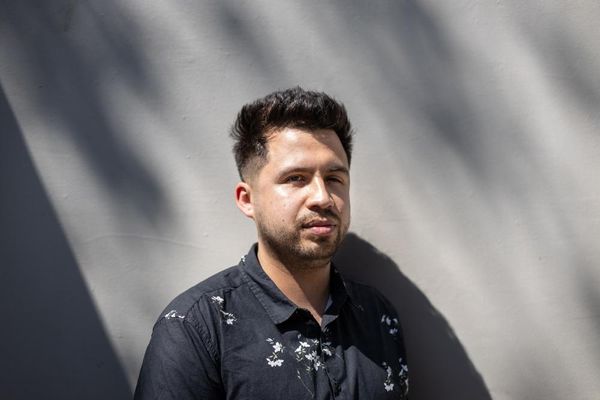
David Opio grew up in a farming community in rural Uganda. He was raised by his mother who, similarly to 80% of adults in the country, was a smallholder farmer. They often struggled to make ends meet, producing just enough food for their own table.
“As a young boy, I watched helplessly as an exploitative middleman took the biggest share of my mother’s hard-earned farm income,” he said.
Opio, now 27, is the founder of Ensibuuko, a social enterprise that is not only introducing farmers to reliable buyers – cutting out the middle man – but also addressing one of the biggest challenges faced by smallholder farmers, access to finance.
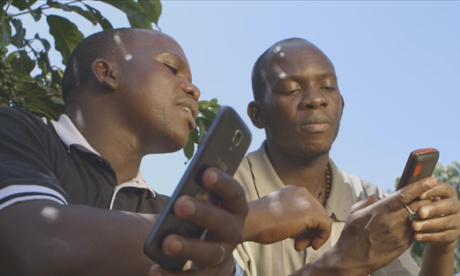
Ensibuuko flagship technology offers MOBIS (Mobile Banking and Information System), which puts SMS and mobile money services into the hands of Uganda’s farmers.
This helps them handle savings, apply for loans and so put unused land into productive use.
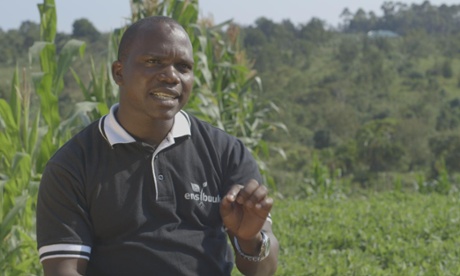
“The process is very simple. The farmer dials onto a USSD (Unstructured Supplementary Service Data) code to access a menu, asks to borrow or deposit savings, enters the required amount, and hits send,” said Opio. “It is very user-friendly and customised to local languages. They even receive SMS notifications of all their transactions and can view their account records on a single dial.”
Smallholder farmers, who typically make between $500 (£334) and $1,000 (£668) a year in Uganda, must have some savings before requesting a loan. But, once approved, they can access up to three times the amount they have saved, to buy agricultural inputs like seeds and equipment. Funds are disbursed to farmers, not by microfinance institutions or banks, but by their neighbours and friends who charge a lower-than-average interest rate. This is how savings and credit cooperatives, known as SACCOs work. Ensibuuko takes advantage of SACCOs, an important source of financing for agricultural workers. In many cases, it’s the only source of financing.
“These are member-based informal financial institutions, an immediate alternative to social finance. They are distributed all over the country and they are made up of rural, small-scale farmers with similar interests who decide to form a group, mobilise funding together, and start lending to each other,” said Opio.
“The tools we’re promoting, the innovations we’re bringing to the community, are not replacing locally-treasured practices. They are about digitising and improving on their operation, making sure that whatever they do, there’s efficiency, accountability and transparency.”
There are already nearly 30,000 farmers in northern Uganda who are connected by five SACCOs, in the Ensibuuko network.
But Opio believes Ensibuuko can connect to 500 SACCOs and reach 3 million farmers. This would be about 65% of Uganda’s agricultural workforce, and is a dream he wishes to see become reality in the next year – with the help of the government.
The Ministry of Trade, Industry and Cooperatives – the government body mandated to regulate SACCOs – has been an advocate for the Ensibuuko platform since Opio and co-founder Gerald Otim won a “hackathon” at the three-day ICT For Agriculture Conference in 2013. In fact, the ministry recently endorsed Ensibuuko’s solution and has committed to collaborate to bring more SACCOs on board.
“Together, we’re working on a roadmap and plan for 2015 to do a six-month pilot where 500 SACCOs, selected by the government, are going to get the MOBIS solution,” said Opio.
As part of this initiative, the Ensibuuko team, which is receiving additional support from Microsoft and MercyCorps Uganda, is organising solution workshops where SACCO staff and managers will receive training about how to use mobile-powered tools, and also deliver them to smallholder farmers in their communities.
The goal is to create a process by which the rural poor across the country – smallholder farmers in particular – can create digital records of savings and income. This would allow them to access more funding (even from formal microfinance institutions), and eventually become commercial farmers, earning $5,000 (£3339) per year or more.
“Our passion here is to make sure that we empower farmers and extend the innovation to SACCOs to build a powerful financial inclusion tool for smallholder farmers,” said Opio. “We’re serving the community we understand. That’s where our focus is. That’s what gives us the energy and zeal to continue doing what we’re doing.”
The Unilever Sustainable Living Young Entrepreneurs Awards is an international awards programme delivered in partnership with the Cambridge Institute for Sustainability Leadership and in collaboration with Ashoka, that rewards inspirational entrepreneurs aged 30 and under who have developed a product, service or application that helps make sustainable living commonplace.
This is an edited extract from an article that originally appeared on virgin.com
Visit Unilever Project Sunlight for more inspirational stories from people making a difference in the area of sustainability.
More from the Unilever partner zone:
- The last-mile distrubution company that keeps India’s kirana shop network running
-
The business that’s helping young entrepreneurs and saving forests
- The mobile phone-powered lifeline for farmers in Ghana
Content on this page is paid for and provided by Unilever, sponsor of the sustainable living hub