ST. JOHN'S, Antigua _ At the Sir Vivian Richards Stadium in Antigua, some evacuees gazed dully into the distance, reliving the horrors of brutal Hurricane Irma and struggling to come to grips with losing everything. Others spoke at great lengths about their collapsed shops on the tiny island of Barbuda, discussing them as if they were still open.
"It looks very sad," said shelter manager Denise Harris, of the residents who were among 1,800 forced to evacuate Barbuda last month and seek shelter on nearby Antigua after the Category 5 storm decimated the island. "From the look on their faces, you know what they went through, what they lost, what they're thinking of."
Some 118 miles south in a devastated Dominica, visiting behavioral therapists tried to relieve the emotional toll of Hurricane Maria, which tore a path through the Caribbean 12 days after Irma, killing dozens and flattening entire villages.
"Some of us suffer in our own little way, in our own little homes, in our own situations," said Dennis Joseph, a former radio broadcaster hosting a televised government briefing in Dominica to offer psychosocial support to Maria survivors. "There are stories about people trying to hide away in closets, under cellars, under beds or just simply running away _ wild into the wind. What happens after that? What happens after the storm leaves?"
Recognizing that the trauma from Irma and Maria's one-two punch is creating a sense of hopelessness and powerlessness among survivors, shelter managers and mental health experts in Antigua and Dominica are on a mission to help people cope with the stress and anxiety. But in a region where mental health awareness is just gaining traction, giving that sort of support isn't easy.
"If we don't deal with the mental health issue, the psychological first aid ... than we are in trouble," said Wendel De Leon, a behavioral therapist who recently led a team of therapists from Trinidad and Tobago into Dominica.
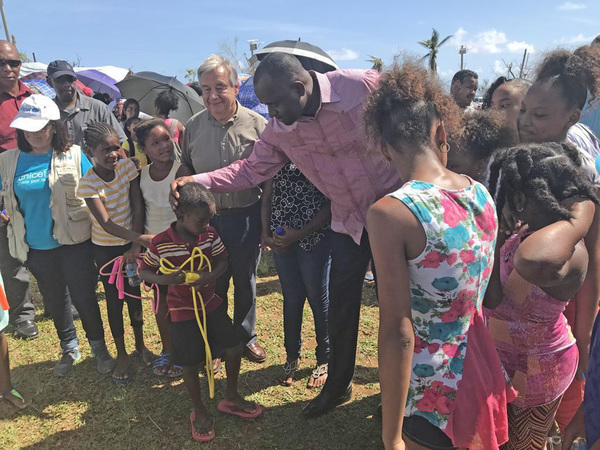
Children are a particular concern. Many seem fine _ but cling to their parents when rain threatens or they have to be separated.
"We tell caregivers that now is the time you have to be cuddling that 2-year-old more than ever," said Heather Stewart, a child protection specialist with UNICEF. "It's going to be difficult for caregivers because they themselves are traumatized so we have to work people through it."
Edlyne Harris, a mother of three who lost her roof and all her windows in Barbuda, said while she believes her children will eventually be OK, the last few weeks have been difficult.
"The 5-year-old cries a lot _ 'Mommy, stay with me, stay with me,'" said Harris, who is temporarily living in a shelter in Antigua with her children.
Harris, who is originally from Dominica where her parents survived Maria after she was slammed by Irma, said she is traumatized by the storm, too.
"I need counseling myself," Harris said. "Sometimes I sit in my room and cry too. You have your stuff and in a blink of an eye, everything's just gone. You have to see where you're going to start again and you're asking yourself, 'How am I going to get a house?'"
Mental health experts say while it's normal for people to feel helpless after such devastation, finding positive ways to cope with the trauma is critical for recovery.
In Dominica, that is happening through shelter visits by therapists and also with play-related activities for children run by UNICEF. Called "Return to Happiness" _ a name designed to take away the stigma of counseling _ the program is aimed at helping children cope with their emotions and feel a sense of normalcy.
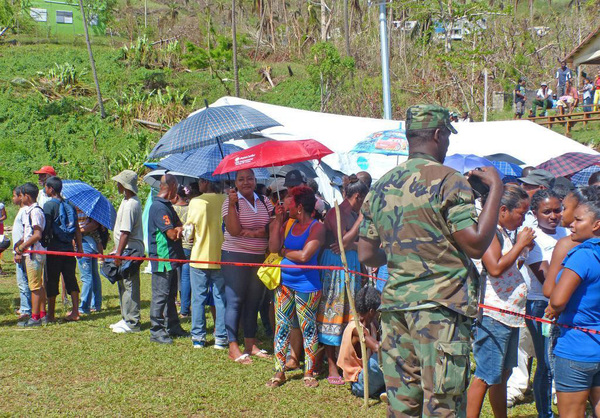
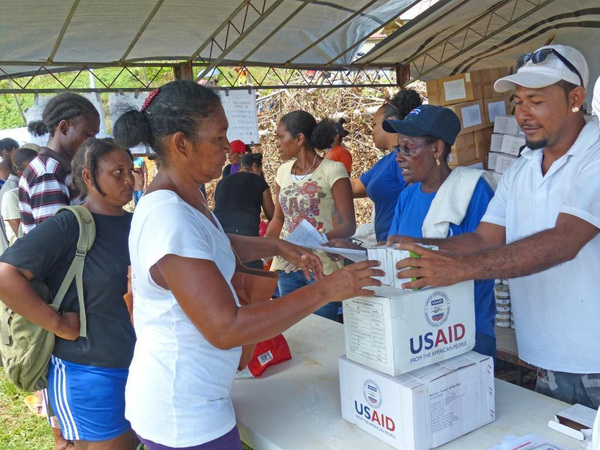
Earlier this month, as U.N. agencies distributed food rations in Salybia, Dominica, a farming village in the Kalinago territory, UNICEF volunteers led young children in games beneath a white tent. Outside in the open field, older kids kicked around a soccer ball while their parents waited in line for food.
"It makes me feel normal," Keon Burton, 15, said as he chased down a ball. Keon said he and his friends try not to think about or talk about Maria because "it was bad what happened to us."
Stewart, of UNICEF, said one reason the outreach is working in Dominica is because similar programs were used after past disasters such as 2015's Tropical Storm Erika. The therapy, she said, is non-threatening.
"It's through play, art therapy, storytelling _ students are able to relate their particular experiences. Yes, you'll have sadness at times, but you know you're in a place of safety where everybody has had an experience of its own kind," Stewart said.
Still, in places like Antigua, where UNICEF recently held a sporting event featuring cricket and other outdoor activities at the cricket stadium to promote integration between Barbudan and Antiguan schoolchildren who are now living on the same island, the idea of talking to a stranger about your feelings requires some getting used to.
Samantha Burnette, manager of the shelter set up at the National Training Center, said many of the children appear to have adjusted and even refer to the shelter as "home." But she knows that many haven't gotten over the fright of their families in Barbuda fleeing from house to house in the middle of the storm.
"Sometimes you see them drifting. Sometimes you see them sitting at a far distance, and we just grab them and they say, "OK," and they are back to reality," Burnette said.
Burnette said a social worker visits the shelter three times a week, spending the day meeting with parents and kids. That counseling has especially become important as the number of residents in the shelter grows in the weeks after Irma _ a sign that that friends and family who took in storm-battered refugees have grown tired of the living arrangements.
Efforts to help children cope still sometimes meet resistance. When a school counselor approached Iesha Hunter about putting her 10-year-old son Trevon Lawrence in post-Irma counseling, the mother of two who is living at the National Training Center quickly nixed the idea.
"He said he's OK," Hunter said.
She admitted that her son has crying spells, but she doesn't "want to push it because I really don't want him bringing back the memories."
That kind of response has Philmore Mullin, director of the National Office of Disaster Services in Antigua and Barbuda, paying close attention to the initial assessments of counseling needs _ and wondering if the work will have an impact.
"Traditionally, we do not have a history of sharing personal information with strangers," he said. "They need to tread lightly."