Humanity has been dealing with some crunchy issues over the past year: a global pandemic, economic dislocation, climate change and heightened geopolitical tensions over Ukraine and Taiwan, to name a few. But in future we may look back on our times and ask one far more consequential question: was it really such a good idea to contact aliens?
Michio Kaku, the prominent theoretical physicist and author, is not alone in thinking that any successful attempt to alert any extraterrestrial intelligence to our presence might be a catastrophically bad idea. “I think it would be the biggest mistake in human history,” he told the last year. Kaku conjured up images of technologically superior interstellar conquistadores mishandling humans as brutally as Hernan Cortes dealt with Montezuma’s Aztecs in the 16th century. “If the aliens were to come, it’s not going to be a pretty sight,” he said. “Some people will worship them as gods. Other people will think they’re devils. And other people will want to cut a deal.”
But there are many astronomers who are excited about the idea of making contact with any extraterrestrial intelligence and are stepping up efforts to do so. One of the aims of the $10bn James Webb Space Telescope, which has just been launched, is to search for habitable exoplanets (planets orbiting stars outside our solar system), where other lifeforms may yet be found.
But there is a significant difference between the passive search for extraterrestrial intelligence, known as SETI, which is relatively uncontroversial among astronomers, and actively messaging extraterrestrial intelligence, or METI, which stirs up far more opposition.
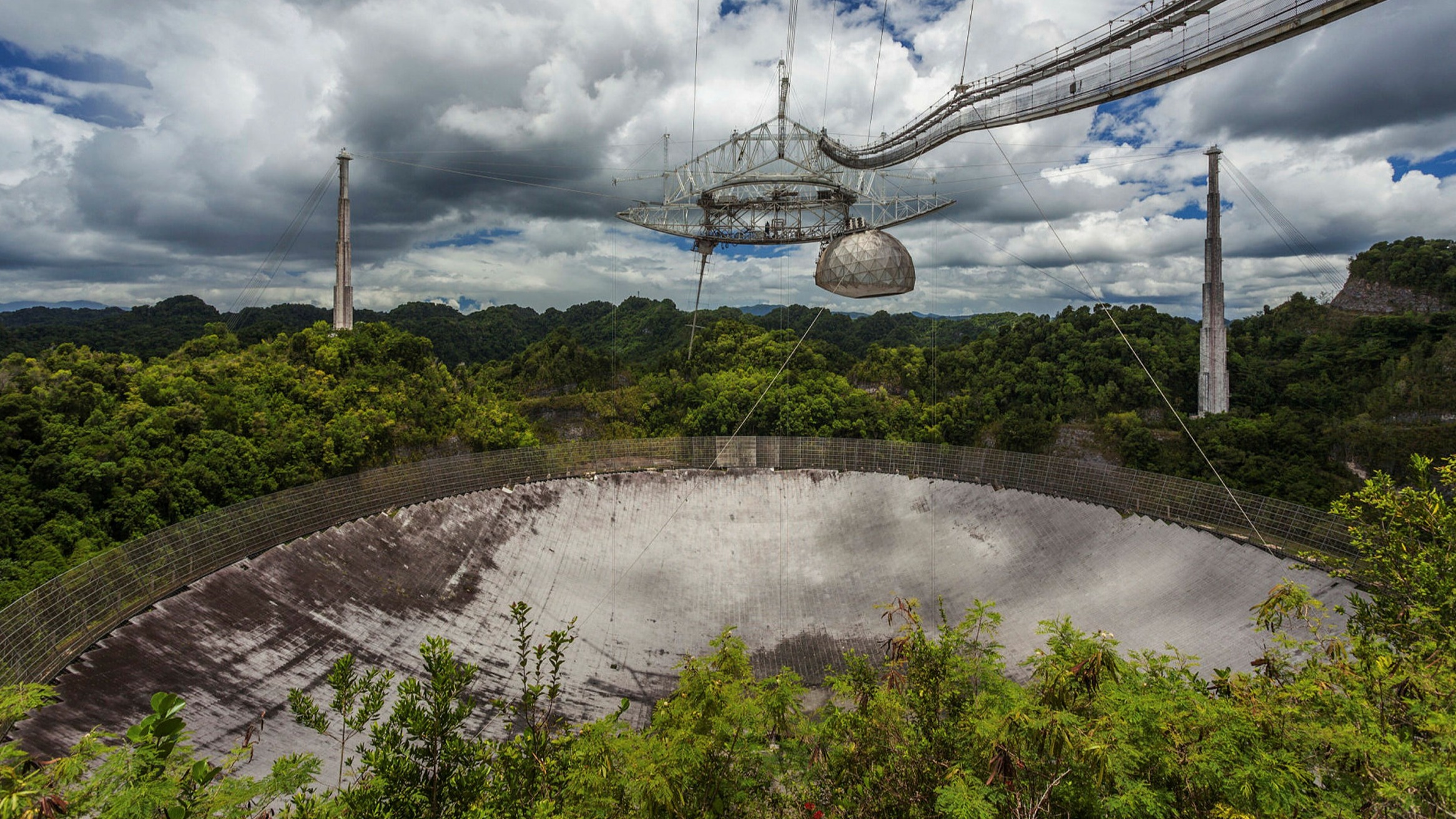
The first attempt to say hello to the rest of the universe was made in 1974 when a group of astronomers broadcast a message from the Arecibo Observatory Radio Telescope aimed at the star cluster M13, some 25,000 light years away. Many thousands of years will pass before we can expect any kind of reply — unless you have overdosed on credulity and believe that two crop circles, containing a human face and an adaptation of the original message, found in an English field in Hampshire in 2001 already constitute the “Arecibo answer”.
Several probes have since exited our solar system on a one-way ticket to advertise humanity’s existence. Nasa, among other space agencies, sponsors research in the field of astrobiology, which pursues “origin-of-life and life-beyond Earth” investigations.
In 2015, a non-profit research and education organisation, called METI International, was founded in San Francisco with the goal of messaging extraterrestrial civilisations. Two years later, it transmitted a message, including maths formulas and music by Jean-Michel Jarre, to the red dwarf Luyten’s Star, 12 light years away.
Douglas Vakoch, METI International’s president and founder, argues that if aliens were sophisticated enough to travel vast distances to reach Earth, they would be unlikely to need anything we have to offer. So we should not be afraid of beginning a cosmic conversation. “Fear does not protect us, it only restricts us,” he says.
One intriguing idea, floated by Jeff Hawkins in his book , is that we could launch some massive orbiting Sun blockers to signal our presence on Earth. These blockers, which would orbit the Sun for millions of years, would create slight, unnatural, detectable reductions in starlight, akin to sending out a message in a bottle to the rest of the galaxy.
But all attempts to contact aliens raise profound questions. Who has the right to speak for our planet? What message should we send? As Kathryn Denning, an anthropologist at York University in Toronto, has asked: why should scientific experts unilaterally decide the planet’s risk tolerance levels as opposed to a six-year-old girl in Namibia, who will live longer and has more at stake?
These are good questions, which highlight how much the debate about METI revolves around humans more than aliens. The controversy may also count as a rare scientific debate inasmuch as neither side can produce a fragment of evidence to support their arguments. The discussion is wholly speculative, shaped by alarmist science fiction narratives, sketchy beliefs in the universality of humanity’s impulses and (possibly false) assumptions that extraterrestrial intelligence exists.
Ultimately, therefore, the question narrows down to this: is humanity’s collective urge for discovery greater than its fear of the unknown? To which, I would argue, many centuries of human history have given a clear answer: Yes.
Copyright The Financial Times Limited 2022