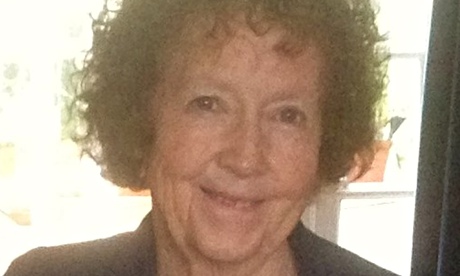
My sister, Helen Peters, who has died of cancer aged 71, helped develop a scheme that allowed refugees to study or work in Britain after fleeing their home countries without proof of qualifications.
She was born in Oxford to Peggy (nee Brennan) and Patrick Attlee, and was originally named Patricia. Our father became a diplomat after the second world war and she grew up in Greece, Turkey, Uruguay and Venezuela. Helen was sent to boarding school in England and then studied at the Sorbonne, Paris, where she made lifelong friends and developed an enduring affection for France. Back home she joined the spiritual movement Subud, taking the name Helen, and met and married Harvey Peters in 1968.
Throughout the 1970s and 80s, while raising her three children, she taught in many institutions, including Waltham Forest college and North London Polytechnic, later London Metropolitan University.
Helen pioneered the use of Accreditation of Prior Experiential Learning (APEL) as a tool for social justice. APEL takes into account the domestic and social background of a student in assessing their academic achievement and qualifications to date. In the 90s, she worked on a module, Making Your Experience Count, supporting students from diverse backgrounds in making claims for some kind of academic credit based on their experience of oppression, disability or community work. This was published under the title Cracking the Code.
Helen helped develop an APEL route for refugees, many of them doctors, lawyers and teachers who had fled with no evidence of their qualifications or whose qualifications were not recognised in the UK. Established in 1995, the Refugee Assessment and Guidance Unit (Ragu) is still working today to improve the education and employment prospects of refugees and asylum-seekers.
Following the end of apartheid in South Africa, Helen helped the University of Cape Town use APEL processes to recognise the learning that black students from the townships brought with them to the university. She also developed a number of units as an Open University tutor.
Helen campaigned for workers’ rights, visited Greenham Common, and monitored elections in Nicaragua. She was also an active trade unionist within higher education.
Her life was full of books, cycling, gardening, and she delighted in the company of children. When she and Harvey divorced, his new family became an extension of their own. Helen found a soulmate in Phil Hingley, and together they visited family in Australia and New Zealand, sailed the Mediterranean, trekked in Peru, and engaged in politics, yoga, music and theatre.
She is survived by Phil, her mother, Peggy, her siblings, Jeremy, Margaret, Thomas and me, her children, Howard, Lenny and Rozi, and grandchildren, Lucas, Aerynne, Brogan, Oisin and Javier.