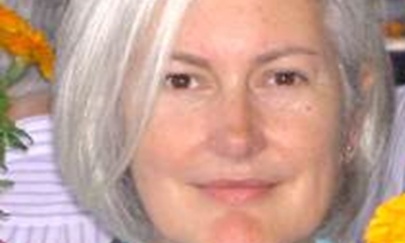
My friend Helen Leith, who has died of cancer aged 56, was deeply involved both as a nun and as a music therapist with the poor and marginalised. In particular, Helen worked with female prisoners, carrying out pioneering music therapy to help with their resettlement into society.
Helen was born in Australia to an Australian father and English mother. Her family came to the UK in 1968. She was a talented musician and, after leaving Altrincham grammar school, she took up an offer to study with a distinguished bassoon teacher, Albert Hennige, in Detmold, Germany, graduating in bassoon and piano. While there, she became committed to Catholicism and – never one for half measures – joined the Institute of St Boniface as a Benedictine nun. She worked for the order in Germany, Paris and London. Helen’s particular concern was with the poor and the destitute. After the genocide in Rwanda in 1994, Helen made visits there to work with women and children.
Back in London she began to feel that her work was restricted and she wanted to put her musical skills to better use. She did a master’s degree in music therapy at Nordoff Robbins in London, and felt that this was what she wanted to do. She also told me once that she was “fed up with the men in the church”. So she left the order in 2008, and started to work at Bronzefield women’s prison, in Surrey. Helen was convinced that music therapy could help female prisoners both in prison and after their sentence ended. Her work here aroused great interest and attracted funding, and she was invited on to the PhD programme at Aalborg University in Denmark, in association with Anglia Ruskin University, Cambridge. She had begun to build this work towards a PhD when her cancer was diagnosed in 2011. Calmly she fitted together her work, her treatment and her friendships.
It was after her diagnosis that she met John Newman, a retired business consultant, through his wife, who was suffering from a cancer similar to Helen’s. John’s wife, Mary, died in 2012. After this, Helen and John had two years together as partners. They knew that their time together was to be brief, but they made the most of it. Helen completed her thesis on music therapy and resettlement of offenders, and in October she triumphantly defended it in public (as is the practice in Denmark) before her examiners, colleagues and friends in Cambridge.
She is survived by John and by her sister, Margo, and two nephews.