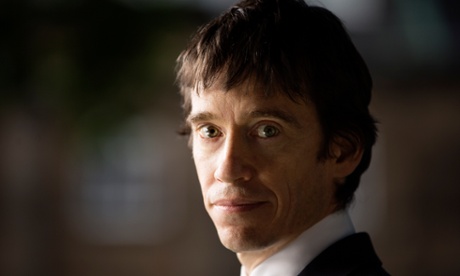
Rory Stewart was one of the more curious appointments to the Conservatives’ government team in May. The surprise was not that David Cameron should ask Stewart to join his team – there are a great many far less talented ministers shuffling papers into red boxes in the outer reaches of Westminster – but that Stewart should agree to become parliamentary undersecretary of state for environment, food and rural affairs. Junior ministers don’t get much more junior than this.
As a free agent on the Conservative backbenches, Stewart had swagger. His views on international diplomacy in the Middle East were taken seriously and as chair of the Commons defence select committee he had real influence. Now his main concerns are hedgehogs. Even for a man who represents a rural constituency and has a natural affinity for the great outdoors, this is something of a comedown.
Defra questions seldom attract more than a handful of MPs – put it down to the 9.30am Thursday start – and not all of those present always appear totally awake. “What plans does the government have to protect hedgehogs?” demanded Conservative Oliver Colvile. It made a change from Syrian refugees, I suppose.
Most ministers like to use the dispatch box as a prop, either to languidly lean a single elbow on it to demonstrate the insouciant command of their brief or to grab it dramatically when making a powerful point. Stewart opted for the road much less travelled by choosing to virtually slump across the dispatch box.
“The hedgehog is a priority species,” Stewart replied in a dry monotone. “As such, it is protected under the terrestrial biodiversity group, but fundamentally we rely on the countryside stewardship scheme to protect the habitat on which this iconic relative of the shrew depends.” It was an answer that could have come straight off a Wikipedia page.
Colvile then chose to implicate badgers in the decline of the number of hedgehogs: this was too much for Labour’s Barry Gardiner. “I hope the minister is aware that there is some black propaganda being put around about badgers and hedgehogs,” he said. “May we have the science on this, not some black propaganda blaming badgers?”
Stewart was more than up to speed on the dark arts of the badger. “A national hedgehog survey is currently being conducted, looking at exactly this issue. As the honourable gentleman has pointed out, in relation to hedgehogs, badgers are not a black-and-white issue.”
Was this some kind of joke? Various Tory MPs looked anxiously at one another, trying to work out whether they were supposed to laugh. They thought better of it. Not a smile. Not even a flicker of emotion had crossed Stewart’s face as he had spoken. Only the ice-cold eyes betrayed he was even conscious. He’s not the sort of person you want to play poker against.
Everyone in the House was now in terror of Stewart: everyone but Tory Philip Hollobone, one of the few MPs who is entirely indifferent to the public mood as he generally has nothing but Kettering on his mind. Not this time, though. Now his thoughts appeared rather more existential.
“It is a pretty miserable life being a hedgehog,” he said sadly. “They are covered in fleas, they are asleep for most of the year, when they do wake up, they are splattered on the road.”
It sounded as if Hollobone was actually describing the life of a backbench MP rather than a hedgehog. Just a few hundred yards away in the Methodist Central Hall in Westminster, Labour’s Liz Kendall might have been nodding in agreement.
The final speech in her leadership campaign was ending in a tearful concession of defeat. For a few weeks early in the summer she had shone brightly, but now she was that hedgehog splattered in the road. Had it all been worth it? Not even Kendall probably knows the answer.