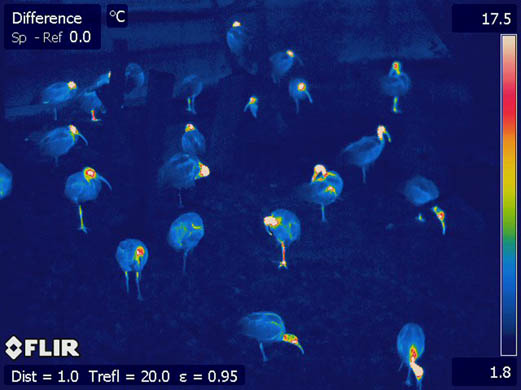
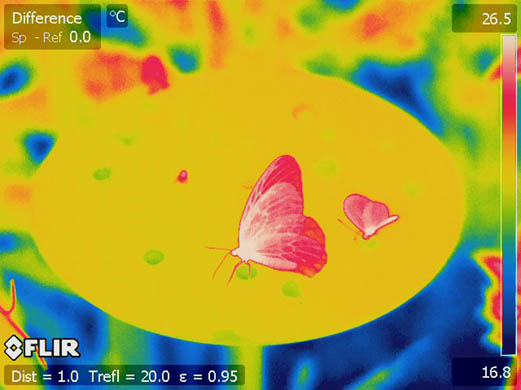
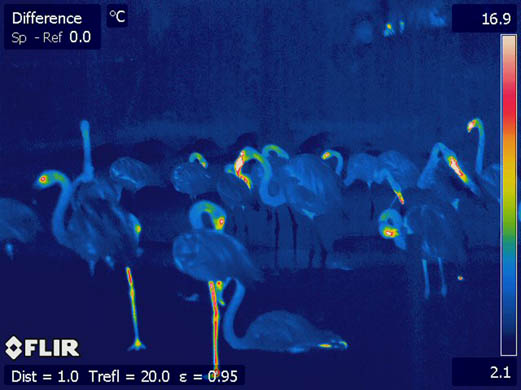
These sacred ibis are well insulated, with only their eyes and one leg losing heatPhotograph: Steve Lowe/Zoological Society of LondonBy changing the parameters on the thermal camera, the veins running through this butterfly’s wings are clearly visiblePhotograph: Steve Lowe/Zoological Society of LondonThese flamingos have brilliant insulation, allowing heat to escape only through one legPhotograph: Steve Lowe/Zoological Society of London
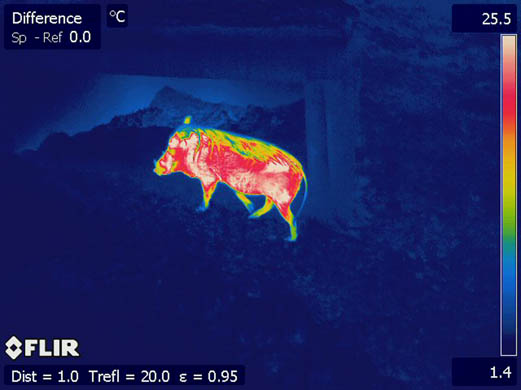
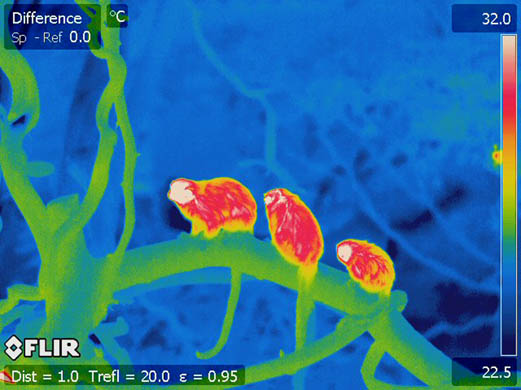
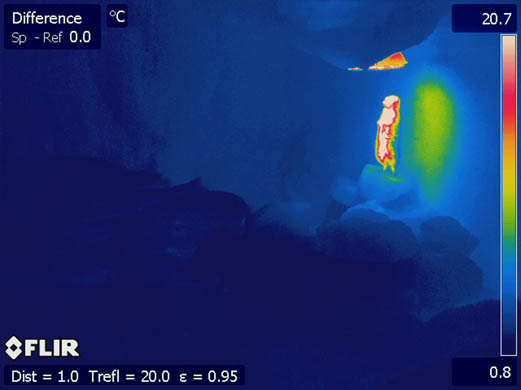
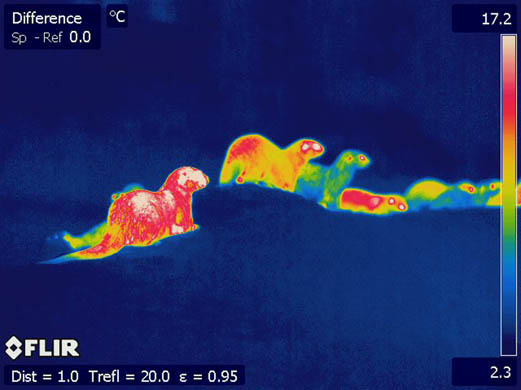
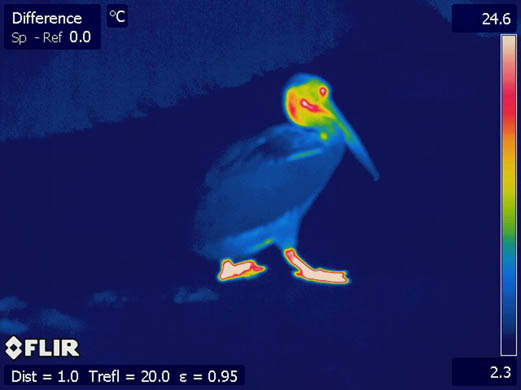
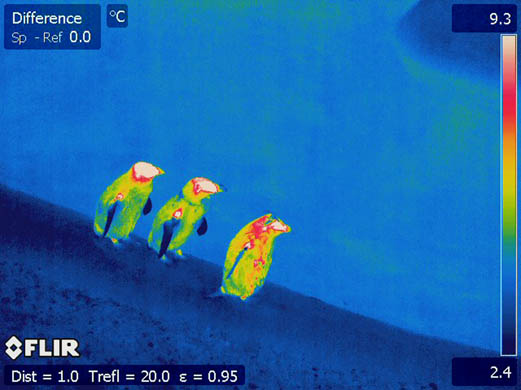
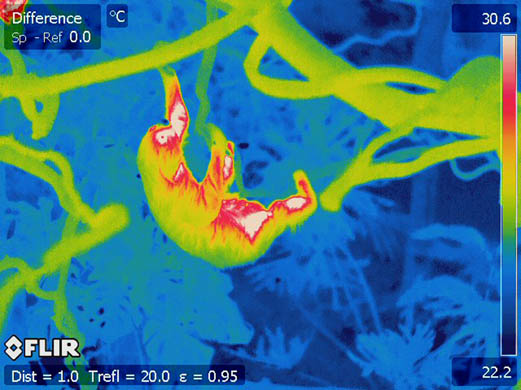
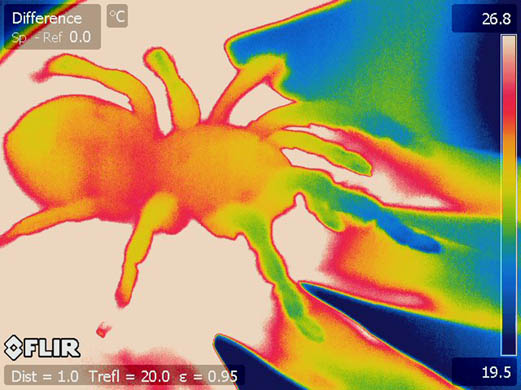
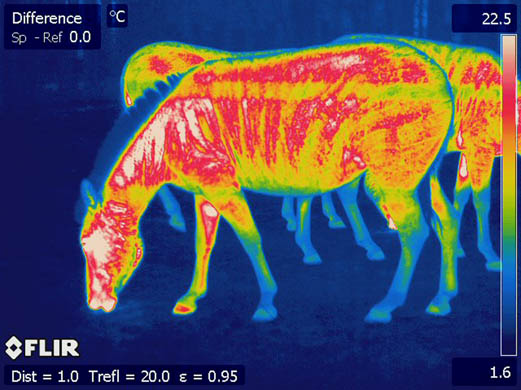
The coarse hair on this warthog’s back helps keep him coolerPhotograph: Steve Lowe/Zoological Society of LondonLucifer the lion’s mane isn’t allowing any heat to escapePhotograph: Steve Lowe/Zoological Society of LondonThree silvery marmosets dangle their cool tails behind themPhotograph: Steve Lowe/Zoological Society of LondonFatty the meerkat enjoys a turn under his heatlampPhotograph: Steve Lowe/Zoological Society of LondonAsian short-clawed otters Photograph: Steve Lowe/Zoological Society of LondonThis pelican, which had just stood up after sitting on its feet, has left a clear trail of warmer footprints behind itPhotograph: Steve Lowe/Zoological Society of LondonThree South African black-footed penguins trundle along the edge of their cold poolPhotograph: Steve Lowe/Zoological Society of LondonThe cold nose of this sloth is clearly visible as it clambers through Rainforest LookoutPhotograph: Steve Lowe/Zoological Society of LondonA closer look at the Mexican red-kneed bird-eating spider shows that the tips of its legs are the coolest areasPhotograph: Steve Lowe/Zoological Society of LondonThe dark stripes on these zebra clearly show up as warmer than the white areas because they absorb heat instead of reflecting itPhotograph: Steve Lowe/Zoological Society of London
Sign up to read this article
Read news from 100’s of titles, curated specifically for you.