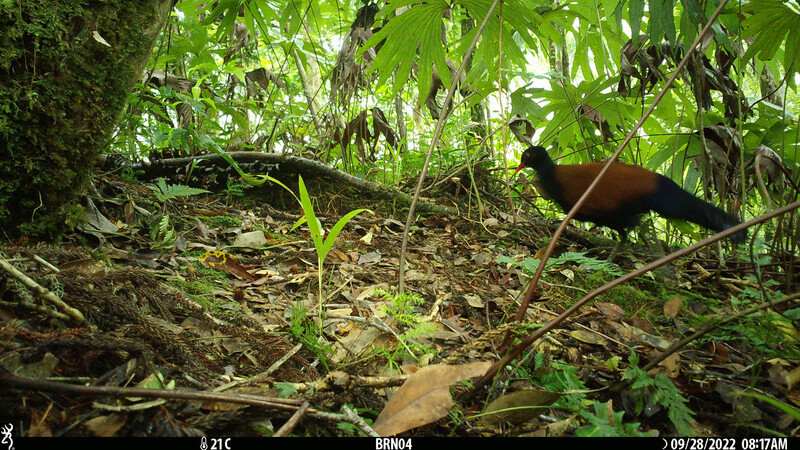
Back in 2022, researchers in Papua New Guinea, with the vital help of the local community, made an important rediscovery for wildlife conservation. Through the use of camera traps, they recorded footage of a black-naped pheasant-pigeon. Known locally as Auwo, this bird species that hadn't been seen by humans since its first discovery in 1882, some 140 years earlier.
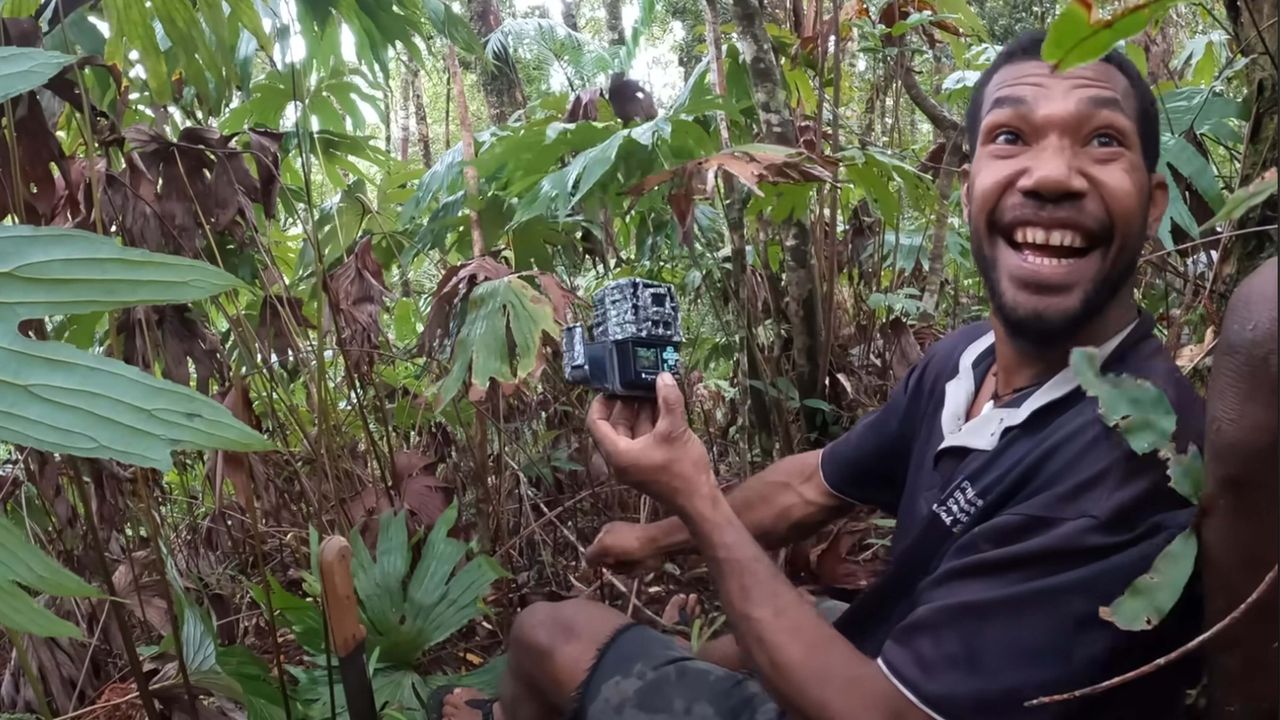
Now, footage showing the moment of rediscovery, recorded by the researchers themselves, has gone viral four years later. The heartwarming video, captured by study co-lead Jordan Boersma of the Cornell Lab of Ornithology, shows the ecstatic scene of his colleague, local biologist Doka Nason, jumping for joy at what the trail camera had picked up.
In the video, you can hear both Boersma and Nason repeatedly saying the name “Auwo” in disbelief, with Boersma later recalling he felt like he'd been “confronted by an image of a mythical creature.”
The black-naped pheasant-pigeon (Otidiphaps insularis) is a rare, quirky ground-dwelling bird native to Fergusson Island in Papua New Guinea. While classified in the pigeon and dove family, it looks and behaves like a pheasant.
It features a mix of iridescent green, bronze, and black plumage with a distinctive solid black nape on the back of its neck, and has a flattened, bobbing tail and long legs adapted for walking.
The researchers, also co-led by John C. Mittermeier, director of the American Bird Conservancy's Search for Lost Birds Program, had already been on Fergusson Island for a month, making the rediscovery just two days before the expedition was due to end. Mittermeier later described the event as “the kind of moment you dream about your entire life as a conservationist and birdwatcher.”
While an incredible story of conservation, the endearing footage of Nason over the moon at the continued existence of the black-naped pheasant-pigeon is also a testament to how important endemic wildlife species are to Indigenous communities.
You might also like…
John C Miitermeir and the Search for Lost Birds was also involved in a 2026 re-discovery of the blue-fronted lorikeet, a small endemic parrot found only on the island of Buru, Indonesia, not seen in 100 years.