When your goal is to make a meaningful impact in the world, you usually think less about yourself and your status, but focus more on the elements that will truly make a difference.
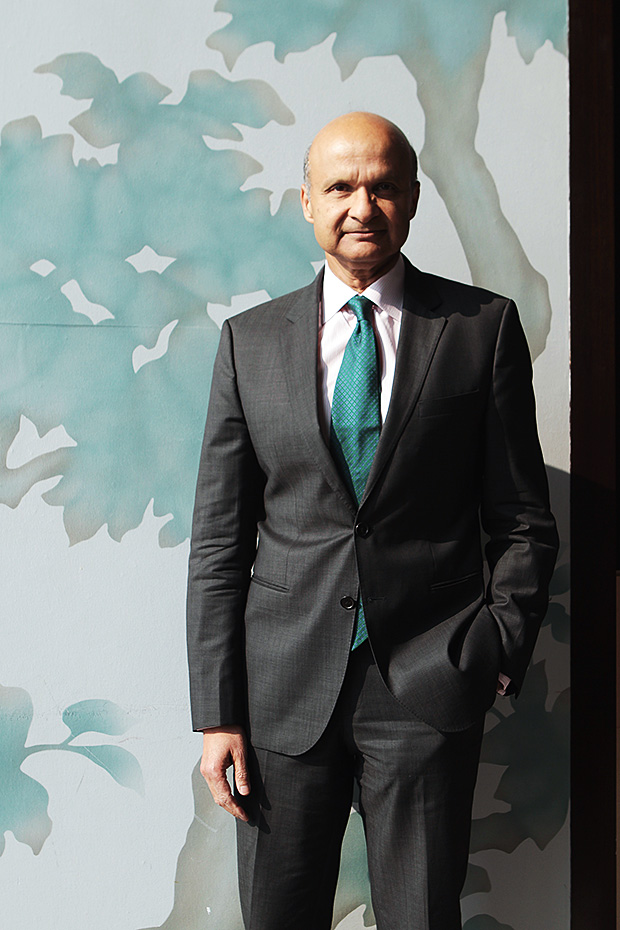
That could describe the path taken by Omar Ishrak, the chairman and CEO of Medtronic, the world's largest medical technology company, generating US$30 billion in annual revenue from devices ranging from heart pacemakers to insulin pumps and surgical equipment and all the software and services related to them.
Meeting someone who oversees a business of such magnitude, with a presence in 150 countries, and employing 86,000 staff and 9,600 scientists and engineers, one might expect that person to be a little high and mighty.
But 63-year-old Mr Ishrak is the total opposite. Pleasantly unostentatious, with an air of modesty surrounding him, he never gives the impression that he is superior to the person sitting in front of him.
Born in Bangladesh where he also received his early schooling, Mr Ishrak was fortunate to receive his education primarily in English, which provided a sturdy foundation for his higher education in the United Kingdom, where he received his Bachelor of Science and PhD in electrical engineering.
Though his family was very well off, his parents instilled in their son a deep value for honesty and respect.
"The most important thing in life is the value of honesty and integrity, the transparency and how we treat people with respect -- giving people the benefit of the doubt," he tells Asia Focus during a short visit in Bangkok. "Whatever career path you take, it doesn't matter as long as you enjoy what you do and do the best you can."
Mr Ishrak admits he had no grand plan when he chose electrical engineering for his higher education. "I felt that it was the future of engineering. I was fascinated by technology and I wanted to learn more about it."
The learning didn't stop when classes ended, either. One summer, he hitch-hiked across the United States but not just for the scenery. He planned his route so that he could stop at every university that had an ultrasound unit, with the goal of meeting professors who could help him with his thesis. The dedication to hands-on experience has served him well ever since.
MAKING A DIFFERENCE
He began his career in 1982 as an engineer with Philips Ultrasound in the United States, followed by a leadership position at Diasonics in Silicon Valley. For over a decade, he amassed valuable technology development, business management and product development experience, which served him well on the next stage of his professional journey with General Electric (GE).
"From early on in my career, my initial goal was to make a difference and that immediately broadened my skills beyond engineering, because if you want to make an impact you need to do more than just engineering," he says. "You have to understand customers, understand how things are used and understand how to create a business that could leap in growth."
After that, he was hired by GE, where he says senior executives including then-CEO Jack Welch "made a bet" on him given that he was an outsider coming in to run a struggling business unit. The sole goal given to him was to create the world's largest ultrasound business, which became his only focus.
"I didn't think about success or failure. I told myself, I'm going to do the best I can," he says.
The result was that he did make a difference.
"Creating the world's largest ultrasound business is truly something that I'm proud of," he says. "We revolutionised the field and created portable ultrasound products that opened the way to globalisation of the industry. There's a footprint there and I felt good being a part of that."
His contribution did not go unnoticed by Mr Welch. In his memoir Jack: Straight from the Gut, the former CEO recalls how he wanted to give the ultrasound business another chance after some earlier "false starts": He personally interviewed the candidates to lead the division and in Mr Ishrak, "all of us thought he had just what we needed and we hired him", he wrote:
"I made sure he got lots of funding and attention. Every time I went to Milwaukee to visit our medical systems division, I'd make a big deal over Omar and ultrasound even though it was a small part of the total business.
"I became his biggest cheerleader. He hired great people, many from the industry, and the rest is history. We went from nowhere in 1996 to number one in 2000, creating a highly profitable business."
Through his journey with GE, Mr Ishrak says he learned how to create global businesses and how to translate technology into value. He came to understand the importance of connecting with physicians in their own language and learned to exchange knowledge with them as peers, which allowed him to establish valuable relationships.
After spending 16 years with GE Healthcare Systems -- a division now worth over $12 billion, looking after a broad portfolio of diagnostic, imaging, patient monitoring and life-support systems -- he was hired by Medtronic in 2011 as its chairman and CEO.
"I had no idea or aspiration to be a CEO. This just happened," Mr Ishrak says humbly.
"I've not been with many companies but there has been a lot of learning in between. I've always been interested in how things work and how value is created. Through that, it became a natural process of broadening my interest and I've always maintained a keen interest in technologies," he says.
His core focus at Medtronic revolves around three principal strategies: therapy innovation, economic value and globalisation, which is in line with his personal goal to drive high-quality patient outcomes, expand access to healthcare, and lower costs in healthcare systems around the world.
Creating products that can be used successfully in low-income markets is a special interest of Mr Ishrak, who places great value in simplicity. A simple installation, he believes, is easier to use for less-experienced medical professionals and will be less expensive overall. And as more people become able to afford the product, such as a pacemaker, prices go down naturally. This speeds up adoption of the product even in low-income countries.
There is a compelling competitive argument for simpler devices as well. While at GE, he observed that medical device firms in emerging markets were leapfrogging to the latest technologies, such as miniaturisation, mobile communications and advanced materials. That enabled them to build devices that are both cheaper and better than rich-country models.
Away from the technology side, one of his notable achievements at Medtronic was in 2014 when he engineered the acquisition of Ireland-based Covidien, a $10-billion global manufacturer of surgical products and supplies, which was the largest medical technology acquisition in the history of the industry.
The Covidien deal was also controversial because it was the largest "tax inversion" in US corporate history, enabling Medtronic to move its legal headquarters to Ireland, while maintaining its operational and executive headquarters in the US state of Minnesota where it was founded in 1949.
This allowed the company to avoid taxation on more than $14 billion held overseas, taking advantage of Ireland's beneficial low corporation tax regime. The money saved was used to reinvest in Minnesota.
Mr Ishrak defended the tax inversion in a 2015 interview with The Financial Times saying, "We just followed the rules and the deal was done based on strategic merits". However, changes in the US tax code in 2016 have since put an end to similar deals.
VALUE-BASED CARE
At Medtronic and other places where he has worked, Mr Ishrak says his working style has been guided by a sense of purpose based on what he calls "fundamental principles".
One of those fundamentals is that innovation will be the key to the globalisation of healthcare, as there were hundreds of millions of people in developing countries still in need of accessible, quality treatment.
Another fundamental principle on which the business is based is people's willingness and desire to live longer, alleviate pain, restore health and extend life.
"Those desires will never go away. It's a fundamental truth," says Mr Ishrak. "A hundred years from now, people will still want to live longer, so if you can build a business that serves that purpose, you'll have a business with sustained growth. It's a fundamental principle.
"How you do it is not one trick -- it depends on where you are, which country you are in, what products you have and all kinds of different variables. But you should never get away from the fact that if you are in the healthcare business, you have been given the opportunity to improve people's lives, and you should be doing that."
One approach that is aligned with Mr Ishrak's fundamental purpose is the concept of a value-based healthcare delivery model.
Contrary to the fee-for-service healthcare model now in widespread use, providers in a value-based system, including hospitals and physicians, are rewarded based on evidence that patients' health outcomes have improved.
Mr Ishrak believes that value-based healthcare should apply to everyone and everywhere because it's a fundamental principle that people who deliver healthcare should be accountable for the outcomes of the patients.
However, the norm today is that different stakeholders in healthcare get paid based on pricing schedules set by governments, insurers and others for defined services, not the outcome.
"This occurs in hospitals, with care givers and everyone else in the value chain. It's a fee-for-service system in which healthcare providers promise an outcome but they are not accountable for it," he says.
"As a technology provider, we get paid for technologies with a promise to improve an outcome. If that outcome isn't reached, we still get paid and we will get paid again because that procedure will be repeated."
The challenge, he explains, is that to reach the desired or promised outcome, it might require three or four different stakeholders fulfilling all their promises. This can also include the patient, who is expected to follow certain behaviours deemed necessary to ensure an improvement in their health.
Aligning all the stakeholders to make sure that everyone truly benefits only when the outcome is reached, and that they are held accountable when it's not, is what makes it complicated.
"For us, we make technologies to improve outcomes, so if the outcome doesn't improve, at some point people are not going to pay for the technologies as they are paying for something that doesn't have value," says Mr Ishrak.
"We have to take an interest in making sure that the technologies we sell will improve the outcome and be ready for the day when we are held accountable for that."
For this goal to be fulfilled, he says, policymakers will have to be committed and willing to align stakeholders' interests to improve people's health at the lowest possible cost.
"[Policymakers] have to be clear-headed about value-based healthcare. They should see it as an optimum goal and not flinch about it."
This is especially true in developing countries, he says, where the potential exists to leapfrog into a better healthcare system given how much medical technology has advanced. They have a better chance to move forward than countries with systems that have been established for 50-60 years and thus could be more difficult to change because of entrenched vested interests.
"Countries that are relatively new in terms of healthcare system development -- Thailand, for instance only started about 10 years ago -- could go into a value-based system straight away."
A husband and a father of three, Mr Ishrak says that although he has to travel extensively because of his job, he always tries to spend as much time quality time as possible with his family.
One very rewarding recent experience was a 10-day trek in Tanzania with his children, where physical conversation took the place of on-screen interaction.
"Last year, my son, my daughters and I along with others climbed Mount Kilimanjaro. Spending 10 days with my adult children in direct contact isn't something that one gets to do a lot. It was very memorable."
Omar Ishrak
Chairman and CEO, Medtronic Plc
Born
- 1956, Bangladesh
Education
B.Sc and PhD in Electrical Engineering, University of London, King's College
Career Highlights
- 1982: Product development and engineering, Philips Ultrasound
- Technology development and business management, Diasonics/Vingmed
- 1995-2004: President and CEO, Ultrasound and BMD, GE Healthcare Ltd
- 2005-08: President and CEO of Clinical Systems, GE Healthcare
- January 2009-May 2011: President and CEO, GE Healthcare Systems
- June 2010-May 2011: Senior vice-president, GE
- June 2011-present: Chairman and CEO, Medtronic Plc
Other positions
- Member, board of trustees of the Asia Society
- Member, Health Leadership Council of the Save the Children Foundation