Our society’s dependence on acute-care hospitals, which are often not the best places for healthcare issues to be dealt with, must be reduced dramatically over the next few years. That was the general agreement at a recent Guardian roundtable, sponsored by Optum, that looked at the role community services will play in the future of the NHS. The direction for the NHS is towards devolved services, and there are a host of positive reasons for developing them in that way, experts from NHS England, healthcare providers and charities were told at the event.
The problem with hospitals is that they are geared up for acute care and tend to follow narrow pathways focusing in on a particular problem, the roundtable heard, when a more holistic approach to health is what is needed.
Properly thought-out community services – which covers all medical services delivered in the community, from GPs’ surgeries to district nurses and midwifery services to procedures in community hospitals – would take a more personalised, and a longer-term, prevention-orientated view of healthcare and could transform current provision, the roundtable was told. “We are at a crossroads, and it’s about a change of mindset that needs to stop us looking at community services in the same way that we look at acute services,” said Bev Fitzsimons of the King’s Fund. Community services needed to be regarded not as some sort of adjunct to hospital, but as a service in their own right.
A big factor in the move towards radically different community services, said Nancy Williams of Optum, was technology. “We’re still assuming that we will deliver healthcare as we’ve always delivered it, but we won’t. How do we start building in technology?” What was more, she said, healthcare providers needed to take a step back to intervene before health issues took hold. “Conditions like diabetes, cancer and heart failure take up 70-80% of the healthcare budget. We’re so focused on reacting to what patients need in the short term rather than looking ahead to ask what we can do to avoid these problems.”
Katherine Ward, also of Optum, who was for four years PCT director at Bristol North PCT, agreed: “When I worked in a PCT I realised roughly 20% of patients were driving 80% of the costs and that led me to see things in a different way.”
Michelle Drage, chief executive of the London Local Medical Committees, said local provision of healthcare services was the neglected backwater of the NHS. But it could transform the health of the nation, especially if change went hand in hand with proper grassroots engagement. “One of the biggest problems is that medical school training embeds a culture focused on hi-tech solutions and with an emphasis on drilling down to fine details, with care pathways that reflect that,” she said. The fact was, patients often came into hospital and ended up with healthcare that had nothing to do with what they came in for. “If you zone in too quickly on one care pathway, you miss the other components of people’s wellbeing.”
Drage was critical of doctors, whose culture she said was not geared towards community services. “It seems a penance for them to have to go out into the community; it’s something that’s not changed in 50 years,” she said. In London, the healthcare system was much too focused on acute care, because of the existence of the hugely powerful teaching hospitals whose model was all about drilling down to one specific problem rather than opening up a conversation that was more holistic.
There was a sense around the table that the health service was now at the beginning of a process that could see a genuine revolution, not merely in how care is accessed and delivered, but in the underlying philosophy of what it means to be healthy and to stay that way. There were also opportunities for people to become much more involved at local level with healthcare services. The story of healthcare over the past 100 years or so had been about something being done by a doctor to make us better, but the sense among many participants at the roundtable was that now there was an opportunity to be genuine partners in our health narrative. Instead of it being something that is done to us, healthcare can become a process in which we are all properly engaged from early on in our lives, long before the onset of ill health.
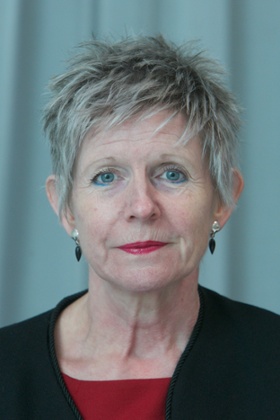
“For generations, we’ve gone to ask the doctor for the answers to our health problems,” said Madeleine Starr of Carers UK.
Although there was plenty of talk in the media about increasing public awareness and involvement in healthcare, there was a still a long way to go. What was changing, said Caroline Alexander of NHS England, was that people were beginning to grasp that to be healthy and to stay that way, they needed personalised care. At the moment, she said, the public didn’t realise what kind of transformation was possible: they didn’t have any idea how great the potential was.
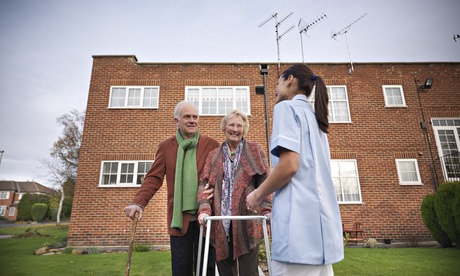
While it’s clearly early days in the rollout of new-style community services, various roundtable participants were able to give concrete examples of what they could look like. Alexander talked about Buurtzorg Nederland, set up in 2006 by Jos de Blok, a nurse who was dissatisfied with the traditional delivery of home care and believed there had to be a better way. He created a new model of patient-centred care that focuses on facilitating and maintaining independence and autonomy for as long as possible. Buurtzorg nurses do a great deal more than traditional nursing tasks: they might clear up the kitchen and feed the cat alongside changing dressings and taking patients’ blood pressure. The approach, which means that in one single visit a carer can do the jobs of several health and home care workers combined, has led to people being able to stay in their own homes for longer, and to fewer hospital and emergency admissions.
Nick Kaye described a scheme in his area of Newquay, run jointly with Age Concern, under which pharmacists from the town were able to carry out home visits to help tailor care to elderly people. The project aimed to break down barriers and allow pharmacists to identify how they could better meet patients’ needs. “Pharmacists are the health practitioners whose work most brings them into contact with patients on a daily basis,” he said. “They really can make a difference to reduce the number of people ending up at accident and emergency units, by intervening well before problems become crises.”
Ian McDowell of Patient Powered Medicine said healthcare had been operating in silos for too long, and that now was the moment to cut through that and make the broad-based relationships that could break down barriers and lead to real change. “We need to unlock the expertise we’ve developed and to start becoming the movers and shakers that we have the potential to be,” he said.
What was inspiring, said Pam Creaven of Age UK, was where communities took a “leap of faith” to provide something genuinely different without necessarily having the science behind it to prove it worked: “They do something based on gut instinct, and where we have traction is where the local leadership is prepared to take that leap of faith.” But the big problem was that, while new services were being trialled, the original services they were primed to replace had to carry on, and this double-funding wasn’t always possible. Sometimes, she said, projects with potential fell by the wayside because they weren’t affordable alongside existing spending.
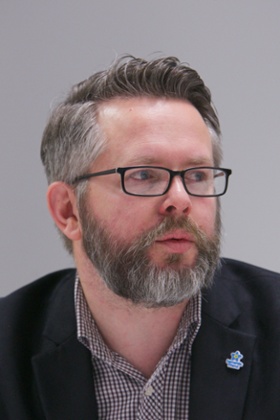
Nor should those responsible for community health services forget, said Gavin Terry of the Alzheimer’s Society, how much the voluntary sector had to offer tomorrow’s new-look community provision. “The key is coordination,” he said. “The voluntary sector has a key role and it’s not an add-on, it’s an essential part of the whole.”
The fundamental opportunity, said Phil McCarvill of Marie Curie Cancer Care, was that community services should not aim to replicate what was currently being provided by hospitals. There was a chance to do something much bigger, to strip back to the real changes that could allow people to take control of their own health and to make the alterations in their lives that could keep them much healthier for far longer.
At the table
Denis Campbell (Chair) Health correspondent, The Guardian
Caroline Alexander Chief nurse, London region, NHS England
Pam Creaven Director of services, Age UK
Michelle Drage Chief executive, Londonwide LMCs
Bev Fitzsimons Fellow and programme manager, The Kings Fund
Gavin Terry Policy manager, Alzheimer’s Society
Nick Kaye Director, NPA
Ewan King Director of business development and delivery, Social Care Institute for Excellence
Phil McCarvill Head of policy and public affairs, Marie Curie Cancer Care
Ian McDowell Director, Patient Powered Medicine
Sarah Raper Executive director, Community Health Partnerships
Madeleine Starr Director of business development and innovation, Carers UK
Thara Raj Locum principal adviser and public health consultant NHS England/Public Health England (London region)
Katherine Ward Chief growth officer, Optum
Nancy Williams Director of clinical solutions, Optum
Credits
This content has been sponsored by Optum (whose brand it displays). All content is editorially independent. Contact Matt Nathan (matt.nathan@theguardian.com). For information on debates visit: theguardian.com/sponsored-content