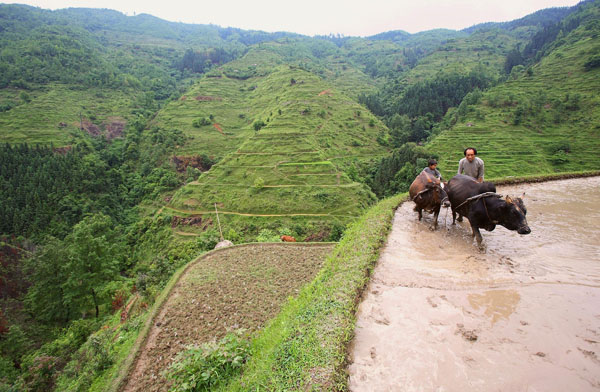
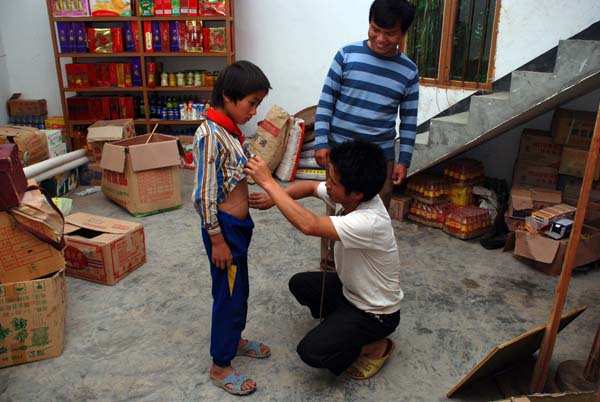
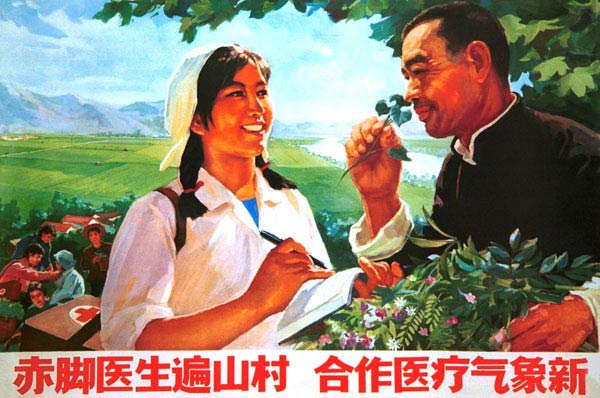
Congjiang county, Guizhou province: Miao ethnic minority farmers plough a paddy terrace. Guizhou is one China's poorest provinces, and compared to the commercial capital of Shanghai, the region’s 37 million people - most of whom are peasants - can expect to live 13 years less. Mothers have a 10 times greater risk of dying during childbirth, and infants are five times more likely to perish before the age of fivePhotograph: China Photos/GettyJinhua village, Guizhou province: Barefoot doctor Hua Wanxiang examines a young patient in his clinic and shop. He recently shut his old clinic next door and opened a shop selling groceries alongside medicines. In Jianghua, where peasants are fortunate if they earn £20 pounds a month, most of people cannot afford medical treatment without going to debtPhotograph: Jonathan Watts/GuardianIn the 1960s, China raised an army of paramedics who were given basic training in western disease control and traditional Taoist medicine. While opinions vary about the medical worth of these 'barefoot doctors' -so called because some were so poor they walked from village to village without shoes - they are credited with having an important role in educating people in the basics of hygiene and infectious disease controlPhotograph: Imagine China
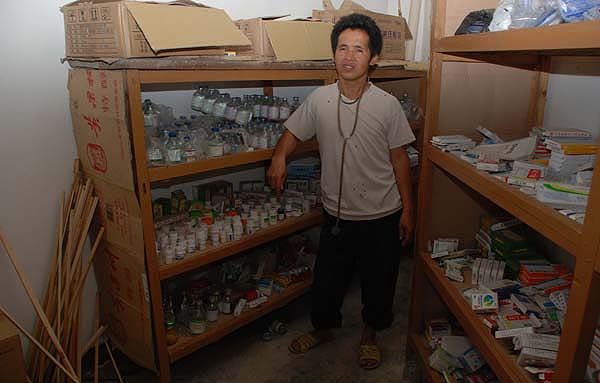
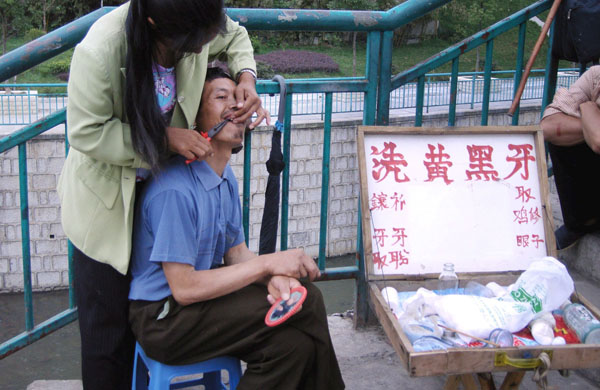
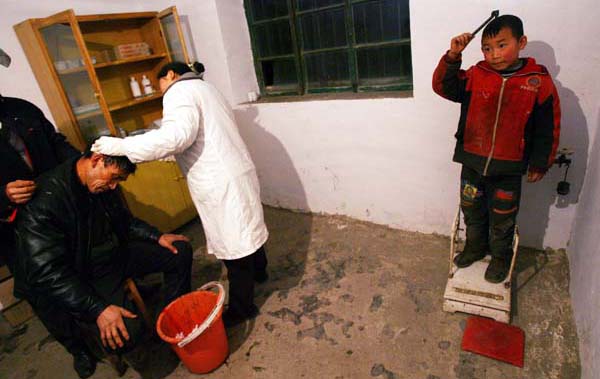
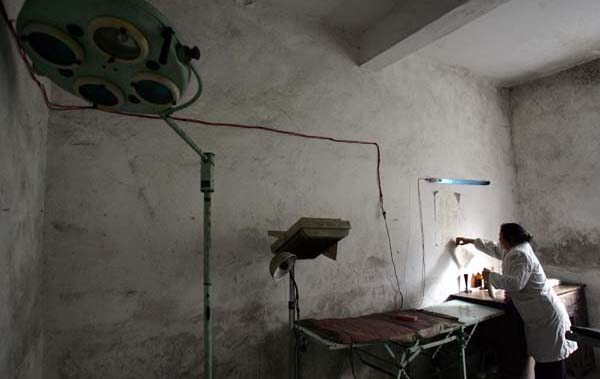
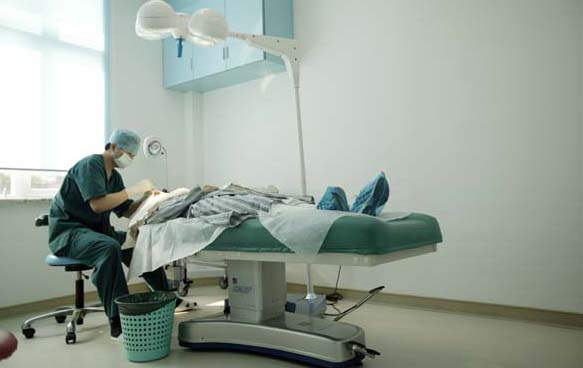
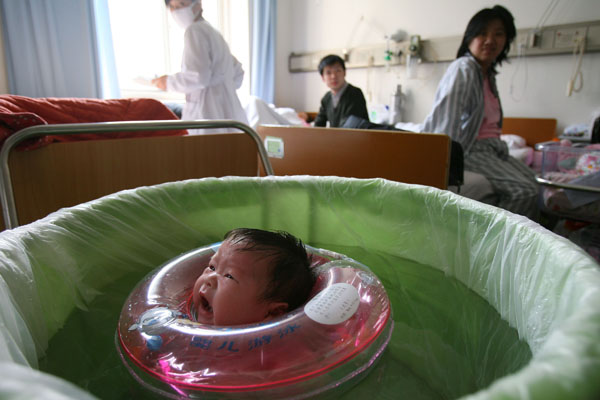
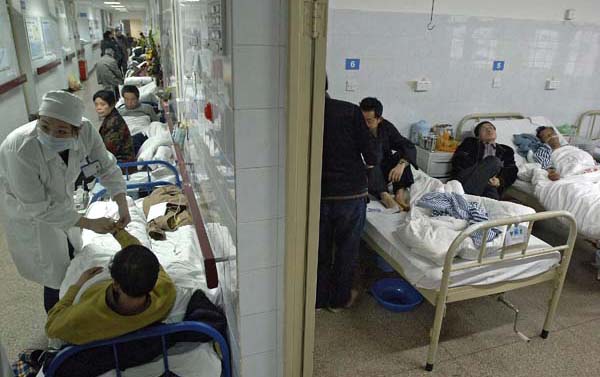
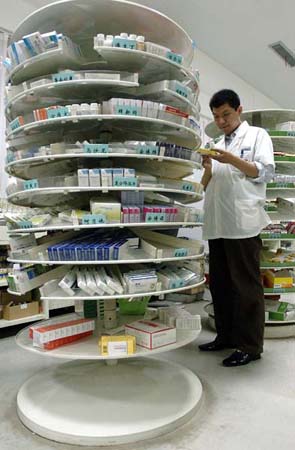
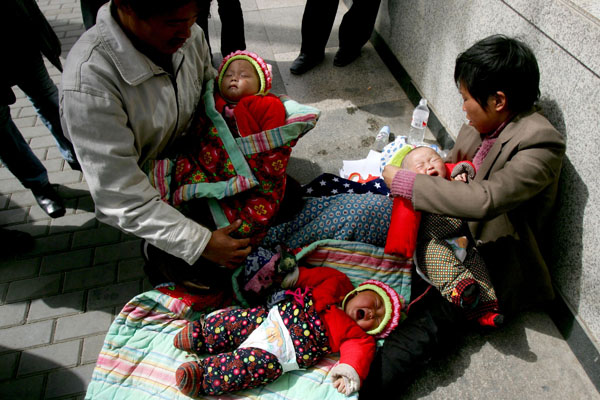
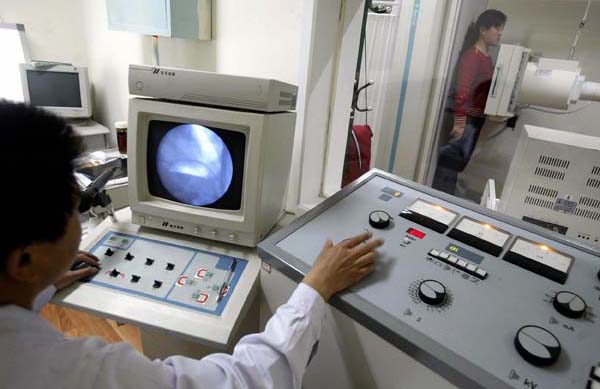
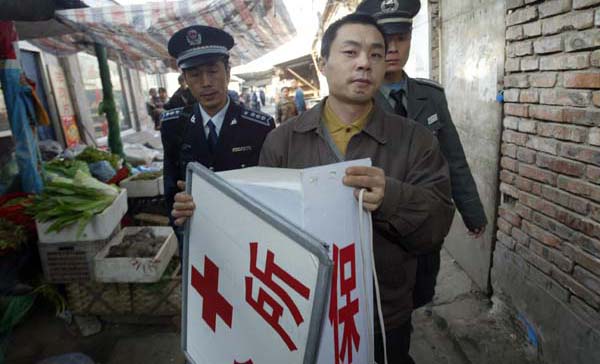
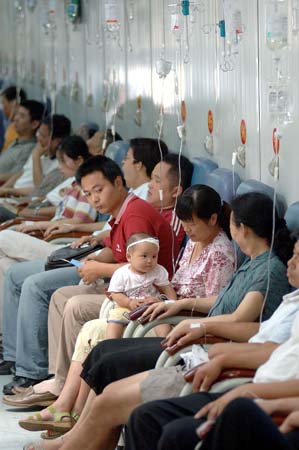
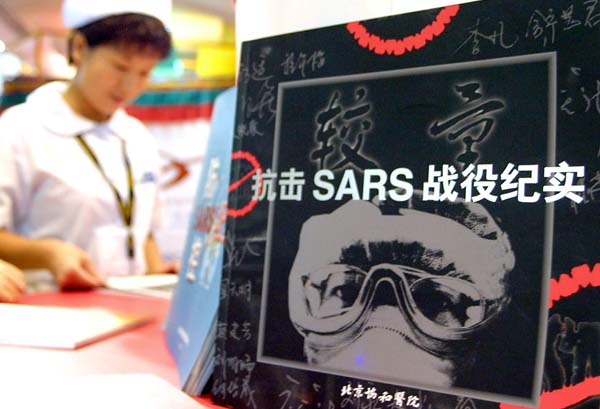
Jinhua village, Guizhou province: Barefoot doctor Hua Wanxiang checks his stock of medicines. Although government healthcare spending doubled between 1998 and 2004, the funds have been disproportionately invested in the cities and on hi-tech equipment. According to one study, the rural share of medical expenditure dropped from 34.3% to 22.5% in the decade up to 2003, despite more than half of China’s 1.3bn population living in the countrysidePhotograph: Jonathan Watts/GuardianGuiyang city, Guizhou province: A woman extracts a client's tooth at her stand offering dentistry services on a pedestrian overpass in Guizhou's capital. Dental health is not a high priority to many low-income Chinese people, who are not covered by the medical insurancePhotograph: Lu Di/EPABaima township, Chongqing municipality: Feng Yifen treats a patient's wound in the treatment room at a local hospital. A peasant saying has it that a pig must be taken to market every time an ambulance siren wails, a year’s work is ruined as soon as you sleep in a hospital bed, and if you are struck with a serious disease, 10 years of savings go up in smokePhotograph: China Photos/GettyBaima township, Chongqing municipality: Feng Yifen, the only doctor at the local clinic, pulls down a notice in the disused operating theatre. China’s main health indices continue to be reasonably good given the country’s stage of economic development, but such gains mask a huge gapsPhotograph: China Photos/GettyShanghai: A plastic surgeon at work at the Shanghai Ren-Ai hospital. Medical care in Shanghai is now on a par with that of the west. Doctors in the city are well-trained and well-paid, and the high-end healthcare market has expanded to the point where a private 'five-star' maternity clinic opened last year charging £660 a night for a suite with a karaoke barPhotograph: Dan Chung/GuardianBeijing: A baby in a flotation tank at Youyi hospital's obstetrics and gynecology departmentPhotograph: China Photos/GettyHefei, Anhui province: A nurse attends to patients at an overcrowded hospital. Around one in ten of China's 1·3 billion people is thought to be a carrier of hepatitis B, while tuberculosis, syphilis and rabies - all under control 20 years ago - are sharply on the rise againPhotograph: STR/AFPHefei, Anhui province: A Chinese pharmacist checks his stocks of medicines at a hospital pharmacy. The sale of medication now accounts for half of hospital incomes, which has led to suspicions of overprescribingPhotograph: STR/AFPBeijing: A Chinese couple with triplets beg for money to pay for the medical care for one of the babies who is suffering from meningitis, after the local hospital refused treatment. Public resentment at lack of facilities is rising - according to the state media, 5,500 medical workers were injured last year in assaultsPhotograph: China Photos/GettyBeijing: A woman undergoes a scan at a hospital equipped with the latest medical equipment. More than a third of Chinese people who fall ill do not see a doctor because they cannot afford the treatmentPhotograph: STR/AFPBeijing: A man carries a sign that reads 'clinic' as he is detained and taken to a police station after officials found an illegal surgery in a house while they were patrolling in the neighbourhoodPhotograph: EyePress/APHefei, Anhui province: Patients receive treatment at a local hospitalPhotograph: STR/AFPBeijing city: A Chinese nurse browses through the various information on SARS during an exhibition showing the latest monitoring devices. New concerns - such as SARS, Bird Flu and HIV/Aids - have pushed the health issue high up the political agenda. WHO, the World Bank, and the Organisation for Economic Cooperation and Development are now preaching socialist values - less market, more state intervention - to the communist government in BeijingPhotograph: STR/AFP
Sign up to read this article
Read news from 100’s of titles, curated specifically for you.