Get all your news in one place.
100’s of premium titles.
One app.
Start reading
The Guardian - UK
The Guardian - UK
Health

Health Workers Week 2013: celebrating health workers at the frontlines - in pictures

Gallery: Healthworkers at the frontlines
"The number of deaths in children under five has gone down a lot. I know this, because as a parish co-ordinator I always hear what is going on in the community. I would hear that such and such child had died, or listen to the radio announcements and find out that this woman’s baby had died," says Solomon. "At least one child would die from malaria every month. These days, we bury our old men, not our children." Solomon Spaya is one of over 12,000 community health workers trained in integrated community case management of common childhood diseases by Malaria Consortium in Uganda.
Photograph: Tine Frank/Malaria Consortium
Gallery: Healthworkers at the frontlines
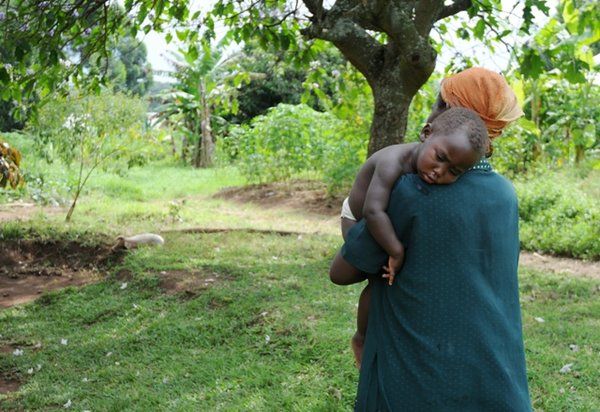
Rose knows that Solomon has been trained to treat sick children and can provide free drugs. Her baby Susanne is not feeling well, so she walks the short distance to Solomon’s house and asks for his advice.
Photograph: Tine Frank/Malaria Consortium
Malaria gallery: Healthworkers at the frontlines
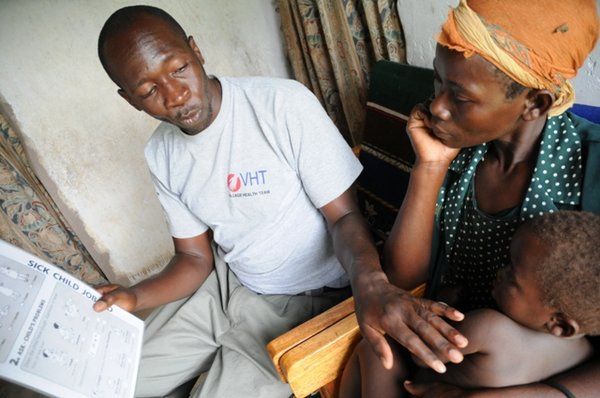
Solomon uses his training and follows the instruction manual, first assessing Susanne for fever.
Photograph: Tine Frank/Malaria Consortium
Gallery: Healthworkers at the frontlines
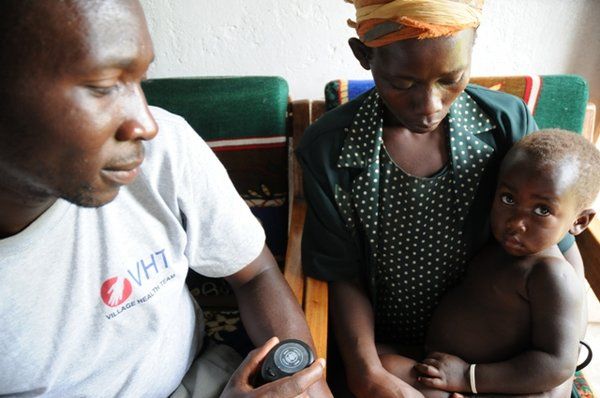
Since Susanne has a cough, Solomon uses his timer and assesses her respiratory rate. This allows him to check for pneumonia. Susanne’s breathing rate is under 40 breaths per minute, therefore Solomon does not have to provide antibiotics.
Photograph: Tine Frank/Malaria Consortium
Gallery: Healthworkers at the frontlines
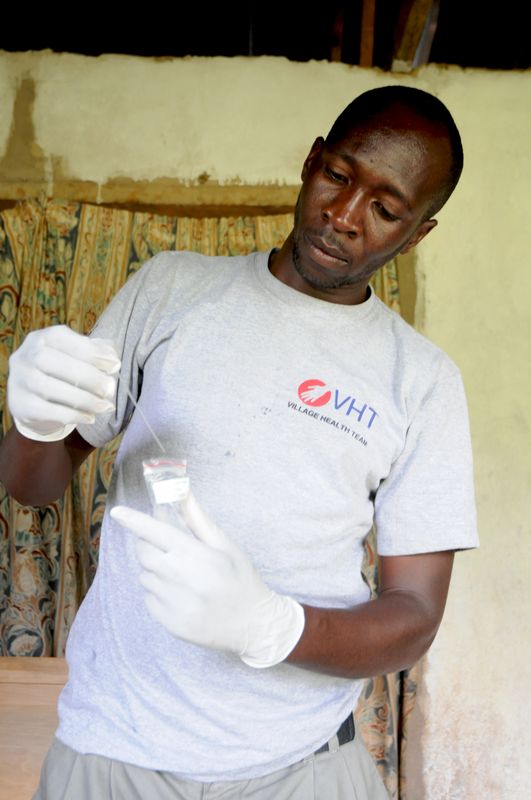
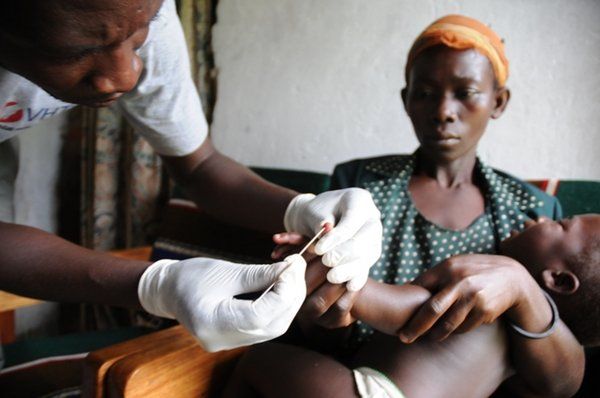
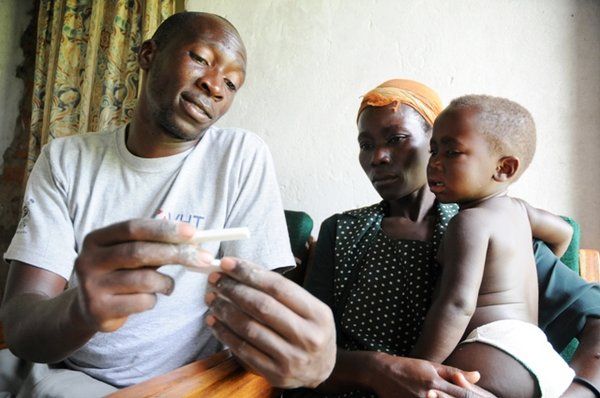
To perform a Rapid Diagnostic Test (RDT) for malaria, Solomon takes a drop of blood from Susanne’s finger. The RDTs provided to Solomon after training in how to use them, are easy to use and as sensitive as a microscope at detecting malaria parasites in the blood.
Photograph: Tine Frank/Malaria Consortium
Gallery: Healthworkers at the frontlines
Susanne’s malaria test is negative and Solomon explains the result to Rose and why Susanne needs to be referred to the nearest health centre for further examinations.
Photograph: Tine Frank/Malaria Consortium
Gallery: Healthworkers at the frontlines
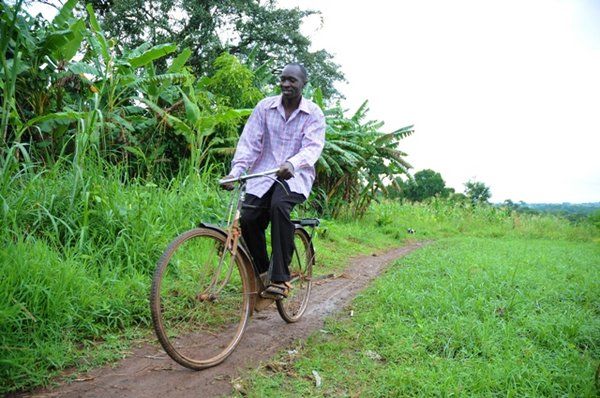
In addition to receiving patients in his home, Solomon also performs home visits and gives basic health promotion, sharing the village health team bicycle with his fellow village health team volunteers.
Photograph: Tine Frank/Malaria Consortium
Gallery: Healthworkers at the frontlines
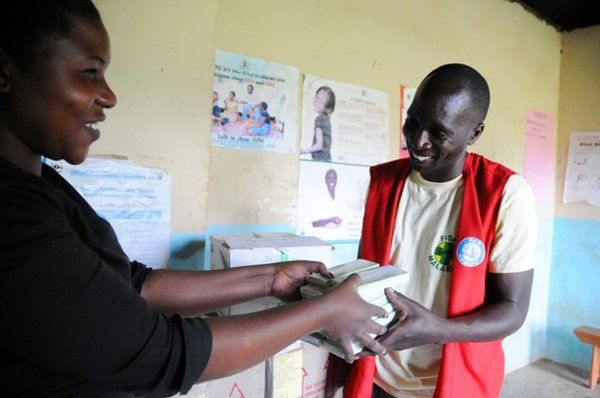
7 miles away at the closest health centre, Solomon restocks on drugs and supplies from his trainer and supervisor, Christine. "We used to be overloaded, I used to see about 70 patients per day. Now I barely see sick children: sometimes only three per day," she says.
Photograph: Tine Frank/Malaria Consortium
Gallery: Healthworkers at the frontlines
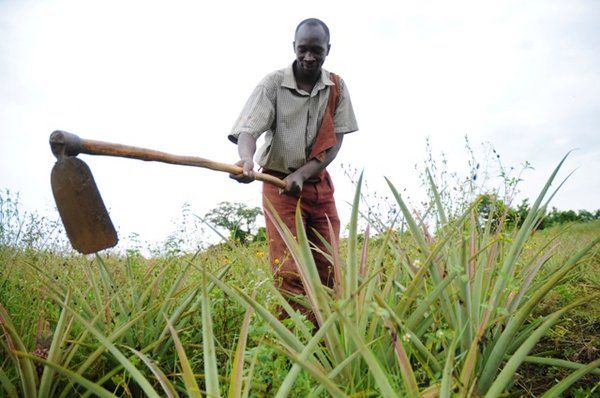
When not busy with patients or his health promotion tasks, Solomon can be found on his land, the only source of income for his family. He grows pineapple, pumpkins, beans, cassava and matoke (cooking bananas).
Photograph: Tine Frank/Malaria Consortium
Gallery: Healthworkers at the frontlines
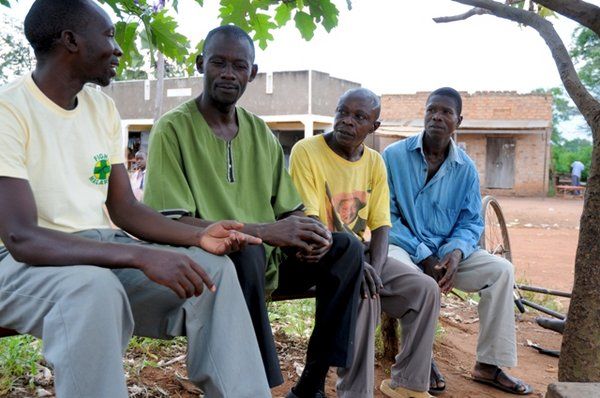
He also likes to spend some time talking with his friends in the nearby trading centre. The community is satisfied with the services provided by their village health team. Drugs for all children under five years are free of charge, and proximity to a village health team makes a big difference.
Photograph: Tine Frank/Malaria Consortium
Gallery: Healthworkers at the frontlines
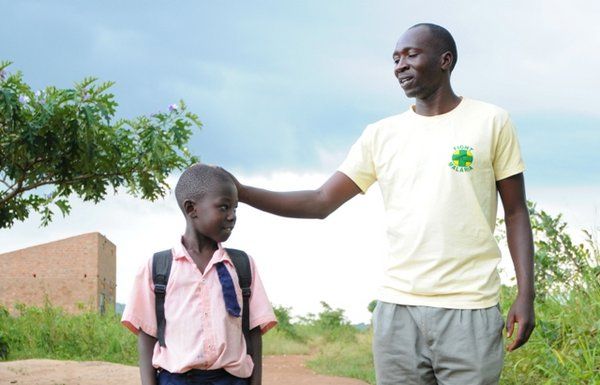
Being a Village Health Team volunteer (VHT) is an unpaid position, yet Solomon takes great pride in his work. Malaria Consortium trains VHTs like Solomon in integrated community case management of childhood fever. Through Malaria Consortium’s inScale project, funded by the Bill and Melinda Gates Foundation, the organisation is also looking into innovative ways to keep VHTs motivated and increase coverage in rural areas.
Photograph: Tine Frank/Malaria Consortium
Gallery: Healthworkers at the frontlines
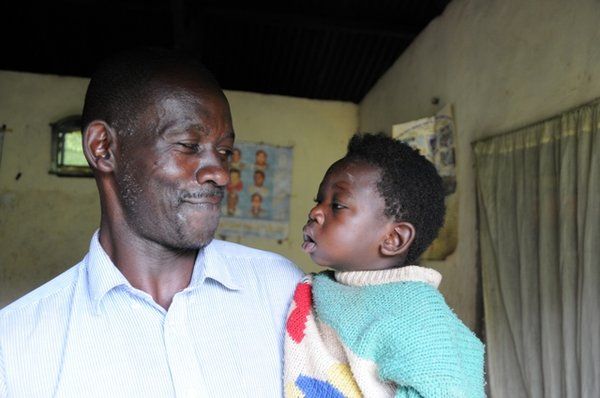
"The number of deaths in children under five has gone down a lot. I know this, because as a Parish Coordinator I always hear what is going on in the community. I would hear that such and such child had died, or listen to the radio announcements and find out that this woman’s baby had died," says Solomon. "At least one child would die from malaria every month. These days, we bury our old men, not our children."
Photograph: Tine Frank/Malaria Consortium
Sign up to read this article
Read news from 100’s of titles, curated specifically for you.
Already a member? Sign in here
Related Stories
Top stories on inkl right now
One subscription that gives you access to news from hundreds of sites
Already a member? Sign in here
Our Picks
Fourteen days free
Download the app
One app. One membership.
100+ trusted global sources.