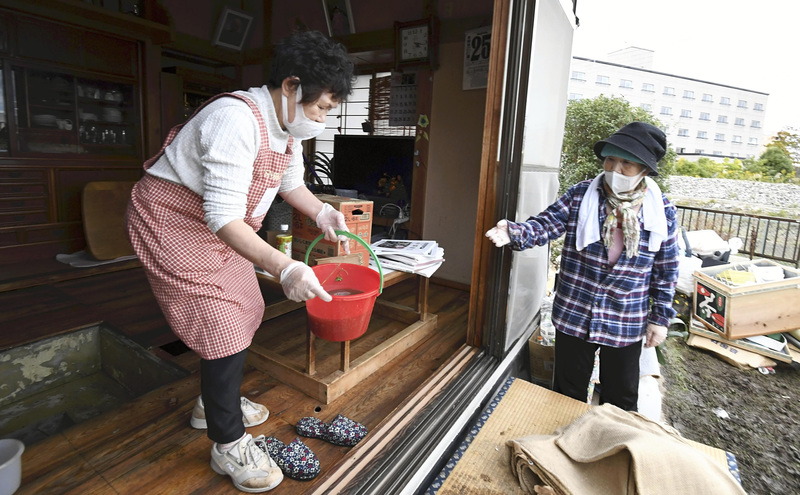
Saturday marked two weeks since Typhoon No.19 brought extensive damage from rivers flooding and breaking through embankments throughout eastern Japan.
About 77,000 homes were damaged, which is more than the destruction caused by the heavy rains that hit western Japan in July 2018.
As the floodwaters recede, it has brought new problems, as many people now struggle to deal with the sludge and foul odors left behind. This has raised health concerns in the affected areas.
Cleaning house
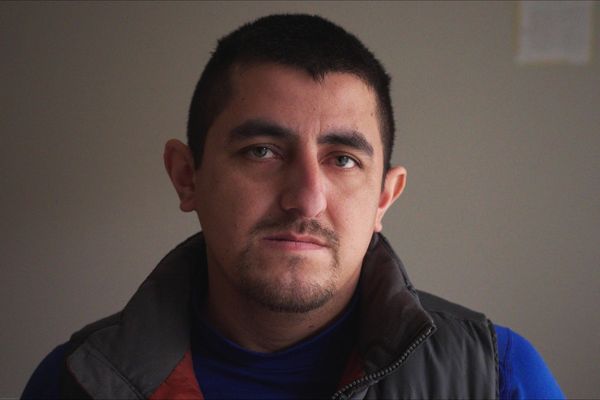
"As soon as I go downstairs, I'm hit with a stink like that of sewage," said a grim-faced 45-year-old Noritaka Seika, a company employee living in Toyono, Nagano Prefecture. "I can't believe this is my house,"
The typhoon caused the Chikumagawa river to burst through its embankments on Oct. 13, which flooded the first floor of his two-story home.
Seika and his parents, who are in their 70s, fled to an evacuation center during the storm. Worried about leaving his home unoccupied, he returned the next day and is currently living on the second floor.
His home was inundated with an immense amount of muddy water. He scooped it out by himself, though sludge was still remained in parts of the foundation. On sunny days, the mud dries into dust, which irritates his throat.
He wants to quickly restore his home, but with all the contractors occupied, he has no idea when that will be possible. "Honestly if this continues to drag out, it's going to be rough," he said.
Staying in affected homes
Typhoon No. 19 drenched many parts of eastern Japan with record rainfall. Nationwide, 71 rivers broke through embankments at 140 places. Many rivers overflowed one after the other.
While the typhoon caused extensive flooding, most houses were not totally destroyed, and many people have been living in them since the waters receded.
However, it is difficult for the government to get an accurate grasp on the current situation of residents, and those living in homes that had been inundated with muddy water will need to pay attention from the aspect of hygiene.
Disaster-related deaths
When heavy rains in September 2015 caused the Kinugawa river to break through its embankments in Joso, Ibaraki Prefecture, more than 6,000 people sought refuge at evacuation centers at one point. But most returned home when the waters receded.
"Many people experienced health problems after returning home," a city official in charge of the matter said.
While only two people died in Joso during the disaster, there were 12 deaths -- six-fold the number -- from falling ill or other health problems after returning home that occurred later and were recognized as disaster-related.
When flooding occurs after a river breaks through an embankment or other reason, the torrent includes not only a mix of river and rain water, but also excrement, oil and other contaminants. When the water recedes, a large amount of sludge is left behind, which can further expose disaster victims to an unsanitary environment.
"The risk of infectious diseases such as tetanus, pneumonia, and food poisoning is much higher in flooded areas compared to places hit by other disasters such as earthquakes," warned Fukui University Prof. Akiko Sakai, an expert in disaster nursing science who has participated in post-disaster aid activities, such as after last year's heavy rains in western Japan.
Cleaning up household items that have been submerged in sludge can be physically draining and even lead to injury.
"It's impossible for disaster victims to rebuild their lives on their own," Sakai said. "It is important for local governments to secure a large number of volunteers, such as from companies and universities, who can serve for long periods and continue to provide support."
Read more from The Japan News at https://japannews.yomiuri.co.jp/