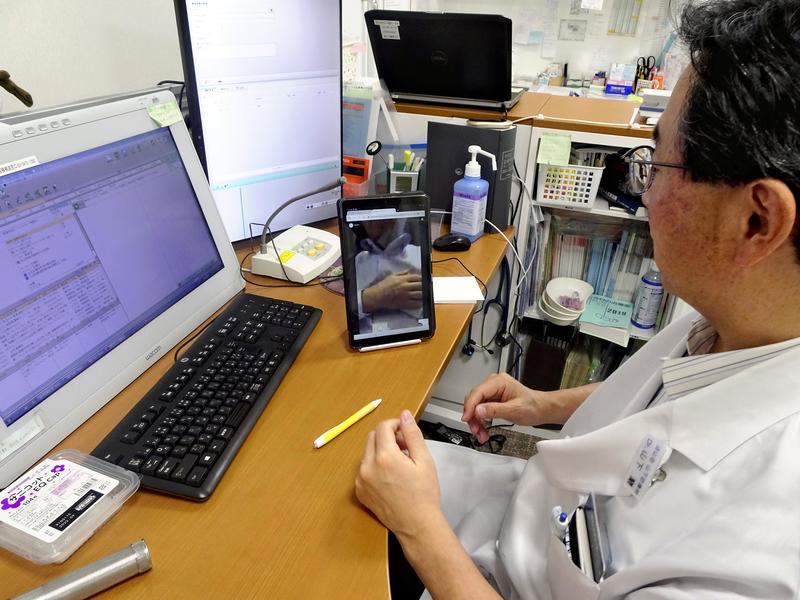
The Health, Labor and Welfare Ministry is urgently building new systems for the treatment and recuperation of coronavirus patients to prepare for a full-scale outbreak, including online medical examinations.
Under the planned systems, patients with mild symptoms and those recuperating at home will be allowed to receive doctors' examinations via smartphones or other online methods.
The ministry also plans to create a recuperation manual advising on matters such as how to live apart from family members who are susceptible to developing serious symptoms.
Currently, everyone infected with the new coronavirus is hospitalized, in principle. But if an outbreak occurs on a large scale, it is feared that there will be a great number of patients with serious symptoms and thus a shortage of beds.
Therefore, the ministry proposes that patients with mild symptoms and those who are infected but asymptomatic rest at home.
In the middle of this month, the ministry informed local governments of a decision allowing doctors to examine patients with mild symptoms at home by telephone or online methods including smartphones, before prescribing medications.
The recuperation manual will give instructions on how to prevent the spread of infection in homes, such as patients with mild symptoms spending time in rooms separate from those of other family members.
It will also recommend that family members with mild symptoms stay at accommodation facilities if the household includes elderly people or those with chronic diseases, since they tend to develop serious symptoms. In such cases, the manual will recommend people live separately for the time being.
To enhance their readiness to accept patients with serious symptoms, the ministry has asked prefectural governments to designate certain medical institutions as those accepting coronavirus patients as a priority.
The ministry also assumes a situation in which patients need to be treated at hospitals in nearby prefectures when the number of patients with serious symptoms increases.
The ministry also asked the prefectural governments to consider how to transport such patients.
The government's specialist panel on the issue is warning that if the number of patients whose infection routes are unknown increases, there could be an "overshoot," meaning an explosive rise in infections.
Read more from The Japan News at https://japannews.yomiuri.co.jp/