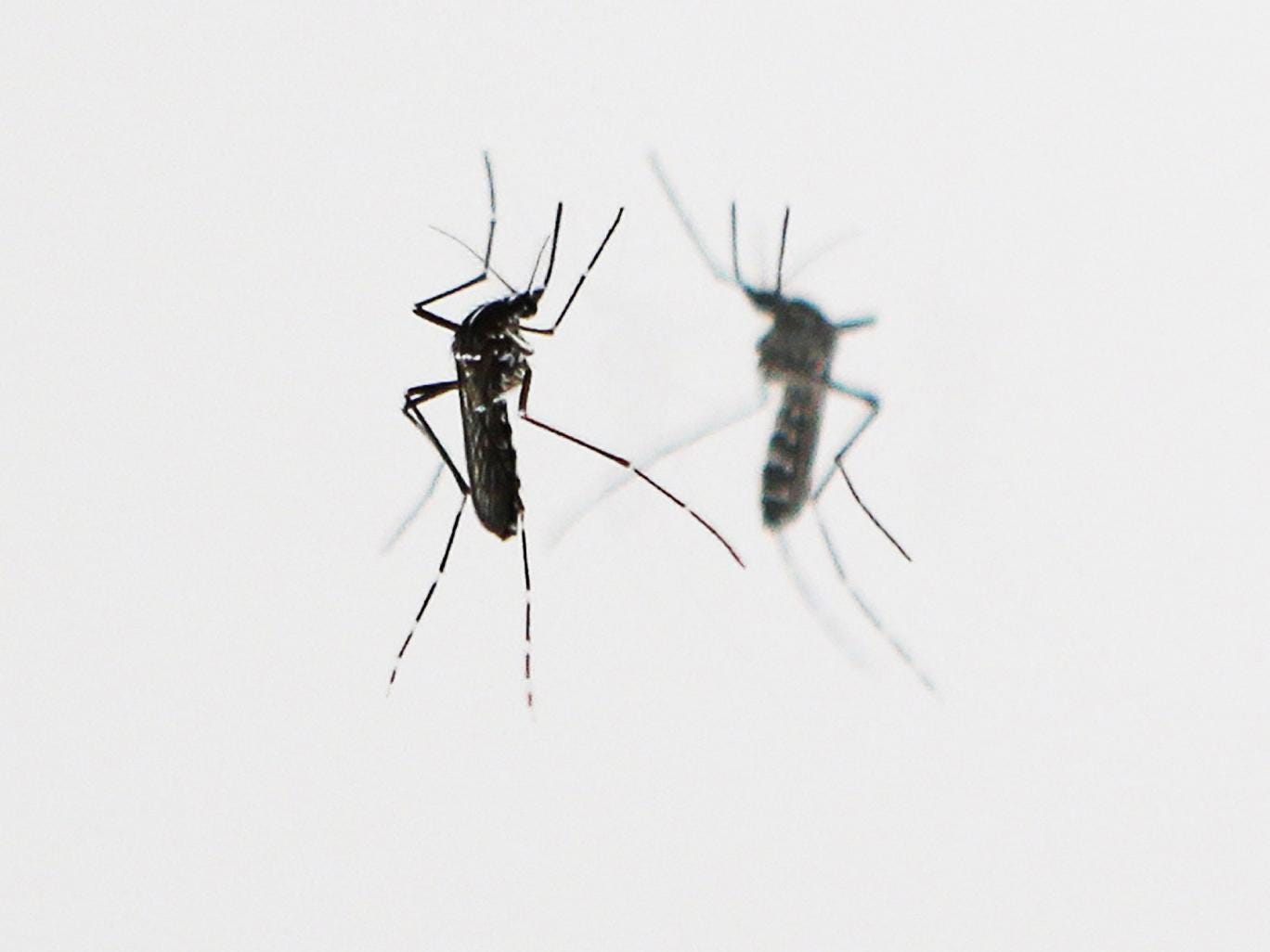
A virus, believed to cause under-developed brains and skulls in newborn babies, has incited a public health emergency in Brazil and the Caribbean.
The Zika virus, a mosquito-borne disease similar to dengue fever, was first identified on Easter Island, Chile in February last year and has since spread to Brazil, Columbia and the Caribbean.
On Monday, the Caribbean Public Health Agency confirmed five cases of the Zika virus in a territory of the Caribbean Community, according to Liverostrum News Agency.
Grenada’s disease surveillance system has since been heightened and health officials are on the alert.
Doctors are now investigating whether the virus could be linked to a rise in cases of microcephaly in infants after the Brazilian health ministry confirmed nearly 400 cases of new-borns with abnormally small heads in an infected region of north-east Brazil, on Tuesday, according to the Telegraph.
Microcephaly is a neurological disorder that causes an infant's head to measure less than 33cm. Children with the abnormality may experience developmental problems.
Cases were especially prevalent in the state of Pernambuco, where the number has risen astronomically from an annual average of 10 to 141 detected between the beginning of 2015 through to 11 November, according to the Pan American Health Orgainsation.
The cause behind the increase in birth defects has not been established, however Fiocruz, a Brazilian scientific institute, said the Zika virus was found in the amniotic fluid of two pregnant women whose fetuses had been diagnosed with microcephaly.
Around 80 per cent of mothers whose babies had microcephaly in Rio Grande do Norte, also had symptoms compatible with Zika in their first trimester, according to Dr Kleber Luz, an infectologist at Federal University of Rio Grande do Norte, Vice News reports.
The PAHO, part of the World Health Organisation, issued an alert on Tuesday for other member states to report similar increases. They said: "The national health authorities of Brazil are investigating the cause of the event."
"Clinical, laboratory, and ultrasound analysis of mothers and newborns is being carried out," they added.
Last month, a PAHO report advised health authorities to prepare for “a potential burden at all levels of health care” as the Zika virus continues to spread.
The Ministry of Public Health in Ecuador ordered immediate notification of suspected cases of Zika, while reports from Jamaica claim doctors already treating cases.
A report by the European Centre for Disease Prevention and Control said cases of Zika are possible in Europe: “Imported ZIKV [Zika virus] cases are possible in EU Overseas Countries and Territories and EU Outermost Regions, with onwards autochthonous transmission where potential vectors are present.”
“Vigilance during the mosquito season is required in areas where potential vectors are present.”
Spread by Aedes mosquitos, the virus was first identified in a rhesus monkey in Uganda's Zika forest in 1947. Its symptoms, similar to those of dengue fever, can cause a fever, headache, muscle and joint pains and a skin rash.
There is no specific treatment for the virus and no vaccine.