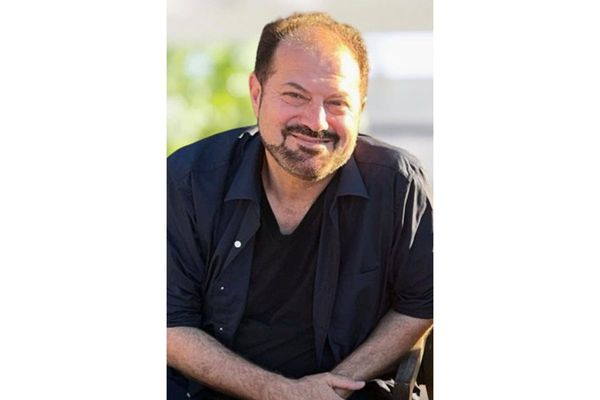
HANFORD, Calif. _ Sometimes when refugees are at their lowest emotional point in his office in Hanford, Jacob Awar Ayuen, a psychiatric physician assistant, will tell the patients his own story of being a lost boy, walking thousands of miles to escape a bloody civil war.
"Being somebody of that background myself who went through a war-torn country _ from refugee camp to refugee camp with no food, no shoes _ I feel like I can relate to them."
He was about 8 years old in 1987 when civil war in Sudan drove him and an estimated 20,000 other boys mostly ages 8 to 12 to walk 1,000 miles from their villages to safety, first to Ethiopia, and eventually to a refugee camp in Kenya.
Ayuen, now a 39-year-old medical professional dressed in a dark suit and shiny black shoes, recalls the terror-filled, barefoot trek: "Four or five times we were caught in crossfire where some of us were killed."
He and the others who survived the unforgiving journey came to be called "The Lost Boys of Sudan" for their likeness to the orphaned boys in Peter Pan. In 2001, the United States accepted 4,000 of those refugees who came to begin new lives in a country at peace. Ayuen was one of them.
But armed conflict seemed to follow him. His arrival in America was delayed by the 9/11 terror attacks.
And fighting in South Sudan is never far from his mind. Ayuen has family still there. South Sudan continues to uproot people. Kakuma, the Kenyan refugee camp that Ayuen left in 2001, is full once again of children and families. The 20-year-old civil war in Sudan ended in 2005, but peace didn't last long. After South Sudan gained independence in 2011, a civil war erupted in 2013. A 2015 peace agreement dissolved in 2016 and fighting, mostly along ethnic lines, has continued.
"People are still suffering, still dying," Ayuen says.
He has brought children out of war-torn South Sudan to Kenya to go to school. It's a way he can make life better for people who remain in the country that he fled as a Lost Boy three decades ago.