"The Lost City of Z" concerns a polarizing character who spent years searching for a holy grail despite experts' skepticism.
Its on-screen story also contains many of those elements.
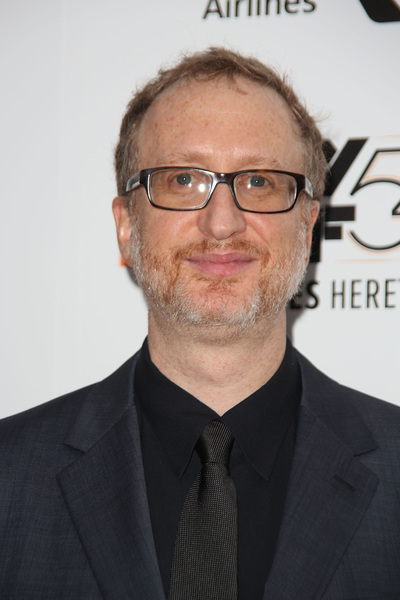
"Z," directed by James Gray, is the latest movie from one of the greatest (to fans) and frustrating (to some establishment skeptics) of modern American filmmakers. For its creator, it involved nearly a decade of production obstacles that included potential star Brad Pitt's second thoughts and the pregnancy of prospective star Benedict Cumberbatch's wife _ and taste-makers who scrunched their faces at a longtime chronic-ler of New York City immigrants and outsiders tackling empire expansion in South America.
The movie's world premiere Saturday night at the New York Film Festival was thus much like the journey of British explorer Percy Fawcett. It was a cause for celebration to Gray's devotees and a chance for wariness from those who've dismissed him before _ and its own end to an improbable odyssey.
"I find an endless obsession," Gray said, "extremely fascinating as a narrative."
There is much relentlessness here. Shot with an old-school sweep and pace, "Z" follows several decades in the life of Fawcett (Charlie Hunnam). The story, also documented in the David Grann bestseller on which Gray based his screenplay, involves Fawcett and his deputy Henry Costin (Robert Pattinson) as they make repeated trips to the Amazon in the early 20th century to find a rumored lost city _ all the while negotiating Fawcett's tricky life with wife Nina (Sienna Miller) and the upper-crust British geographical society that doubts him back at home.
While seemingly a tale of adventure, the movie is slyly about much else _ not just the price of obsession but Gray's trademark theme of an outsider's desire to remake oneself after a journey, and the collision between new and old worlds at the end of the age of exploration.
And though its scenes evoke plenty of reference points _ "Apocalypse Now" and "Tarzan," to name two _ it also shies away from them by not supplying the codas or payoffs of those antecedents. Gray's new movie evinces what the 47-year-old has done for much of his career, in the not-quite-crime stories of "We Own the Night" and "Little Odessa," or the decidedly non-American melodrama of "Two Lovers" and "The Immigrant": zig when he might be expected to zag
"I'm sure some people will say, 'Where are the chills and thrills here?'" Gray said, speaking the day after a premiere. "But there's a point where denying expectations is an important part of the aesthetic. A movie has to unfashionably be itself. You look at Rothko or Pollock, two of my favorite painters, and they stand on their own and don't give a ... of what you think. I owe you nothing, I owe critics nothing; I just want to put myself completely in a film."
Of course, that makes Gray sound like an artist with high seriousness of purpose. And he is. He's also a grade-A kibitzer whose self-effacing wit bespeaks his Queens upbringing and Eastern European-Jewish heritage.
Lanky, with a wisecrack for many occasions, the director came out for a pre-screening introduction Saturday night by saying that "unfortunately for me the book is excellent ... . I'm sure I'll hear a lot of, 'Well, the film was OK, but the book was better.'"
A sense of humor came in handy in the making of "Z."
Gestating for years, "Z" looked for a time like a go with Pitt, whose Plan B Entertainment was producing. Financing issues wore on; Pitt dropped out as star. (Plan B stayed on, and he remains an executive producer.) Paramount, where it was initially set up, walked away. It was not, financially speaking, prudent to make a movie of that scope or with the level of art-house rigor that Gray brings.
Cumberbatch would come on, but the shooting window coincided with his wife's pregnancy, and he was out too. Gray directed several movies and a TV series in the meantime. The film was eventually financed independently then bought by Amazon and Bleecker Street; they will release it in the spring.
It wasn't the first time Gray faced some industry troubles. With "The Immigrant," his 2013 period drama with Joaquin Phoenix and Marion Cotillard, he faced a yearlong battle in bringing the film to audiences. Gray plays down reports of editing-room battles with distributor Harvey Weinstein, though not his frustration with both a lukewarm festival reaction and the delays in getting the movie out.
"It took me a long time psychologically to recover from (the reaction) at Cannes. And the film's hibernation period was" _ he pauses _ "very difficult. For a while I was brokenhearted. But once it did come out, it was a huge weight lifted from my shoulders."
Outside of his genre-infused, wide-release "We Own the Night," no Gray movie has grossed more than $4 million, and though in some quarters he earns the same respect as his pal and contemporary David Finch-er, he's not had nearly the commercial or awards success.
Some of it has been weird luck: It was during the promotional tour for "Two Lovers" in 2009 that Phoenix appear on David Letterman's show as a bearded faux rapper, a stunt that swallowed any attention that might've been paid to the film itself.
But some of it is a general ambivalence among critics, particularly at festivals, where Gray's movies tend to start slowly. After "Two Lovers'" dismissal at Cannes, it eventually came to be seen as a compelling story about relationships and family.
"I guess," Gray said wryly, "that's a better situation than the opposite."
One can imagine a similar arc here: "Z" already has its fans. Slant magazine, in a glowing take, noted "the film's riches as a plumbing of a man's existential confusion." But Variety's Owen Gleiberman noted, "The film is infused with Gray's meticulous gravity, yet it also has his recessiveness _ that feeling he can give you that you're watching the action under glass."
Gray said he has little animus for critics, except for the insta-Twitter review: "That is crap. And extremely harmful for the business." He still sometimes wishes they viewed him differently.
"I'd be lying if I said I didn't have terrible frustrations about it. It's made my life much more difficult," Gray said of critical response to his films. "I've stopped reading reviews. There's no point." He said he can only hope to achieve what Wes Anderson or the Coen brothers have, to "create a new language and eventually bring the audience with them."
Cinema's chronicler of the outsider paused. "It's a lot better to be subversive inside the system. Then they can't dismiss you as a lone psychopath."