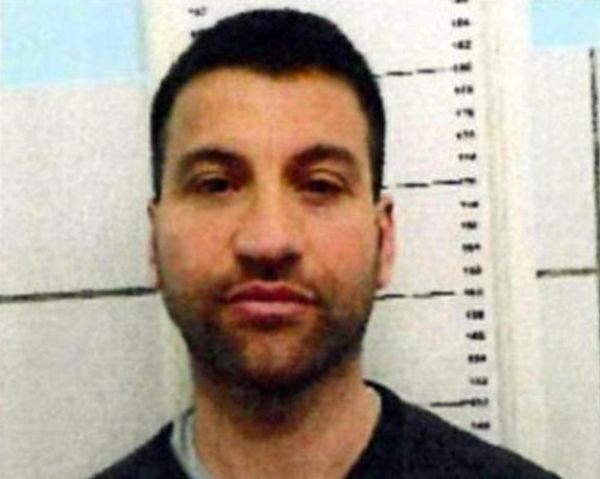
FORT WORTH, Texas _ Javonte Myers could feel when the seizures were about to happen. Sometimes he'd end up at John Peter Smith Hospital. Other times he rode them out.
It's hard to say exactly how many seizures the 28-year-old experienced in his life. It was a seizure that killed him as he lay in a Tarrant County Jail cell on June 19. Three days earlier, jail officials had taken him to JPS because of another episode, his mom, Sondrea Miller, said recently.
Now, his parents are trying to piece together what happened during their son's last days.
Why was he arrested for trespassing instead of just ticketed?
Why was he released from the hospital but taken back to jail?
Was he taking his medicine?
Miller, of Fort Worth, said her son was her best friend and he fell on hard times when he became addicted to K2, a strain of synthetic marijuana, in his early 20s. His addiction led to him sometimes sleeping in shelters or on the street or bouncing from couch to couch. During his worst times, he chose the drug over his family. He checked himself out of rehab at least three times. But during his best, he was a mama's boy who wanted to make sure she was cared for.
Miller and her husband believe a system that doesn't look out for its homeless and downtrodden failed their son and they want someone to be held accountable.
But the question is, who?
STRUGGLES WITH ADDICTION, HOMELESSNESS
The K2 that filled Myers' lungs not only made his body feel light and high, but it also triggered sensors in his brain that made him seize.
He started having seizures in 2018. His mom estimates he'd gone to a hospital at least dozens of times. Myers had been a patient at JPS multiple times throughout 2019 and 2020 and that the Tarrant County Hospital District Police had been called to help him multiple times, according to hospital spokesperson Diana Brodeur.
Brodeur said she couldn't release information about why Myers was at the hospital but said he had not been denied behavioral health or substance abuse treatment.
Miller said her son often faced homelessness and sometimes she only knew where he was when if he was in a hospital.
"He chose not to live with anyone so he could get his K2 when he wanted and didn't have to put up with people complaining about you shouldn't do this or that," his stepfather, Paul Miller, said.
The Millers said they did everything they could to help their son.
Sondrea Miller paid for rehab three times. But he would check himself out after a few days and leave, she said. She would beg him to stay home, but the pull of the drug was often stronger.
Miller said she and her husband felt alone and didn't know where to go for help.
One time Myers fell asleep in a hospital waiting room after he received treatment for seizures. An officer woke him up and called his mother to pick him up. She asked the officer if he could have Myers committed for mental health treatment.
The officer said no, Miller said.
Over the course of three years, Myers was arrested eight times for criminal trespass, an offense that mostly affects people who are experiencing homelessness, advocates say.
Lauren King, the interim executive director of the Tarrant County Homeless Coalition, said the coalition has worked with Fort Worth police to see where improvements can be made in helping the city's homeless population instead of arresting them. The group has given police an overview of what homelessness looks like in Fort Worth.
"No one wants people to be or remain homeless, so we talk about how do we work together on this?" she said. "We talked about how criminal records make it harder for people to find help, so how can we avoid that?"
The coalition is also working to end the revolving door people often find themselves in between the county jail and shelters.
"A focus for 2021 will be creating a connection with the criminal justice system and figuring out how do we catch people who go back and forth between the jail and a shelter," King said, explaining that the group already has a similar program with JPS. "JPS lets us know who their high utilizers are and we can connect them with housing. It's a win for everyone."
Last year, Bexar County District Attorney Joe Gonzales announced his office wouldn't prosecute homeless people for criminal trespassing unless they had a violent history. Gonzales made the decision after two people died in the jail related to homelessness or mental illness, according to the San Antonio Express-News.
Asked how the Tarrant Count district attorney's office prosecutes criminal trespassing against the homeless population and if she'd consider adapting a similar policy to San Antonio, District Attorney Sharen Wilson said, "Yes, homeless people who commit crimes are prosecuted in Tarrant County."
She said several groups within Tarrant County, including the DA's office and law enforcement, are working with mental health services and JPS to create a mental health diversion center.
The center would divert low-level, nonviolent offenders (mostly people accused of criminal trespassing) out of the jail and into treatment, Wilson said.
Myers could have fallen through the cracks in the system.
"Absolutely I'm sure he could have been served better," King said. "We need to improve our system to make sure we catch people like him. ... Why wasn't he connected? It could be that he was couch surfing, there are people who are homeless and don't ever interact with a shelter or outreach team and our system is looking at how we can make contact with those people and serve those people."
DEATH IN THE JAIL
When her son was taken to jail for the last time, Miller said she only knew about it because he was hospitalized for a day.
Then, on June 19, Miller answered a knock at her door. Two police officers stood there.
The coroner wanted to talk with her, they said.
"I automatically knew it was Javonte," she said, holding back tears.
Myers was found dead in his jail cell that day.
Miller said the jail knew about his seizure disorder. The Tarrant County District Attorney's Office declined the newspaper's request for copies of Myers' intake paperwork and sent a letter to the Texas Attorney General arguing against its release.
It also declined to send the Star-Telegram paperwork that would show how often jailers had checked on Myers, who was apparently being held in a unit that required frequent checks by employees.
An in-custody death form filled out by the sheriff's office said that Myers exhibited medical and mental health problems, but it didn't go into detail. The Texas Commission on Jail Standards is investigating the death and said its report likely won't be available for a few months. It investigates all deaths at Texas jails.
Myers was declared dead by Medstar about 12 minutes after he was found unresponsive.
His cause of death is listed as "seizure disorder" by the Tarrant County Medical Examiner's office, but autopsy isn't final yet.
Myers was the fourth person in June to die while being held at the jail.
Jason Martin, 40, died on June 24 of heart disease.
Abdullahi Mohamed, 40, died the next day and a state report says he was found "on his mattress on the floor naked."
"Officers became concerned when he failed to answer their questions and eat his food," the report says. "They put him in a wheelchair and en route to medical he stopped breathing."
Mohamed's cause of death is still pending.
Jose Rivera, 67, died on June 11 after contracting COVID-19 while being held on two counts of felony DWI.
Myers' family believes he was neglected and question why he was arrested in the first place.
"Why couldn't they have left him in the hospital? Or let him go?" Paul Miller said. "Why couldn't you have given him a ticket?"
The circumstances surrounding Myers' latest arrest are unclear. There is no case file available, according to jail and district attorney records. When the jail announced Myers' death, a news release said he was also booked on a drug possession charge.
His parents fear Myers didn't get his medicine and that he wasn't checked on enough.
"You have human lives behind bars, you still have to make sure they're OK," Paul Miller said. "You have to do what you're supposed to do. Years ago when I dropped my kids off at school, the school was responsible for them, it's that simple. It's the same thing."
The state investigation into his death isn't complete and no information could be given about their findings thus far.
"Bottom line is, someone neglected my son," Miller said.