Hate crime prosecutions are set to be fast-tracked due to a “deeply troubling rise in antisemitic incidents”, the chief prosecutor for England and Wales has said.
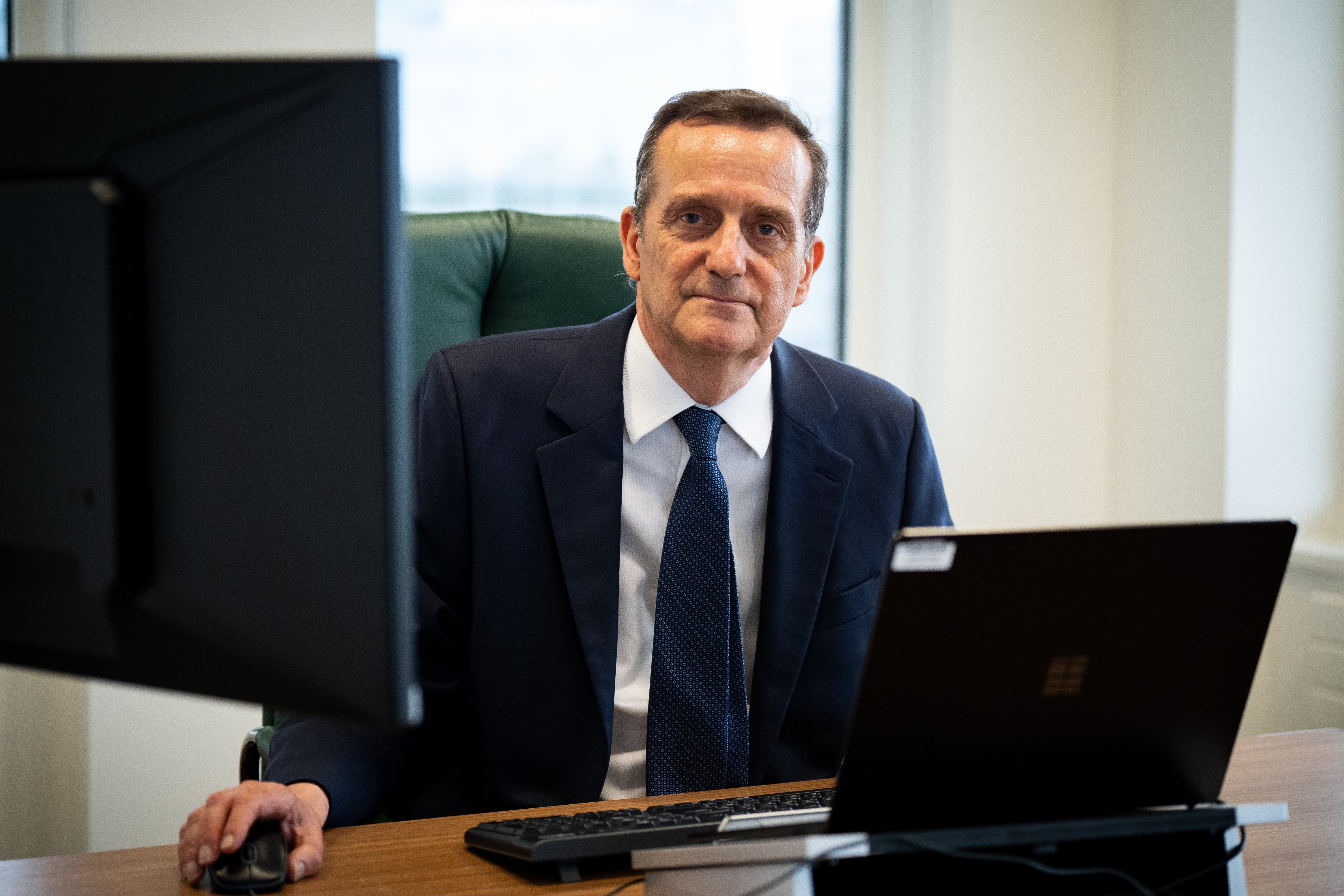
Director of public prosecutions (DPP) Stephen Parkinson has issued guidance to prosecutors which says “any supporting evidence can be obtained subsequently” once the evidential threshold for a charge is met.
The new guidance follows a series of attacks on Britain’s Jewish community which have contributed to concerns that antisemitism is on the rise.
Speaking to the Press Association, Mr Parkinson said he was hoping “we can put a line in the sand” and that making decisions quickly would put a stop to an “uptick” in antisemitic behaviour.
He added: “What I wouldn’t want people to think is that we’re rushing ahead in cases where there’s any element of complexity – it’s important that the police are given the time, and in the recent cases that everyone is aware of, we’ve been working very closely with the police to help them build up a body of evidence that enabled us to make charging decisions.”
Explaining the decision to fast-track hate crimes, the DPP said in his guidance to prosecutors: “Its purpose is to ensure that charging decisions are made swiftly and efficiently, with prosecutors focusing on the core evidence required to determine whether the evidential test is met.
“Where that threshold for prosecution is satisfied, then a prosecution decision should not be delayed – any supporting evidence can be obtained subsequently.”
Since late March there have been a series of arson attacks at Jewish sites in London, as well as a double stabbing in Golders Green that is being treated as an act of terrorism.
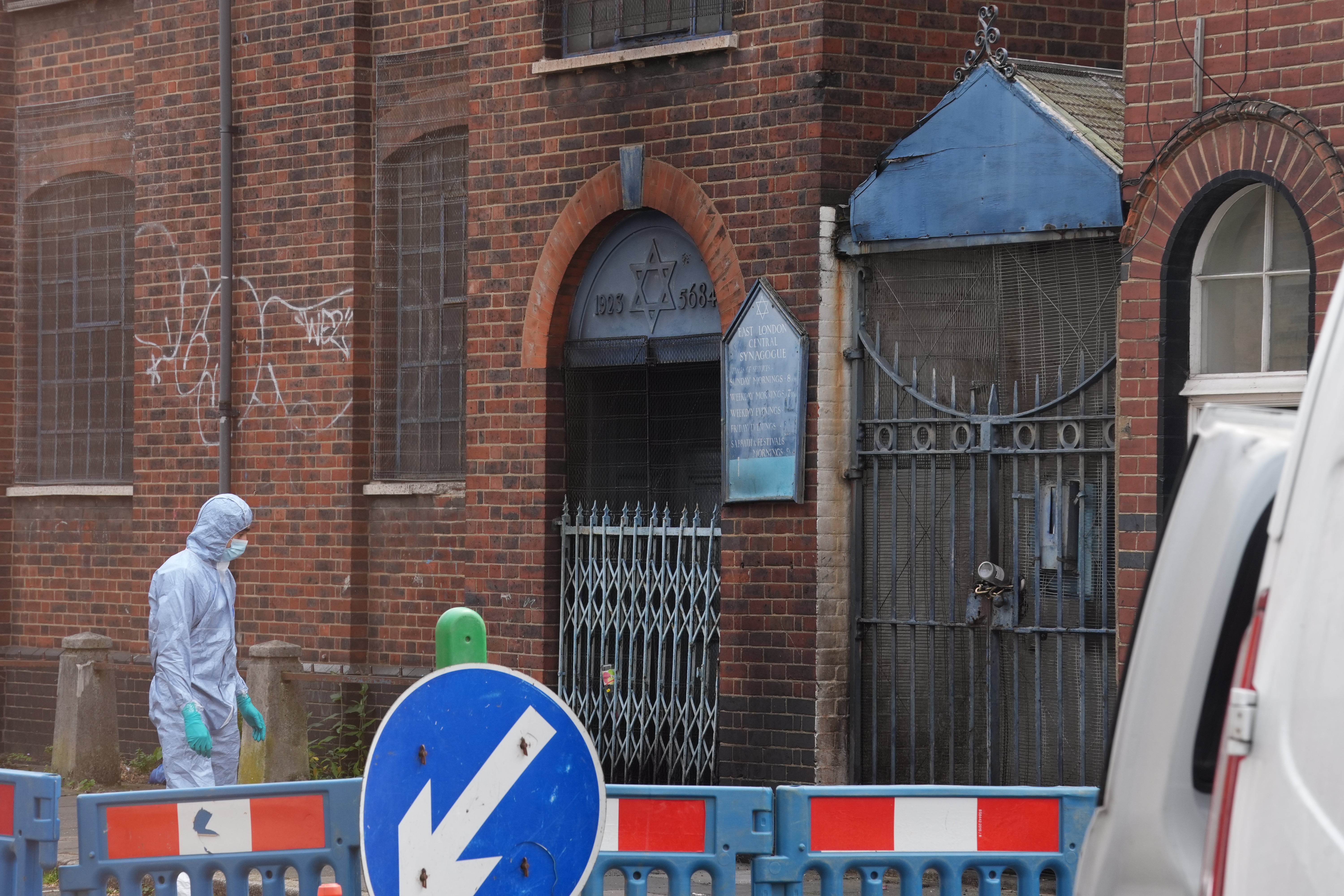
Counter-terrorism police also said officers were investigating a suspected arson attack at a former synagogue in Nelson Street, Whitechapel, east London, in the early hours of Tuesday.
The DPP told PA prosecutors had not “seen evidence of linkage”, but added: “It seems there is a pattern of copycat antisemitism taking place”.
He added: “As a result, people see this and they are sadly encouraged to go out and commit crimes themselves.”
Questioned on whether there was a likelihood that there would be an increase in the number of antisemitic crimes prosecuted as terrorism, Mr Parkinson said: “I think that is possible. Obviously one has to make the link but as you say, those links have been made in these more extreme cases.”
Mr Parkinson said “only a fraction” of antisemitic crimes are referred to the Crown Prosecution Service (CPS), saying the Jewish community faces “extreme acts of violence and criminal damage”.
The guidance continues: “This guidance is issued against a background of a deeply troubling rise in antisemitic incidents across the country.
“These are not limited to the extreme acts of violence and criminal damage that are currently the subject of investigation and proceedings.
“Instead, it is evident that, as they go about their daily lives, the Jewish community face numerous incidents which involve threats or abuse and which are intended or likely to cause distress to Jewish people.
“All such incidents are crimes, but only a fraction of them are referred to the CPS.
“Where they are, we prosecute in the great majority of cases, with a high conviction rate.”
Dave Rich, director of policy at Community Security Trust (CST), said: “We welcome this clear and robust guidance from the CPS and hope to see it implemented with real force across the country.
“Anti-Jewish hate crimes are running at far too high a level and we hope that quicker prosecutions will deter further offenders, and will show the Jewish community that the CPS will act to bring antisemites to justice.”
On Tuesday, Sir Keir Starmer warned Iran that efforts to stir up violence and hatred in the UK “will not be tolerated” amid suspicions Tehran could be backing antisemitic attacks.
The Government has promised a new law to allow it to take action against state-backed groups, with Mr Parkinson saying he would “definitely” support the proscription of Iran’s Islamic Revolutionary Guard Corps (IRGC) if it strengthened the CPS’s ability to prosecute.
Sir Keir also called on the Arts Council to act on bodies it funds promoting or platforming antisemitism.
Speaking at a roundtable in Downing Street, the Prime Minister said: “We will also expect more where public funding is being used to promote or platform antisemitism, the Arts Council must act, using its power to suspend, withdraw and claw back funding.”
He said the Government has ordered an independent audit of how allegations of antisemitism are handled.
In response, Darren Henley, chief executive of Arts Council England, said: “Antisemitism is abhorrent and there is no place for it in Arts Council-funded organisations.
“The new independent audit announced today is valuable at this time, and we welcome any intervention that helps ensure our processes are robust and effective in addressing complaints about antisemitism.
“We expect all organisations we fund to uphold freedom of expression, to support Jewish artists to work without fear, and to ensure Jewish audiences feel safe in cultural spaces.”
Labour will be ‘smashed to smithereens’ in Wales, says Farage
France reckons with Nazi-looted art in new Paris museum gallery
Suspected arson attack at former synagogue in east London
Putting detention centres in Green seats ‘democratically fair’, says Offord
Nissan to close production line in Sunderland and cut 900 jobs in Europe
Britons on cruise ship linked to hantavirus outbreak face more days on board