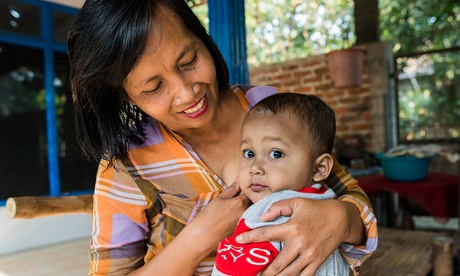
With the inclusion of a nutrition target in the Sustainable Development Goals, there is a growing determination to break the cycle of child malnutrition, stunting and mortality. Yet many infants still aren’t receiving the right nutrition in the first 1,000 days of their mother’s pregnancy - from conception to age two. According to the World Health Organisation poor nutrition has left 161 million children under the age of five stunted and is responsible for 45% of all child deaths.
It is this that brought experts together at the 1,000 Days symposium held by the Global Alliance for Improved Nutrition (GAIN) last week. The event was an opportunity to discuss the challenges of scaling up infant and nutrition programmes and to identity what can be done to ramp up interventions.
Since 2007, GAIN has implemented 22 projects in 16 countries as part of its Infant and Young Child nutrition program. These include protecting and promoting exclusive breastfeeding up to six months, and developing nutrition-rich complementary foods and home fortification powders that can be added to cereals and porridges.
“We don’t have a blueprint, we don’t have a food solution, but we have a start,” noted Marti Van Liere, GAIN’s Director of Maternal, Infant and Young Child Nutrition, in an opening speech that set the tone for the day.
The experts gathered at the conference all agreed there is no single solution, nutrition must be seen as more than just a health issue and it’s an area that’s fraught with complexity. As Liz Ditchburn, Director of Policy at DFID, put it, “every single thread you pull is connected to something else”. This web of complexity can’t be untangled simply by developing products and hoping they will reach the consumer; it requires an understanding of where consumers are, their preferences and how they can be influenced - whilst respecting traditions and local food environments. At the heart of this lies behaviour change communications – something that the private sector has been doing for many years and the nutrition community is now waking up to.
“Behaviour change is so underinvested in and so poorly understood. It’s much more of a cornerstone than any of us in the sector were led to believe,” said Marc Van Ameringen, GAIN’s Executive Director.
So how can deep seated feeding behaviours be changed? According to Valerie Curtis from the London School of Hygiene and Tropical Medicine “we need to disrupt routines, disrupt settings and use power emotional levers”.
In partnership with GAIN, Curtis was involved in research in East Java, Indonesia, where 32.5% of children are stunted and breastfeeding is rare. Deep-fried snacks are also a dietary norm in children under five. The research concluded that women respond best when they are exposed to emotional triggers. So in order to encourage healthy eating and exclusive breastfeeding, the marketing campaign focused on powerful, evocative images rather than lecturing women about feeding practices.
Getting the marketing right so mothers don’t feel lectured is essential. They tend to buy products they can trust, which means investing in marketing and building brands. “If you build a powerful brand, you build trust,” explained Olivier Kayser, Founder of Hystra, a consultancy firm that helps the public and private sectors work together. But the marketing element is just part of it. Kayser said that the sales and distribution side of things is less sexy but equally, if not more, important.
Understanding behaviours can create demand for nutritious products, which in turn will lead companies to focus on manufacturing more nutritious products. A new breed of experts, well versed in the language of behaviour change, marketing and branding, might be needed to help deliver this vision.
So what will the future of nutrition leadership look like? Martin Bloem, a senior nutrition adviser for the World Food Program argued that “the key to unlocking all the talent we need is not just about nutritionists”. Ditchburn called for organisations to pool their best resources and skills and build teams from a range of fields including academia and science. Ditchburn also called for new generation of leaders to create political energy, such as that galvanised through the FGM movement, particularly at the Girl Summit last summer: “We need to harness the power of young people much more” she argued.
There is a still long way to go before any conclusions can be drawn on what the best models for nutrition are. “We only have part of the picture right now,” admitted Van Ameringen, adding that at least another five years of programmes and testing new approaches will be needed. But the sector does appear to be heading in the right direction. As Bloem concluded, “we are all working to ensure that no child is stunted in our lifetime”.
Content on this page is paid for and provided by GAIN sponsor of the Guardian Global Development Professionals Network.