It somehow seems fitting that Neil MacGregor’s successor as director of the British Museum has been found in Germany. One of MacGregor’s most personal and – in the petty context of British national prejudice – courageous campaigns has been to reverse a century of Germanophobia and make us see the greatness and originality of the land of Goethe, Friedrich and Dürer.
Hartwig Fischer, who will take over from MacGregor this winter, is director-general of the Dresden State Art Collections, one of Europe’s finest gatherings of art. It won’t be a big shift in terms of artistic responsibility from taking care of Raphael’s Sistine Madonna and Giorgione’s Sleeping Venus (or is it by Titian?) to being the custodian of Dürer’s Rhinocerous and the Parthenon marbles.
Nor do reports that a “foreigner” is to be put in charge of the British Museum seem very alarming. Fischer, whose appointment appears very much to reflect MacGregor’s choice, comes to a museum that as every visitor soon realises, is British in name only. With its incomparable holdings of African sculpture, Assyrian art, portraits from Palmyra and masks from Mexico, to name just a few of its treasures, this is a truly global museum. MacGregor has taken that virtue and amplified it. The problem for Fischer – or anyone else who had got this job – is not moving from one great European collection to another but simply living up to the example his predescessor has set.
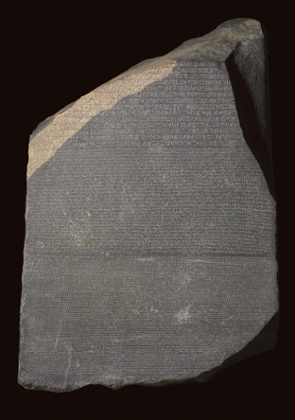
Museums do not usually play the kind of international, even diplomatic role MacGregor has carved out for the British Museum. Just this week, George Osborne announced that its History of the World in 100 Objects exhibition will tour to China. This, and several other British cultural exchanges planned with China, reflect the essence of MacGregor’s immense legacy: the idea that masterpieces of world art and documents of world history are messengers of peace to be shared across the planet, while places like the British Museum become human gathering places and cross-cultural fora.
Admittedly, at the end of a wet summer when the entire planet seems to be crowding under the canopy of the museum’s Great Court, this can feel like a posh way to say the place is popular with tourists. But MacGregor’s drive to educate has made for exhibitions that reveal new worlds and new beauties. From the China of the First Emperor to the history of the Hajj, he has continually opened my eyes. And that sense of discovery is not just needed when we look at “other” places but much closer to home. Celts invites us to rethink who we are, if we claim any Celtic heritage. Last year’s insightful show on Germany was a thoughtful examination of the ingenious people who gave us the Reformation and Meissen porcelain.
So as MacGregor goes to Berlin to advise on its own creation of a global cultural forum, Fischer heads to London in what almost feels like a high level cultural exchange. There’s one big difference betweem them. MacGregor is an expert on the old masters and has also run the National Gallery. Fischer is an authority on 20th-century art who has curated exhibitions on Schwitters, Arp and Kandinsky. Presumably he will take as easily as MacGregor did to exhibiting archaeological wonders from places remote in time and geography. Meanwhile Martin Roth, the director he succeeded in Dresden, is now in charge of the V&A – so London’s museums are getting the benefit of German leadership from Bloomsbury to South Kensington.

Running the British Museum is difficult because you need to make the past accessible without distorting history, or prehistory. There are lots of pressures, including intellectual ones, that can knock this project off course. Celts is a beautiful, entrancing exhibition but just a year ago archaeological pedantry made a similarly ambitious show on the Vikings a dreary slog.
How to present learning properly while seducing the eye is a real art. Fischer seems to be an aesthete, to judge from his engagement with pure art, so hopefully he will be good at making the museum’s many fine scholars curate their treasures with style and imagination, and speak to a universal audience. If he can do that he will ensure this museum carries on drawing crowds and, yes, changing the world.