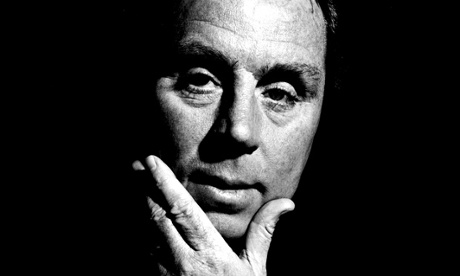
Even on that below-zero day in December 1982 when Harry Redknapp began his managerial career with a 9-0 hammering at Lincoln, the crevices and fissures under his eyes were forming. Now they have deepened, hardened, become sallow. That’s what 31 years and more than 1,300 matches – nearly half in the Premier League – do to a manager.
Always Managing: that’s what Redknapp called his rollicking autobiography. It is an apt description. That is what he does, through good times and bad, court cases and threatened knee-cappings, health scares and magmas of hate. Increasingly, though, Redknapp’s career appears close to its final scene.
He is odds-on favourite in the sack race. His QPR team, who face Aston Villa on Monday night, are bottom of the Premier League. Next up are Chelsea, then Manchester City. If he was to be hurled from the furnace, would he really want to step into another fire?
He will be 68 in March. No one has taken over at a Premier League club at such an advanced age – Sir Bobby Robson was only 66 when he became Newcastle United manager in 1999.
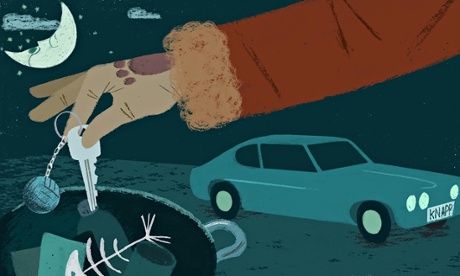
It is too early to write his footballing obituary but we can at least plan the first draft. And perhaps history’s verdict will be kinder than his current reputation. For Redknapp, who argues in his autobiography that “sometimes old school is still the best way”, is now seen as somewhat of a clapped-out Ford Capri in a world that is more Vorsprung durch Technik.
You can partly understand why. At Spurs, André Villas-Boas had records of every training session he had taken in his office. Redknapp didn’t have a computer: just an old-school Nokia 310. What he would make of Tottenham’s new training centre with its altitude chambers, hydropools and cutting-edge science is not hard to guess.
At QPR, fans also moan about his lack of passion, ideas and transfer policy (Rio Ferdinand, anyone?), and claim he has blamed the fitness of players, Loïc Rémy being sold and the lateness of new arrivals for his side’s poor position.
Redknapp could counter, not unreasonably, that when he arrived at QPR there was a “culture of decay” and that last season’s promotion was a financial and footballing kiss of life. But either way there is friction and faction – something the tit-for-tat fat-spat over Adel Taarabt’s weight made public.
It is a far cry from that helium-filled day in February 2012 when Redknapp was cleared of tax evasion and became favourite for the England manager’s job after Fabio Capello stepped down. Shortly afterwards his Spurs side obliterated Newcastle 5-0 to move four points off Manchester United at the top of the league.
At that point Redknapp’s media allies were not only reporters, but propagandists. Yet Spurs quickly fell to earth, winning just four of their last 13 matches and missing out on the Champions League when Chelsea beat Bayern Munich in the final. And Redknapp’s reputation plummeted too.
It has never fully recovered. Which is unfair given that Redknapp’s teams have produced some giddy stuff and only Sir Alex Ferguson and Arsène Wenger have managed in more Premier League games.
While on the surface Redknapp’s top‑flight record – 232 wins, 164 draws, 230 losses – is unremarkable, his points‑per-game tally of 1.37 is better than most of the nine other men who have managed 300 or more Premier League matches, including Mark Hughes (1.34), Sam Allardyce (1.30) and Steve Bruce (1.14). It is also close to that of Martin O’Neill (1.40), a manager who is held in much higher regard.
Reaching the quarter-finals of the Champions League with Spurs and winning the FA Cup with Portsmouth shouldn’t be forgotten either.
When you speak to players who have worked with him, they say the same thing: that while Redknapp doesn’t take detailed training sessions, he is a brilliant man-manager. One former Spurs player went to his office, angered after repeatedly being left out, and departed feeling 10 feet tall, such was the praise that tumbled from his manager’s lips. It was only later that he realised that Redknapp had promised him nothing – and still didn’t pick him.
While he has struggled at QPR, there is enough past evidence to suggest he can organise a team and get them playing. The question now is whether he can do the same at Loftus Road.
These days he is fighting for his legacy, as well as to keep QPR up. In FourFourTwo, he boldly claims that he could have won the league at Tottenham, given time and a striker, and points out: “I finished in the top four twice in three years.”
But it is not hard to detect a weakening of resolve in his autobiography, in which he talks about enjoying waking up without pressure during his five-month break after leaving Spurs. Now autumn has arrived he has to leave before dawn to drive from his faux Tudorbethan mansion on the south coast to QPR’s training ground in west London.
Given his age, the perennial pressures of management and the heavy mileage on Redknapp’s clock, it would be no great surprise if he pulled up the handbrake. If he does, his past achievements shouldn’t be too bitterly begrudged.