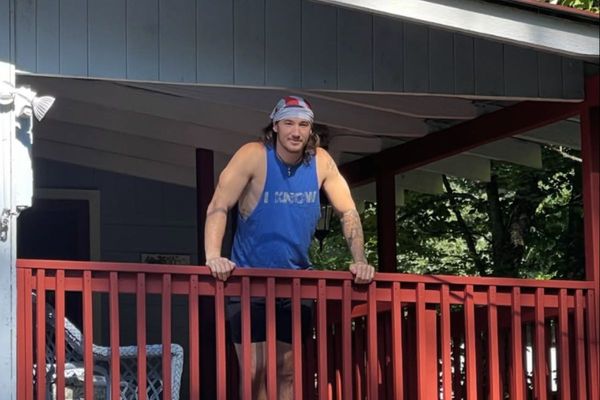
Harry Kewell is back in England, the country where he emerged as a prolific attacking talent but left, in many respects, with some wondering whether his potential had truly been fulfilled. Having recently been appointed the coach of Watford Under-21s, the Australian’s new job is to ensure that others fulfil theirs.
Kewell, who made his name at Leeds United before spells at Liverpool and Galatasaray, returned to his homeland in 2011 and announced his retirement in March last year. When the call came from Ben Thatcher acting as a conduit to the Watford sporting director, Luke Downing, the offer to work in the Premier League once again was too enticing to resist.
“For me it was a no-brainer,” says Kewell. “To have an opportunity at a Premier League club, working under an exciting manager [Quique Sánchez Flores] that is very confident and allows me to be involved in his talks and training. To do that, and to understand what it takes to be a manager, to understand the ins and outs of how a club works … the first week blew my mind.”
Kewell’s enthusiasm in his new surroundings is stark. Here is a man who used to terrorise defenders discussing football with the same abundant energy with which he blossomed at Leeds all those years ago.
Yet the appointment is undoubtedly an unusual one. Aside from running an academy in Australia, this is Kewell’s first job in coaching, having recently taken his Uefa badges. He confesses it is a learning experience, a first opportunity to hone his technical coaching ability and man-management skills.
For Watford, owned by the Pozzo family, it is the latest left-field decision for a club used to breaking the mould. Flores’s new-look side were unfortunate to leave Everton with only a point on the opening weekend of the season, while key figures in the Italian family empire have insisted Udinese in Serie A are still the jewel in the crown. It remains to be seen how many foreign players Kewell will see added to his squad over the coming months, given Watford’s vast scouting network and links to Udinese, Granada and South America.
“I haven’t had a chance to sit down with the owner, he’s been around but has been busy,” says Kewell. “But Watford have a good record of bringing through youngsters and there’s no reason the players I have at the moment can’t force their way into the squad.
“From the first moment I met Flores he was solid and very confident. I’ve seen other managers talk to under-21 coaches and they’re not bothered. They have their first-team squad and that’s it but he wants to know. He wants young players to push the first team.”
On the state of English youth football, Kewell adds: “I’m shocked to a point. In any other country we play football for five, six hours a day. It’s your livelihood. They have rules here where you can only train for a certain amount of hours during the week.
“They were telling me that there might be a rule where you can’t go and play football out on the street without a coach watching. That’s ridiculous. If a kid wants to kick a ball against a wall then let him, that’s the way he’s going to get better. It goes back to how bad do you want it. Keegan, Beckenbauer, Pelé, Maradona, Cruyff – they all said it was 90-95% hard work and the other 10% is your gift.”
While Kewell had the world at his feet at Leeds, he admits he fell out of love with the game at Liverpool. The former PFA Young Player of the Year was frustrated by injuries at Anfield, most notably succumbing to a groin problem midway through the first half of the 2005 Champions League final.
Nevertheless, he is undoubtedly one of the finest Australian players to have played the game. Kewell insists he has no regrets when reflecting on his career, and hopes his managerial ambitions will be aided by the experience garnered working under previous high-profile individuals.
“My career started off under George Graham, a general. Even though we had big name players, he would walk into a dressing room and people would shut up. I worked with Gérard Houllier too. The way in which he talked about football was amazing. And [Rafa] Benítez, a very tactical man with a structure which he stuck too. If you fell out with that, he didn’t like it,” says Kewell, who also praised Guus Hiddink and described Frank Rijkaard as the best coach he ever worked with.
That relationship with Rijkaard grew at Galatasaray, the Turkish club Kewell joined in 2008, eight years after two Leeds fans were killed in Istanbul when the two sides met in the Uefa Cup. “I still get a lot of stick from Leeds fans which is unfortunate because Leeds is very close to me. It was one of the best clubs I ever played for. They gave me the start and I had a fantastic time there,” says Kewell.
“It’s all about opinions but my idea was about bringing the clubs together. You’ve also got to look at it as after my Liverpool career, what was I supposed to do? I still wanted to play football and that was the only club that really showed interest. As much as I know it hurts them, I hope one day they will [forgive it]. They probably never will. That’s football, everybody has their opinions. I loved Leeds but I also loved Galatasaray.”
From the razzmatazz of European and World Cup football to the coalface of Under-21 Development League Division Two South. That will be Kewell’s priority for the foreseeable future with Watford, as he takes the first step on his coaching pathway.