Trade is at the heart of reducing poverty and helping economies to grow. It is central to the soon-to-be-agreed Sustainable Development Goals (SDGs), the new global poverty reduction and sustainability targets to be adopted by the United Nations in September. However, as the Fairtrade Foundation highlights in its recent briefing paper (pdf), trade is a tool that can harm, as well as help, poverty reduction.
The proposed fifth goal of the SDGs is to “Achieve gender equality and empower all women and girls”. Last week Tsitsi Choruma, senior advisor on gender at Fairtrade International, participated in an online discussion, organised by Business Fights Poverty, on harnessing value chains for the SDGs. She was highlighting Fairtrade’s concern about the position of women farmers and those working within global supply chains and the urgent need to address this.
Choruma’s belief is that we need to challenge the deep rooted behaviours and attitudes which hold back women among the world’s poorest farmers and workers. Women have less land, fewer livestock, less access to credit and more responsibility for the household. Choruma said that whilst businesses have in many cases increased social investments, to date these have not focused enough on reducing inequalities and discrimination against women and this should be a priority.
She told the group, “We need to invest in producer organisations so that they are not violating the rights of the women who work for them. Creating inclusive businesses should be a priority for all.”
In Choruma’s opinion, investment would allow analysis of the issues in value chains, especially concerning gender. “This would mean challenges and constraints that specifically relate to women, who carry the most burdens, can be diminished,” she explained.
Choruma’s work on gender is an indication of what is happening within Fairtrade as a whole. Fairtrade is increasingly working with businesses and producers to go beyond certification and seek to increase progress with issues such as gender equality and climate change in order to have a deeper developmental impact.
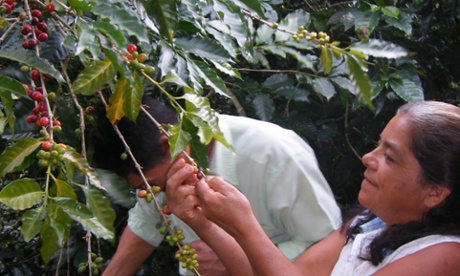
One example of an organisation pushing for a still deeper impact is the PRODECOOP coffee co-operative in Nicaragua, which has been working with Cafedirect since the early 1990s and which has a core objective to improve gender equality. This includes a 40% quota for women in leadership positions, allocation of a percentage of the Fairtrade Premium for implementing the gender programme and training for field staff on working with women farmers. There is awareness raising on women’s rights, including their right to actively participate in the co-operative.
And at the Bukonzo Joint Co-operative Union in western Uganda, a group of members and leaders are taking part in a process to analyse and address gender inequalities in their organisation and in wider communities. More than 80% of the coffee co-op are women and the group is examining equal allocation of work in their households and joint decision-making on how to use household income. Steps have been taken to ensure women are able to participate in all areas of co-operative life and, thanks to international funding from Oxfam and others, these developments and findings are being shared with co-operatives in Tanzania.
The Ghanaian cocoa farmers’ co-operative Kuapa Kokoo prioritises gender equality, ensuring that women have equal standing as members and land owners. Charlotte Borger, communications director at Divine Chocolate, which is co-owned by Kuapa Kokoo, said the company’s Producer Support and Development Fund (PS&D) has been used to develop programmes for women designed to build their skills and confidence, enabling them to take on more roles within the co-operative.
“Through education - such as an adult literacy and numeracy programme - and growing confidence, women can build their own economic independence, their active contribution in their communities and have equal opportunity to take leadership roles,” said Borger. “As more women are empowered, they provide role models for other women to believe that they too can do more, and, importantly, for their daughters too.”
Choruma is clear that all sectors: private, governmental and NGOs, can work together, to help find more effective solutions to develop women’s potential.
Sharing developments is vital for the future, said Choruma. “Progress that has been made on gender equality has happened largely on a case-by-case or project basis. This is not something that has spread in a wider fashion.
“We need more organisations to invest in spreading the word about the outstanding work being carried out by these co-operatives, so more organisations will be influenced and more women will benefit.”
Businesses need to look at their practices too, said Choruma. She explained that they should seek to create “shared value”; putting in place policies and operating procedures that enhance the competitiveness of a company while at the same time improving the conditions of the communities in which they operate. “It is important that connections are made between social and economic progress. This presumes compliance with the law and ethical standards, as well as mitigating any harm caused by the business. And beyond this, it means actually creating value for society.”
Businesses should seek to build supportive clusters outside of themselves. “No company is self-contained,” she added. “All sorts of organisations with relevant expertise can help influence companies and determine the most appropriate actions they can take together with the skills they require to advance their gender policies. This includes development agencies, women’s organisations, academics, the UN and trade associations.
“These clusters can play a key role in driving productivity, innovation and competitiveness, through investments and other support,” said Choruma. “Working together is key to build a brighter future for the world’s poor.”
Content on this page is paid for and provided by Fairtrade Foundation, sponsor of the spotlight on commodities series