
The cabinet passed a resolution on July 27 acknowledging a draft of efforts to drive data utilisation or the National Big Data Strategic Plan 2025-27, aiming to turn Thailand into a "data-driven nation".
This marks the first time the country set up a big data framework to enable data-driven decisions and planning, promoting a data economy and artificial intelligence (AI)-enabled data services.
The goal is to benefit the country's economy and society, enhancing competitiveness and promoting AI usage, according to the draft.
The framework was developed by the Big Data Institute (BDI) and proposed to the cabinet by the Digital Economy and Society (DES) Ministry.
The institute developed the framework based on its analysis of challenges, including a shortage of personnel with specific skills related to data, cybersecurity, digital data public disclosure laws, and an insufficient budget for data integration and platform development.
What are the purposes of the framework?
According to the BDI, the framework addresses key obstacles, including bridging fragmented government data, ensuring the secure use of data, protecting personal data privacy, and solving limitations in law and infrastructure.
The guidelines are also expected to create an environment to propel the use of big data and AI.
Patchara Anuntasilpa, DES permanent secretary, said the ministry continues to advance policy initiatives.
"The cabinet endorsement of the big data plan marks a pivotal step in the government's digital transformation roadmap aimed at integrating state-level data repositories and enhancing public service delivery," Mr Patchara said.
Nan Boonthida Somchai, deputy DES minister, said the framework opens the door for all agencies to offer e-service systems properly, so that none of them can claim they cannot send data.
"We aren't doing data sharing just to say 'we did it', but to reduce the steps across government agencies and connect all systems so that each agency can finally see the same data," she said.
Future welfare programmes and national systems will be based on unified, connected data, said Ms Nan.
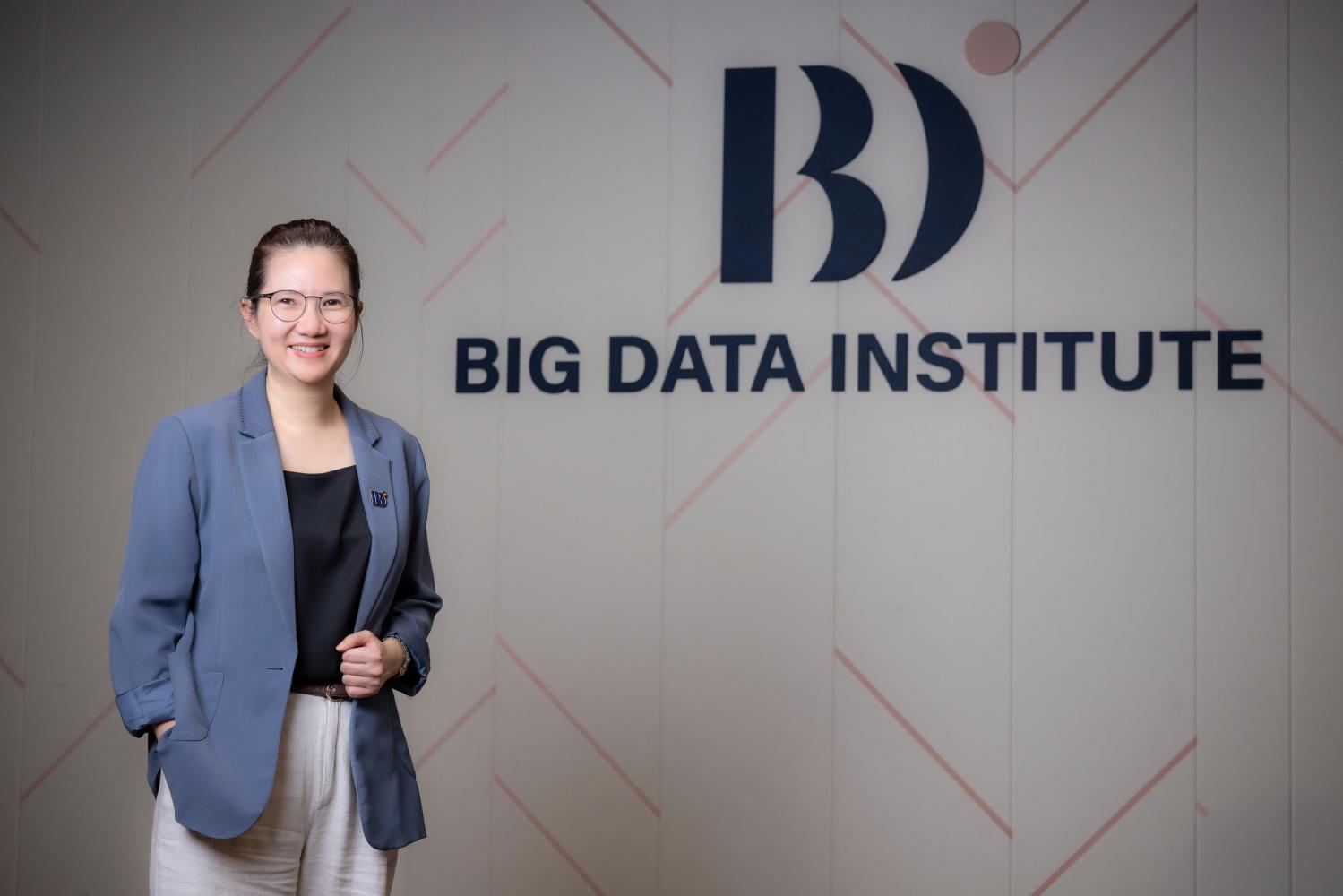
Tiranee Achalakul, president of the BDI, said the framework seeks to "harness the power of big data for inclusive growth and well-being".
According to the framework, a major goal is to increase the value of the big data-driven economy by at least 35% year-on-year by 2027.
Another target is to improve Thailand's ranking in the use of big data and analytics to 25th next year from a projected 27th this year in the World Digital Competitiveness Ranking by the International Institute for Management Development.
Thailand slipped one spot to 38th out of 69 economies in the overall ranking for the 2025 edition, attributed to a slide in the country's technology ranking from 23rd to 29th, which reflects weak private investment in AI, according to the Thailand Management Association.
How can BDI achieve these goals?
All the targets in the framework can be achieved through four strategies as BDI collaborates with public and private partners, said Ms Tiranee.
First, the development requires a national data infrastructure for big data utilisation.
Second is promoting the use of big data to tackle the country's problems and promote development in health, tourism, the environment and agriculture.
Next, AI should be applied to upgrade public and private services and promote Thai large language models.
Finally, the workforce requires training on big data and AI skills, aiming for a minimum of 160,000 personnel by next year.
Under the first prong, the BDI developed the national big data platform for secure and decentralised exchanges among state agencies.
The institute set up a mechanism for data integration with state agencies, and developed a data catalogue to support searches.
The BDI also created data storage space for data that can be used to develop AI models.
Furthermore, the readiness of basic infrastructure will be enhanced by state agencies for effective data utilisation, she said.
The second strategy calls for the BDI to develop medium- and long-term action plans for data utilisation.
The plan focuses on four dimensions, beginning with the economic impact for the agricultural, tourism, small and medium-sized enterprise and manufacturing sectors.
The other dimensions cover social dimension, human capital development and future readiness.
Under the third strategy, the BDI joins with private and public partners to set up a data service platform for AI development, as well as promote AI-enhanced public services and AI adoption in industries.
The institute expects the promotion of AI adoption by the industrial sector can be implemented through many measures, including offering tax incentives to companies to adopt AI for operations.
Another measure calls for offering financial aid to companies that use AI to bolster their businesses.
Thailand's AI adoption is growing rapidly, with 43% of surveyed organisations now using AI continuously, up from 32% last year, according to Amazon Web Services' "Unlocking Thailand's AI Potential 2026" study.
This growth represents around 220,000 additional businesses adopting AI, though adoption is mostly at a basic level, the company said.
Under the fourth prong concerning manpower in big data and AI, the BDI has joined with local university networks and the public and private sectors in developing Thai content related to data analysis and AI.
The BDI and partners plan to foster platforms for online learning and to increase public awareness and engagement in using data technology and AI, said Ms Tiranee.
Are there other developments related to the country's digital transformation?
The Electronic Transactions Development Agency (ETDA) is drafting a new electronic transactions law to replace the 2001 edition, aiming to strengthen trust in these interactions, facilitate their use, and improve the confidence of participants.
These improvements are expected to enhance Thailand's competitiveness in the digital era, said the agency.
The DES Ministry recently said Thailand aims to finalise a draft of the AI Act this fiscal year, with a focus on balancing the promotion of AI adoption and strict regulations.
The ministry is promoting AI governance across all sectors to build trust and support responsible innovation, positioning Thailand as a regional hub for AI governance.
"Rather than rushing into heavy regulation, Thailand is taking an observant approach to see how AI fits into its economic development, social welfare and cultural landscape," said Chaichana Mitrpant, executive director of ETDA.
Thailand has a national AI action plan for 2022-2027.
Last month the Industry Ministry said it is drafting a law to regulate data centre investment as the country grapples with the environmental and infrastructural challenges posed by the sector's rapid growth.
Industry Minister Varawut Silpa-archa said the legislation will establish clear standards to prevent future problems, particularly those related to energy consumption, water usage and pollution.