For most large-scale health programmes, harmonisation amongst partners is key. When it comes to disease control, this is all the more essential. As organisations work with limited resources and across multiple countries, they have a major task in ensuring that their resources are used to maximum benefit.
This streamlining is easier said than done. Funding for malaria control currently reaches about $2.5bn (£1.5bn), but these billions are divided amongst a range of organisations, technical agencies and governments working at local, national and international levels. Although united by common goals, each recipient organisation has its own projects and way of working – not to mention conflicting programme cycles and funding schemes. Variations like these can lead to challenges and, unsurprisingly, confusion.
Harmonisationis the large but essential process of fomenting coordination amongst partners – in this case, partners working towards malaria control. Since Malaria Consortium began its Support to National Malaria programme (SuNMaP) in Nigeria in 2008, it has learned some valuable lessons about coordinating work between partners. Olatunde Adesoro, technical malaria manager for SuNMaP in Ogun State, has experienced some challenges first-hand, including “the availability of too many training modules [causing] difficulty in harmonising; territorial tendencies of partners causing initial delays in getting full participation; and partners trying to maintain the originality of their materials in the harmonised version.” She added, however, that persistence has paid off – partners now do not expend resources developing their own training modules or training staff. They can focus on service delivery instead.
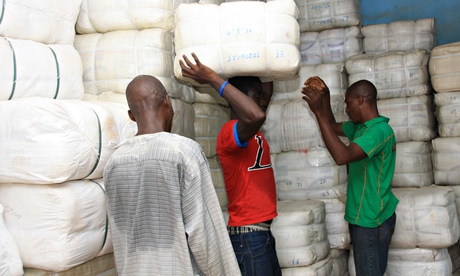
“One great success we’ve been able to have in Nigeria is long lasting insecticidal net (LLIN) distribution,” said Dr Moriam Jagun, a health specialist at the World Bank. “If you look at the country also as a whole – to distribute over 50m LLINs in Nigeria – it’s a great achievement. And you can’t say that we did that alone … it’s because of the partnerships that exists in Nigeria and the harmonisation.”
Apart from LLIN campaigns, successes in streamlining other aspects of malaria control have added up. In addition to standardisation of training modules for health workers across the country, rapid diagnostic tests have been distributed to health centres and systems for monitoring and evaluating interventions have been improved. SuNMaP has also worked to centralise knowledge through the creation of a compendium which serves as a database for research – an especially useful tool for academics and research-based organisations.
Read a more in-depth article on harmonisation on the Malaria Consortium website here, download the learning paper here, or watch our video below:
Content on this page is paid for and provided by the Malaria Consortium sponsor of the Guardian Global Development Professional Network.